9 h
Teotihuacan Pyramids, Guadalupe Shrine & Tlatelolco with Lunch
- Guía local experto
- Grupo reducido
- Acceso sin colas
- Cancelación gratuita
Climb the Sun and Moon pyramids, explore the Avenue of the Dead
Compara tarifas y elige la que más te convenga — todas las reservas incluyen bono móvil y cancelación gratuita donde se indica.
9 h
9 h
8 h
| Experiencia | Duración | Valoración | Recogida | Almuerzo | Guía | Cancelación | Precio | |
|---|---|---|---|---|---|---|---|---|
|
Con guía
Más popular
Teotihuacan Pyramids, Guadalupe Shrine & Tlatelolco with Lunch
|
9 h | ★ 4.7 | ✓ | ✓ | ✓ | ✓ | €52 | Reservar → |
|
Con guía
Teotihuacan Pyramids, Guadalupe Basilica & Tlatelolco Day Tour
|
9 h | ★ 4.7 | — | ✓ | ✓ | ✓ | €52 | Reservar → |
|
Con guía
Teotihuacan Early Morning Tour with Tequila Tasting
|
8 h | ★ 4.6 | — | ✓ | ✓ | ✓ | €60 | Reservar → |
Worth it for history seekers and pyramid climbers
A teotihuacan pyramids tour from mexico city delivers measurable value: the 210 MXN entrance fee grants access to climb two major pyramids—the Pyramid of the Sun and Pyramid of the Moon—plus the Avenue of the Dead and on-site museums. Tours from Mexico City range from basic transportation packages to comprehensive experiences bundling the Guadalupe Basilica, Tlatelolco, hot air balloon flights, and authentic Mexican meals. The site sits 50 km northeast of the capital, requiring 1–1.5 hours each way. Independent visits cost less but demand navigation of public transport and Spanish-language signage. Guided options justify their premium for travelers prioritizing context over budget: certified guides decode the murals at the Palace of Quetzalpapalotl and explain Teotihuacan's urban grid without the research overhead. The early morning tour with tequila tasting and hot air balloon adventure cater to experience collectors willing to pay for layered itineraries. If your goal is purely architectural photography and you speak Spanish, self-guided entry wins. For first-time visitors wanting historical narrative and logistical ease, teotihuacan pyramids tour from mexico city tours pay off.
Bottom line: The combination of monumental scale, climbing access, and tour convenience outweighs the added cost for most visitors prioritizing depth over budget.
Experiencias seleccionadas amadas por miles de viajeros
3 - 11 hours
Cancelación gratuita
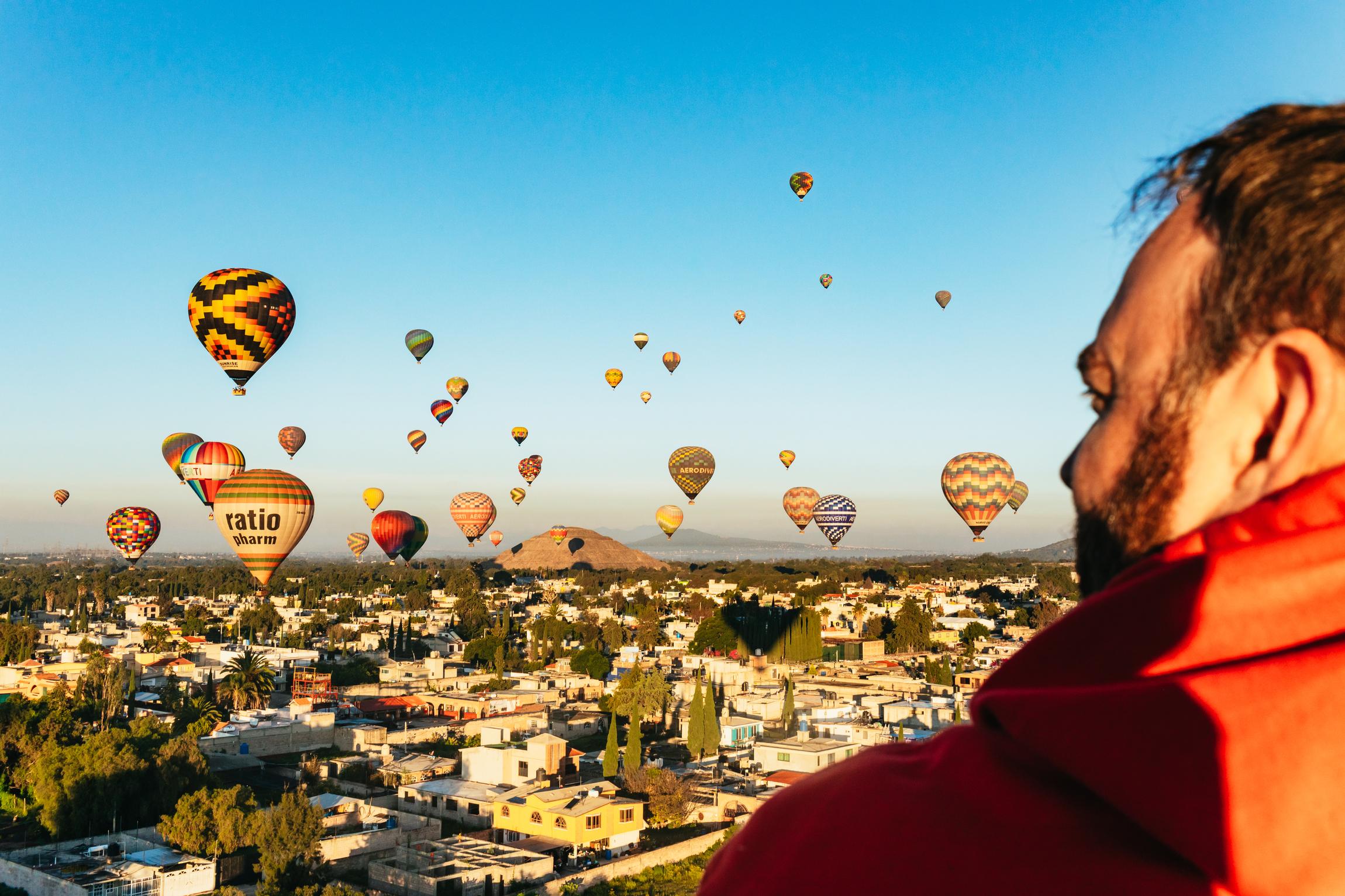
Soar above ancient pyramids at sunrise, then explore archaeological wonders and sacred sites below
8 hours
Cancelación gratuita
Ancient ruins meet authentic family cuisine on this immersive day trip from Mexico City
8 hours
Cancelación gratuita
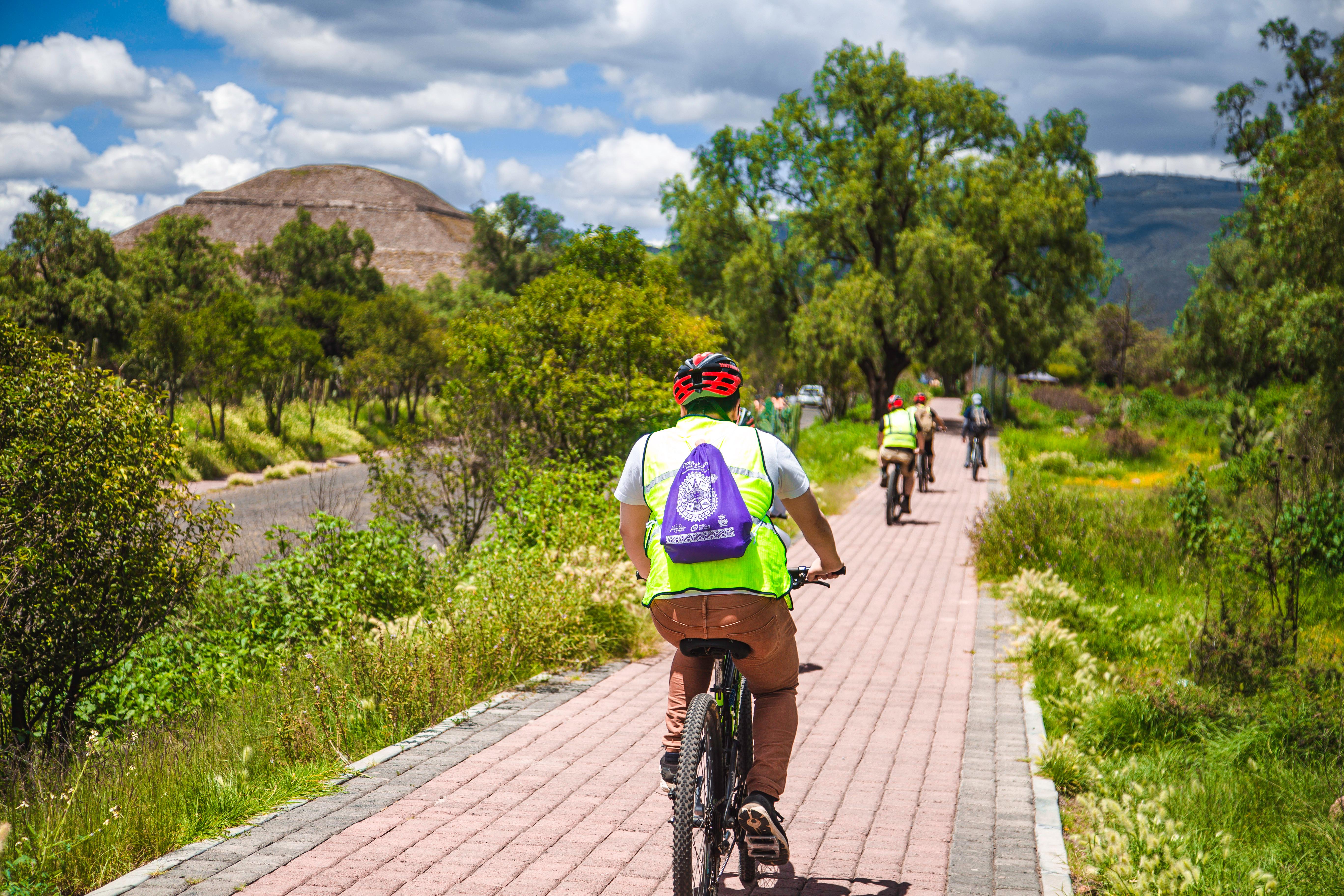
Explore ancient ruins, cycle through scenic valleys, and taste traditional pulque on this full-day escape from Mexico City
6 hours
Cancelación gratuita
Journey to the City of the Gods and explore ancient pyramids plus a mystical underground cavern
11 hours
Cancelación gratuita
Aerial views of ancient pyramids, guided archaeological exploration, and spiritual heritage—all in one day
5 hours
Cancelación gratuita
Discover Mexico's legendary pyramid complex with expert guidance, private transport, and skip-the-crowd comfort.
6 hours
Cancelación gratuita
Explore ancient pyramids and descend into a ritual cave on this guided small-group tour from Mexico City
5 hours 30 minutes
Cancelación gratuita
Explore ancient pyramids at your own rhythm with a knowledgeable guide and skip-the-crowd morning access
Pass security checkpoint near the Citadel entrance and pick up a site map
View the sunken plaza and carved serpent reliefs before heading north
Walk the ceremonial causeway connecting the site's major plazas
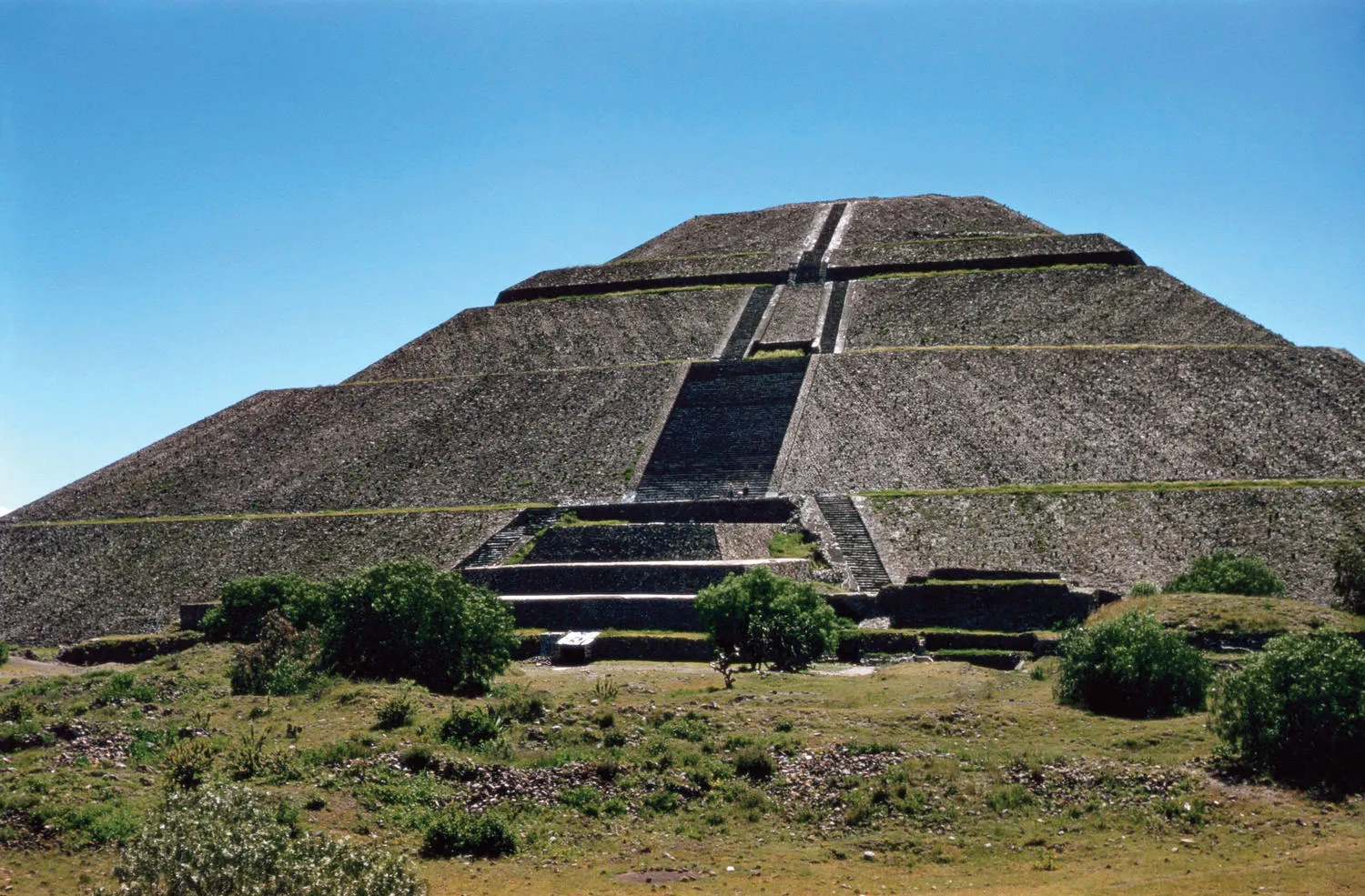
Climb the stepped terraces of the third-largest pyramid in the ancient world
Reach the base platform for wide views back down the avenue
Review artifacts and site models included with the entrance fee
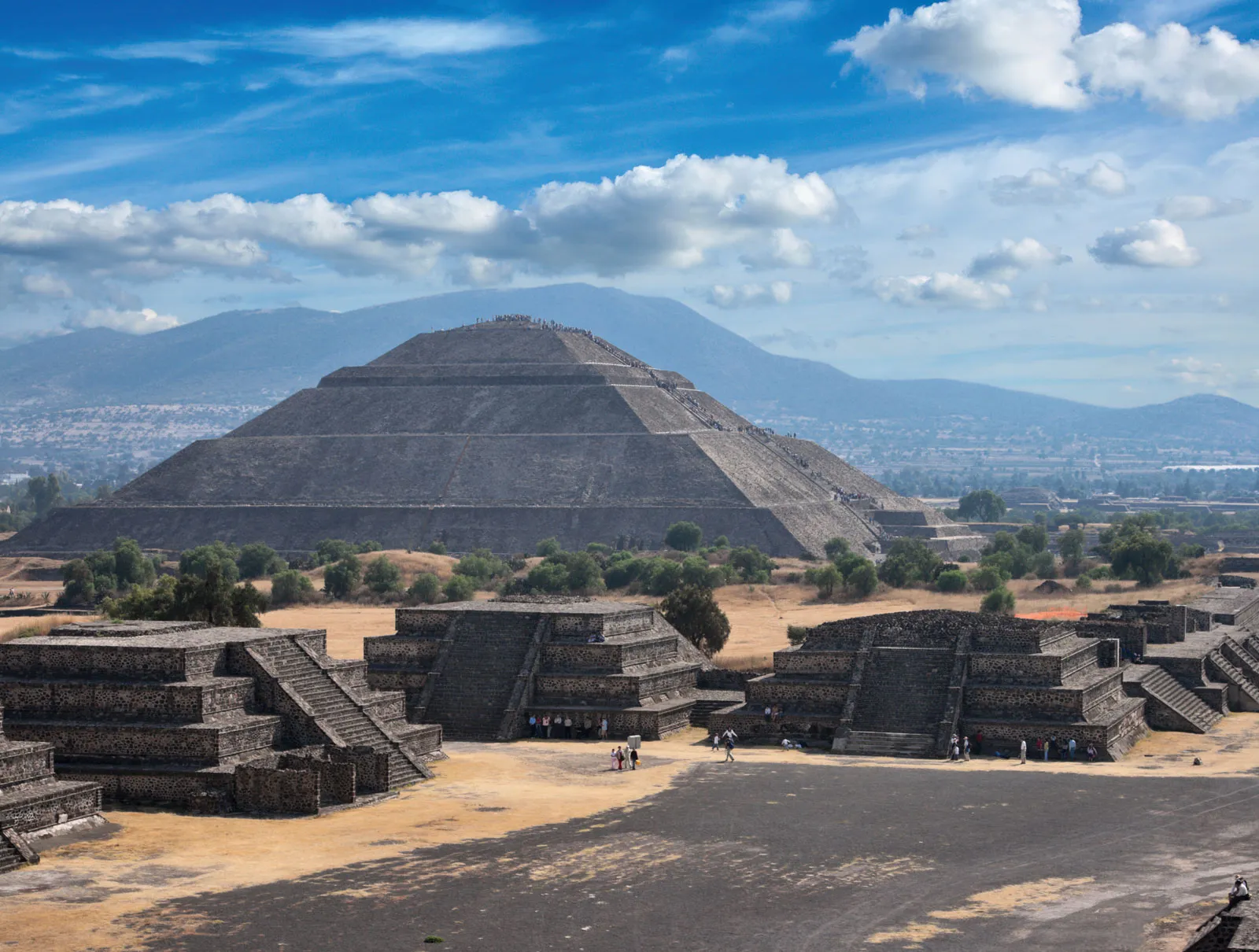
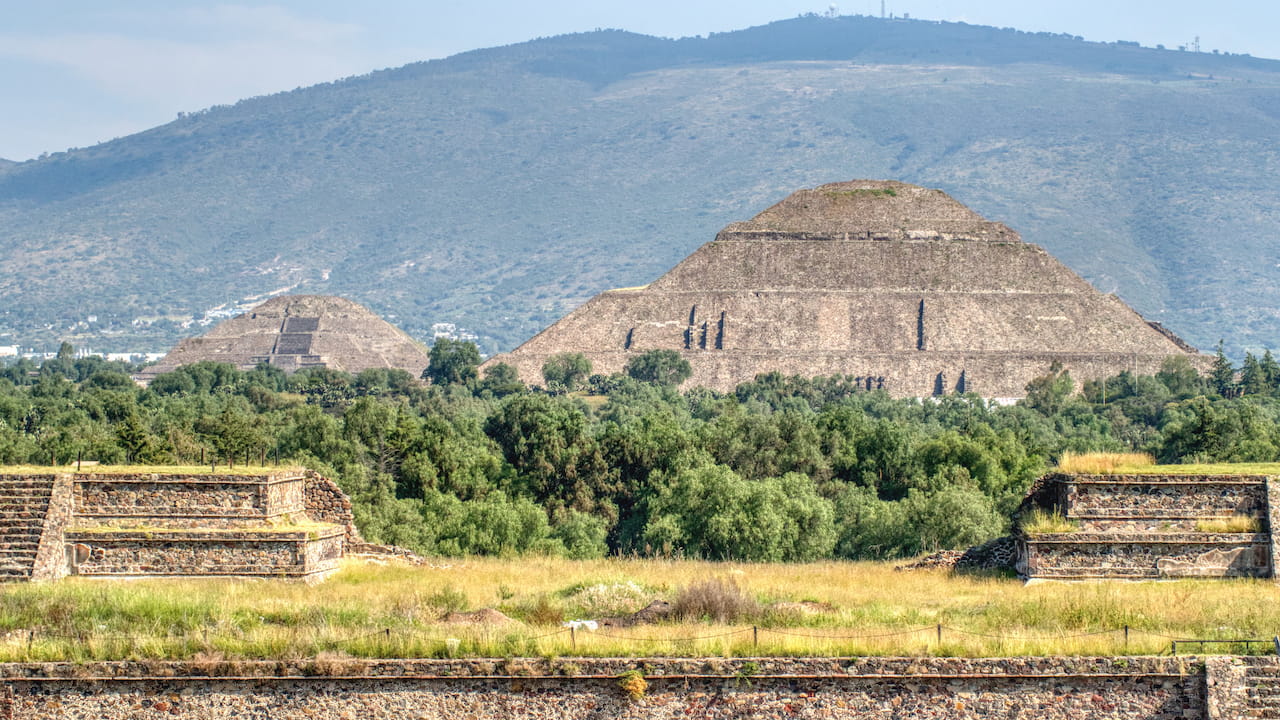
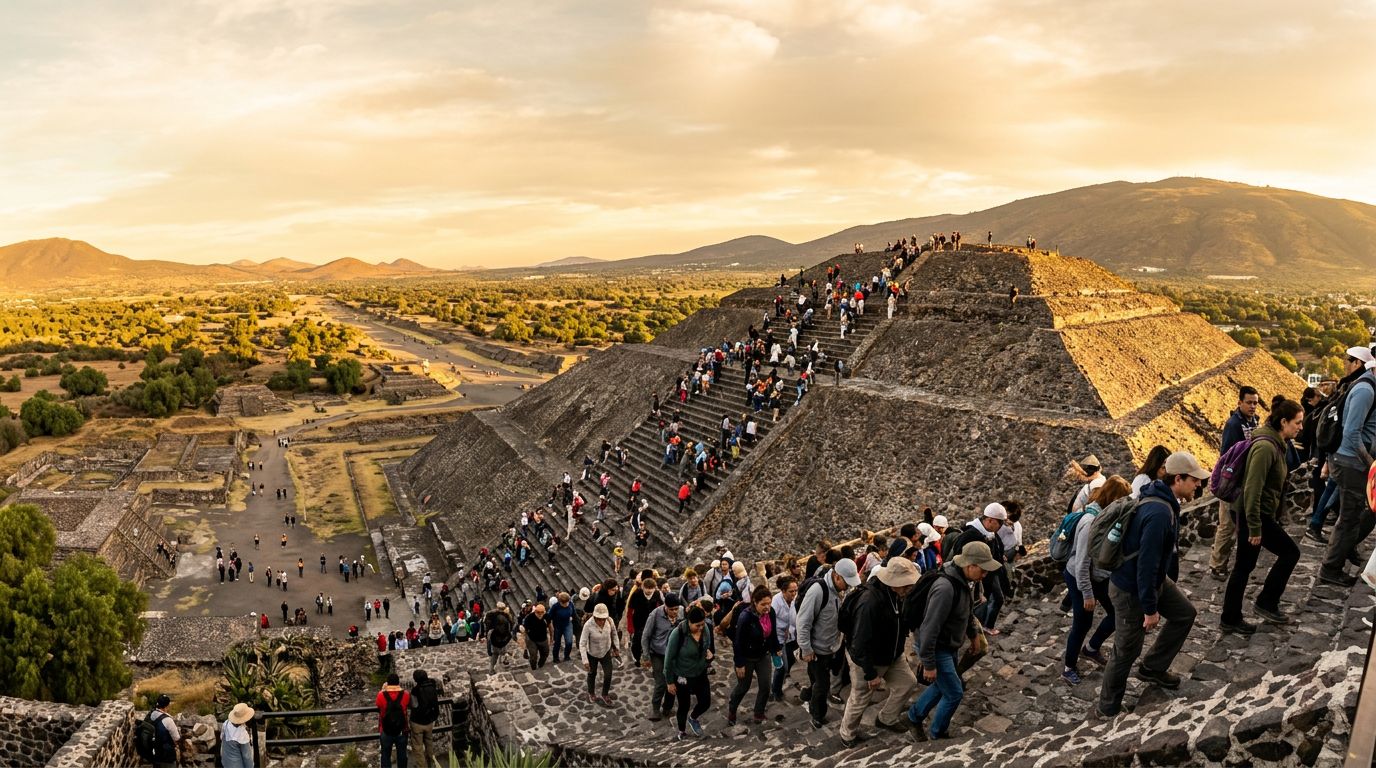
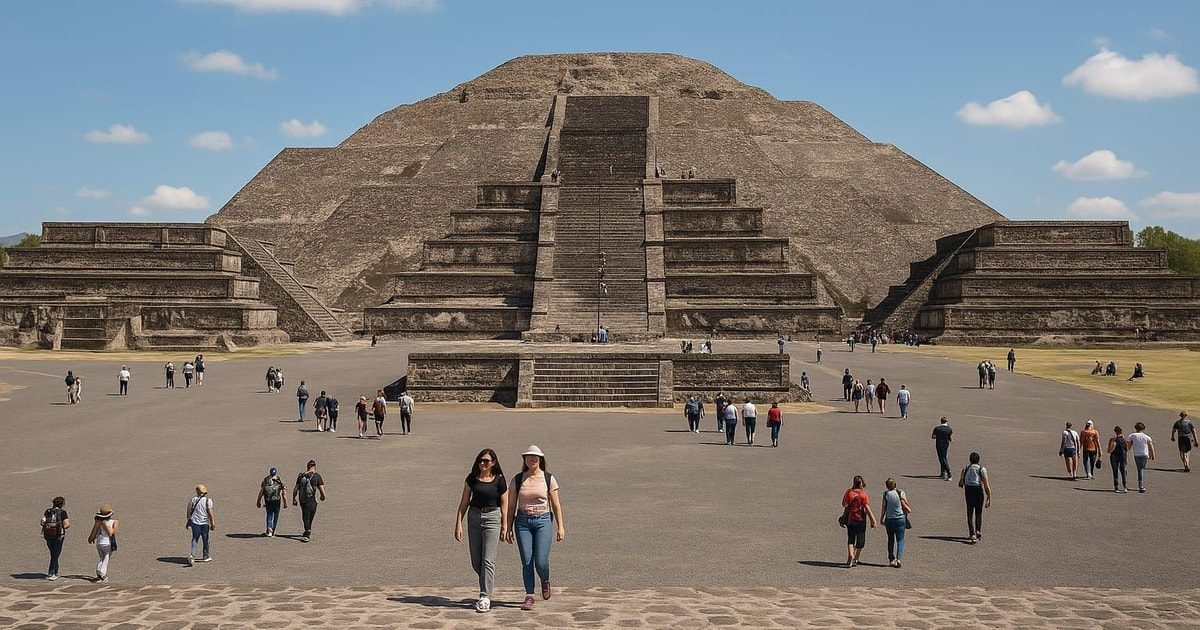
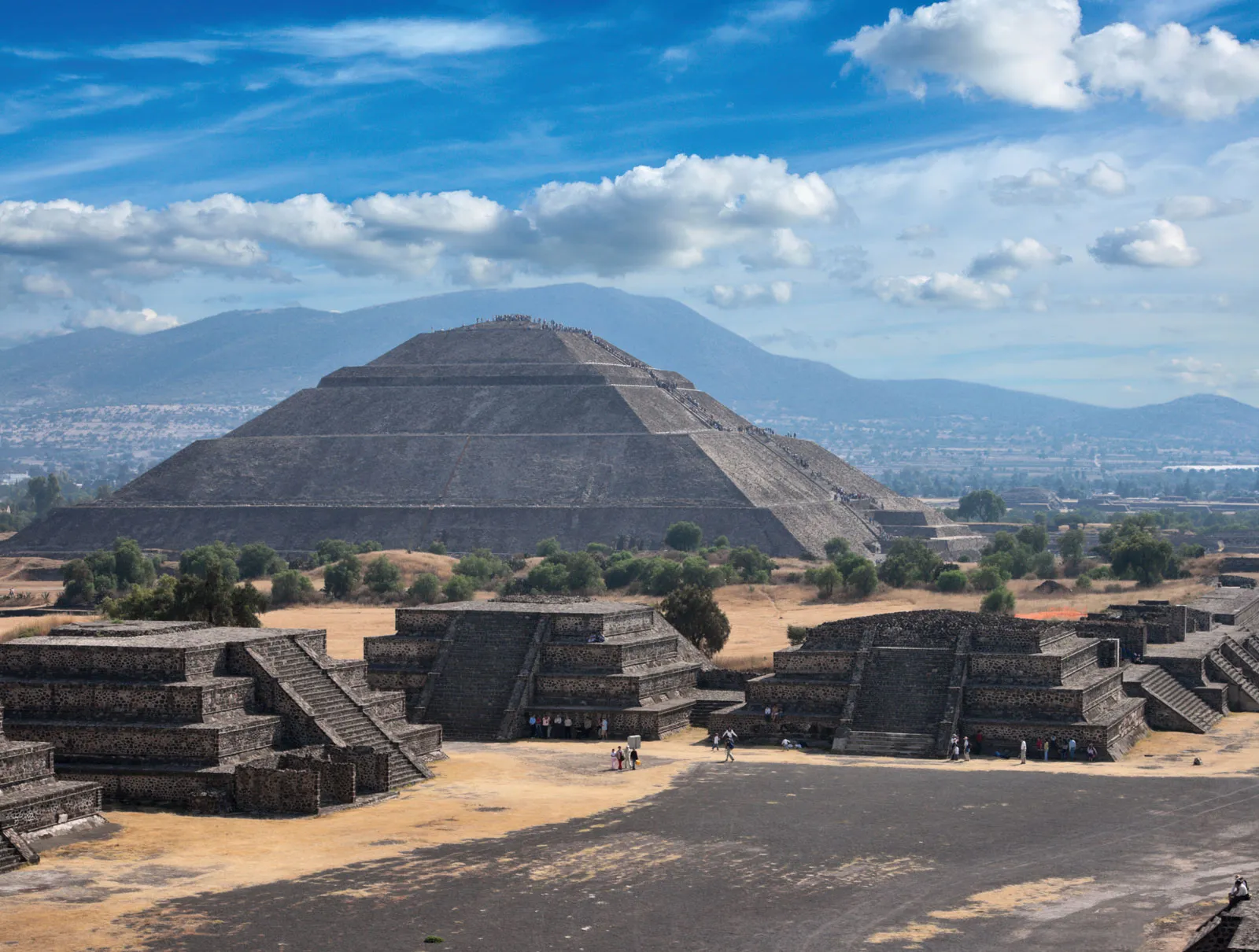
The third-largest pyramid in the ancient world by base area, its core structure was built in a single construction phase around the 1st century CE without the aid of metal tools. Visitors climb roughly 240 uneven stone steps to reach the summit platform.
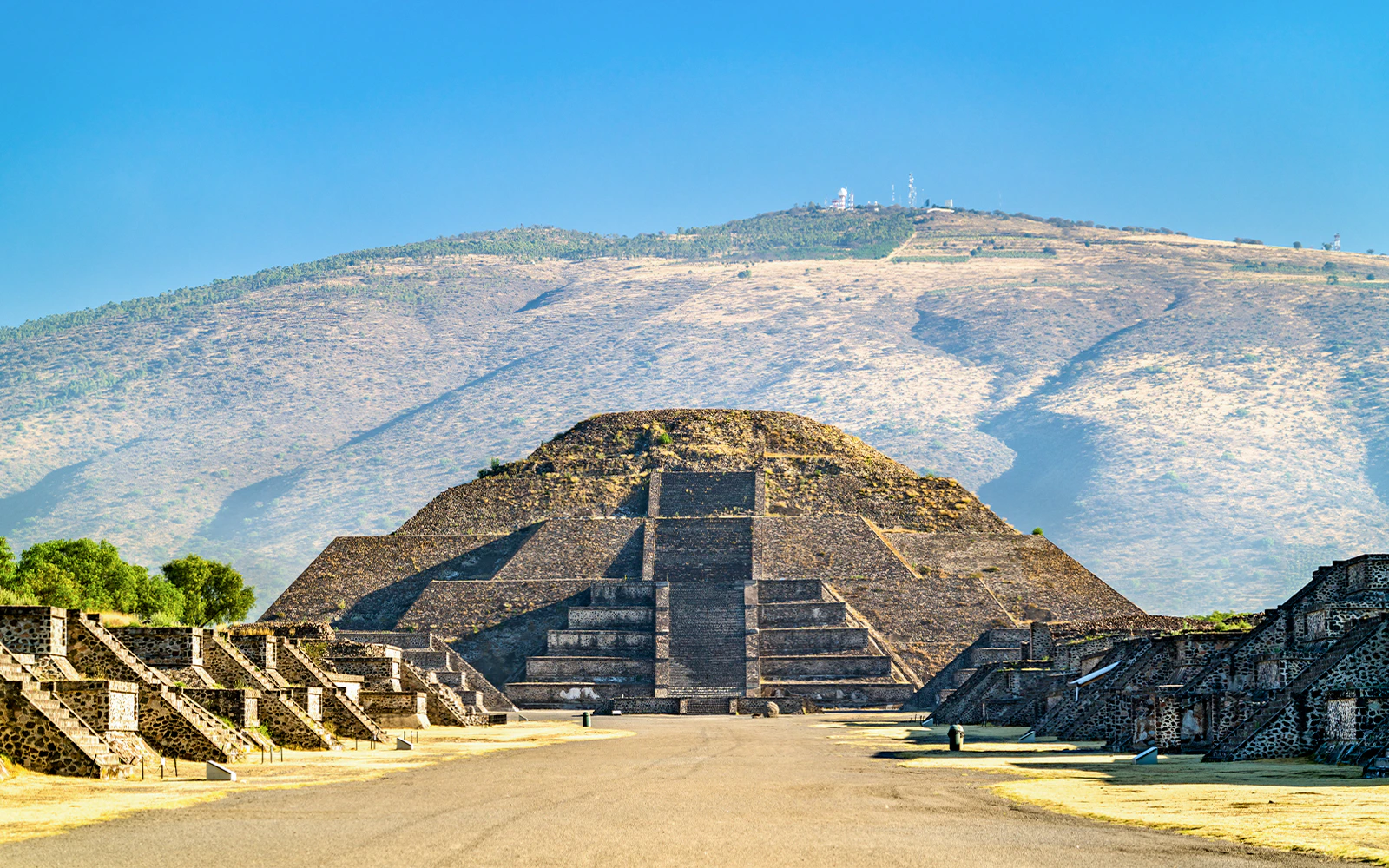
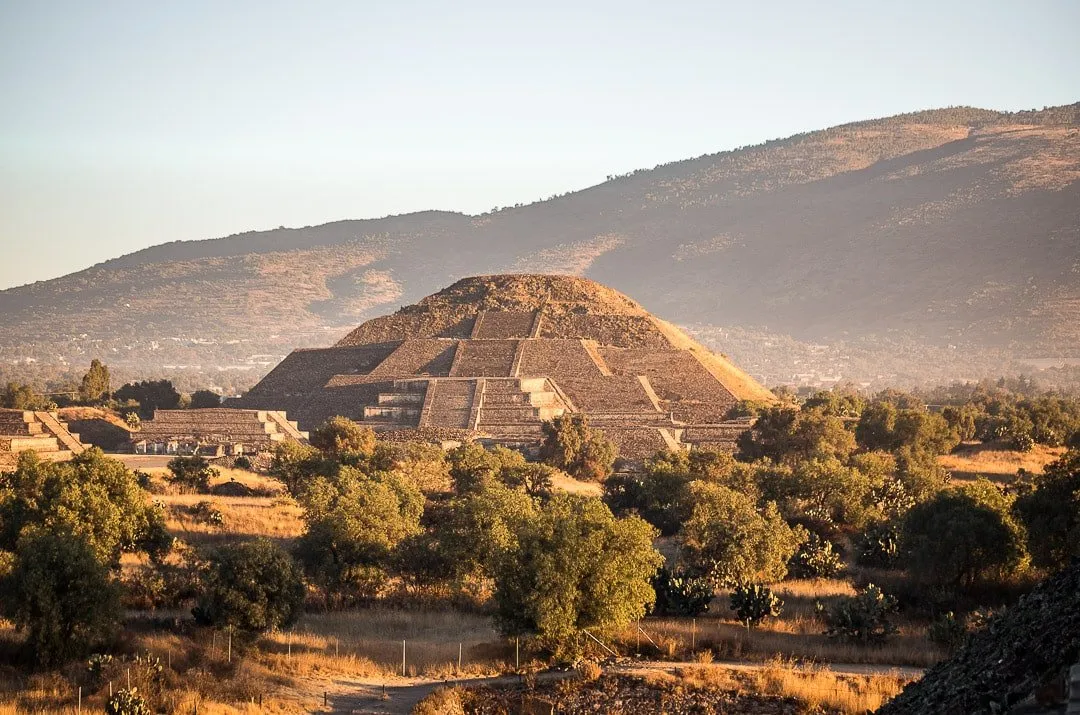
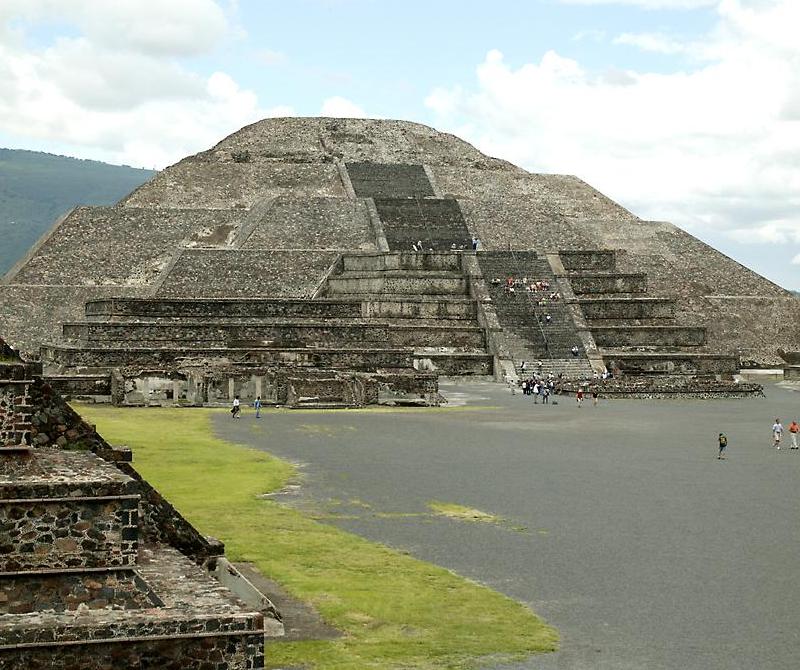
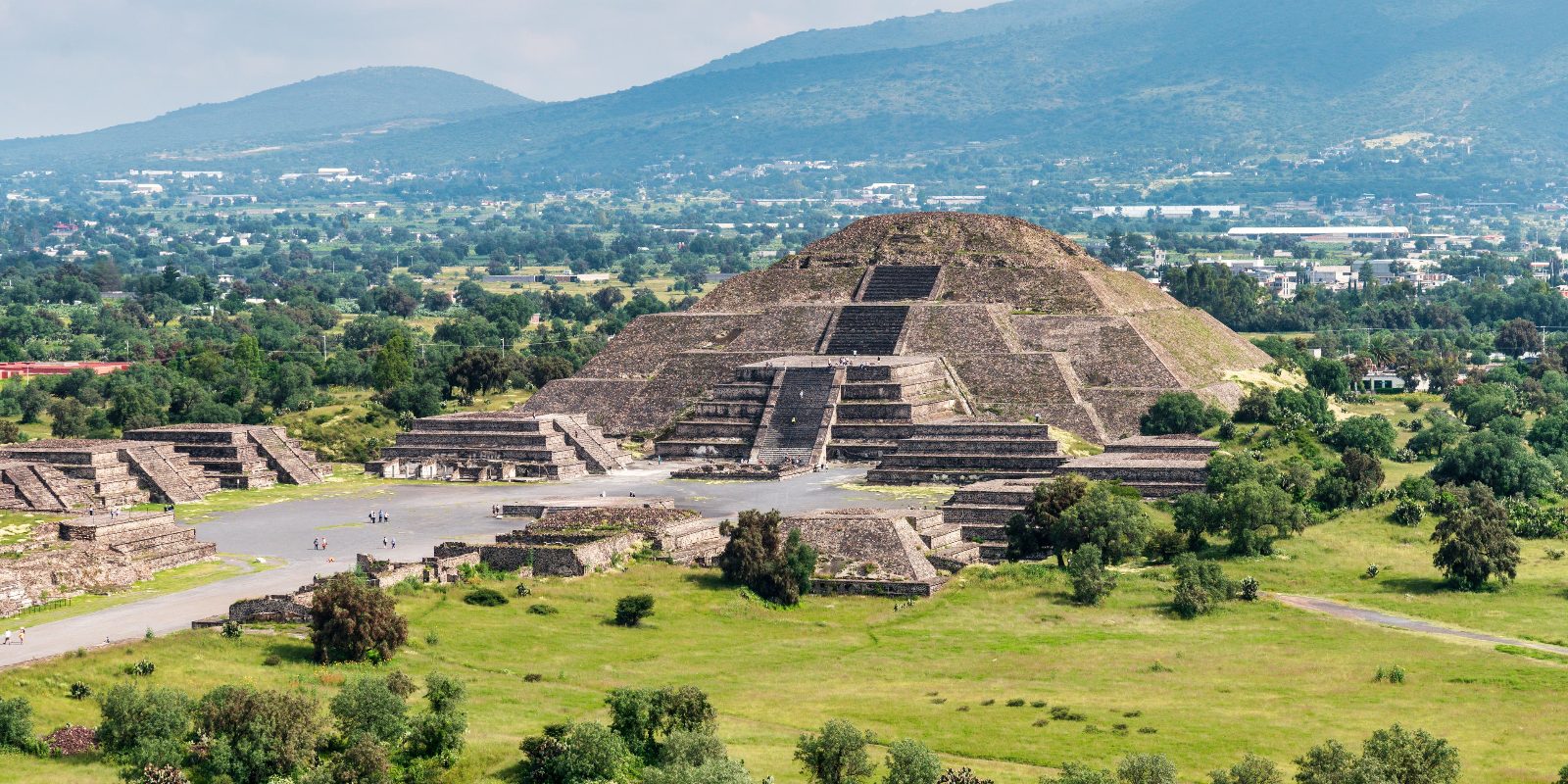
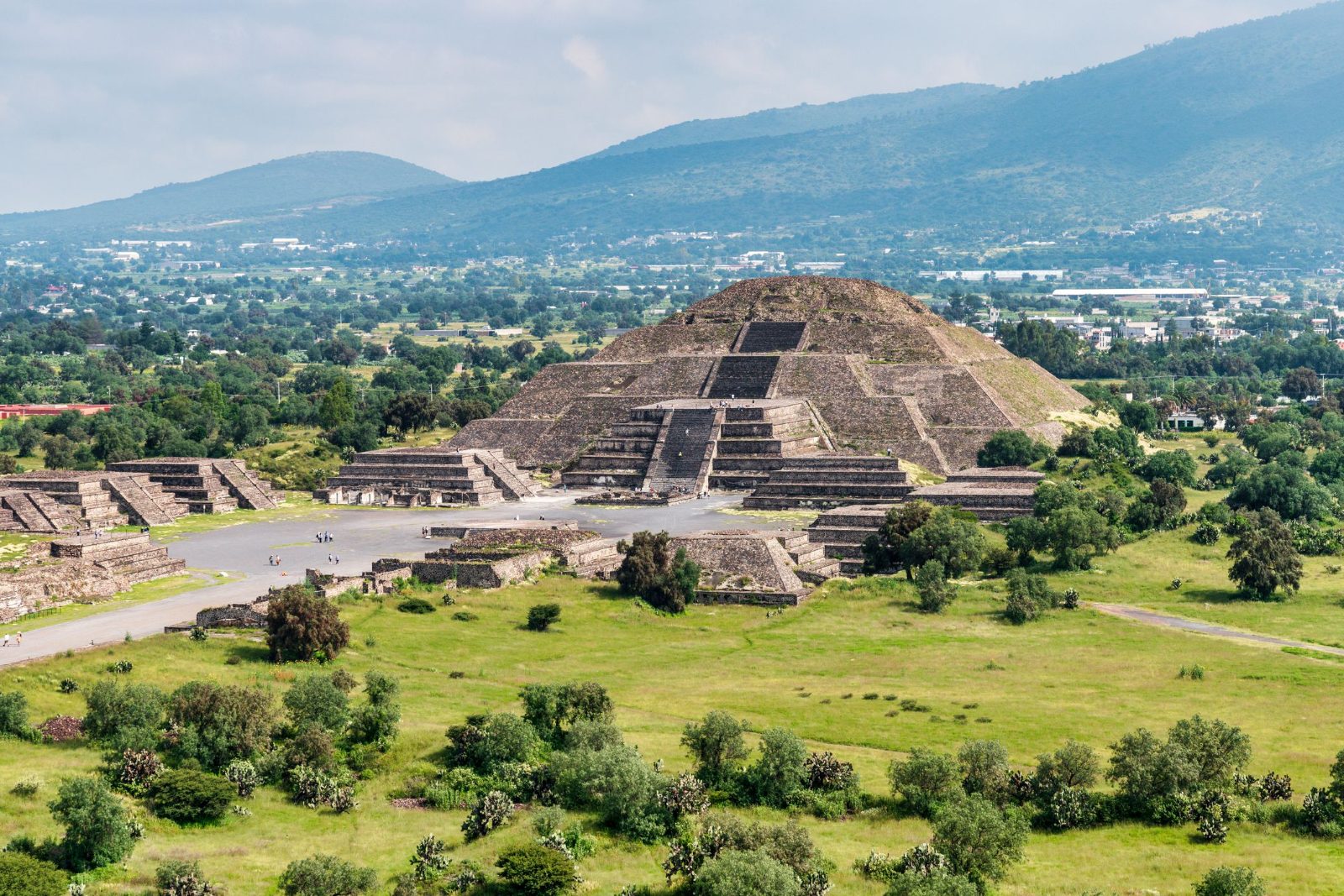
Slightly shorter than the Pyramid of the Sun but built on higher ground, so its summit platform sits at a comparable elevation, giving what many consider the more commanding view down the Avenue of the Dead. Excavations beneath it revealed sacrificial burials tied to the structure's dedication.
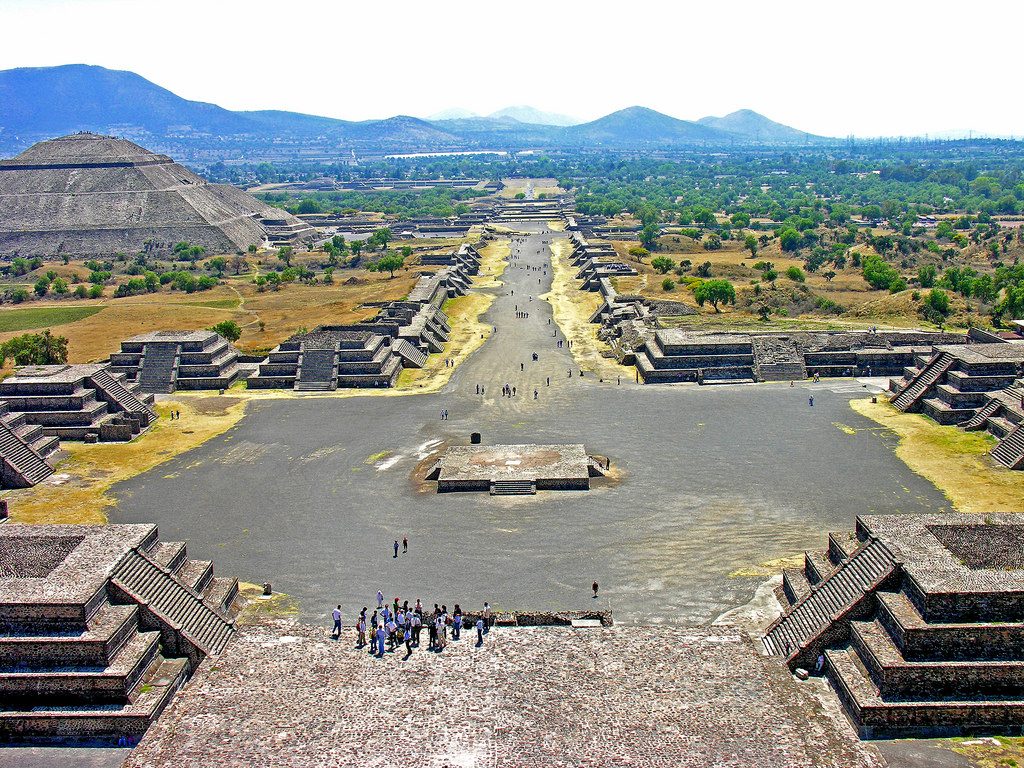
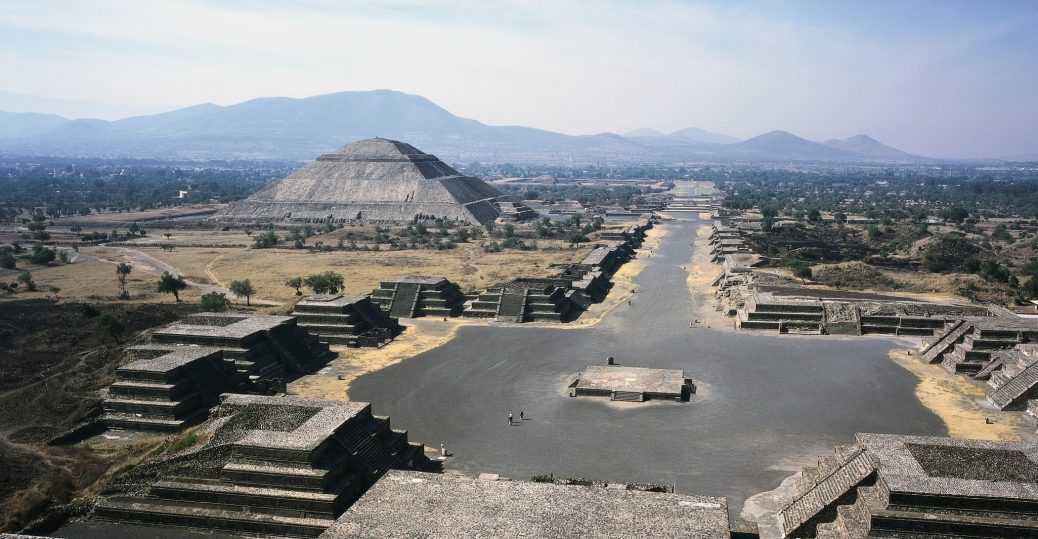
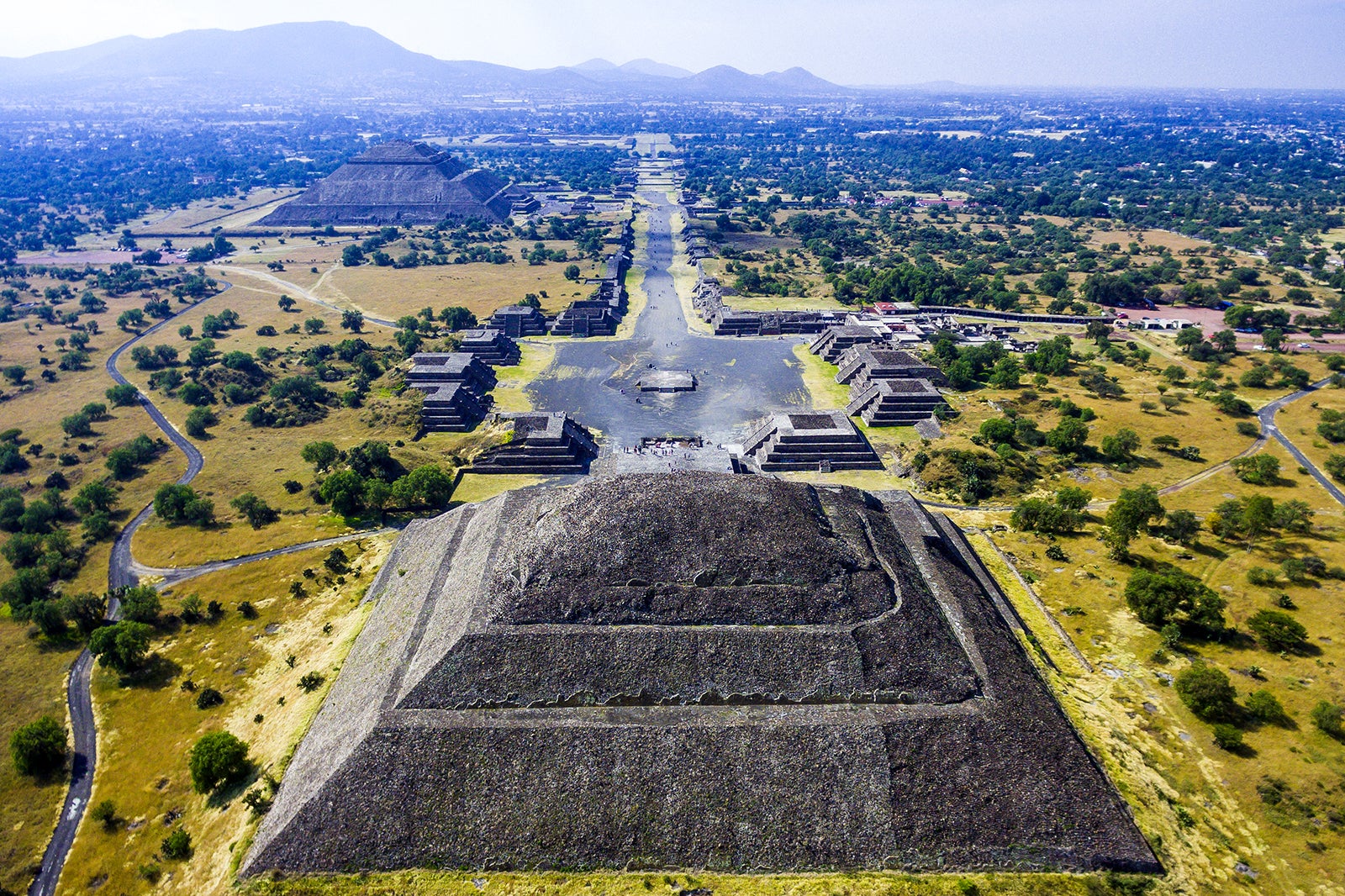
This roughly 2.4 km ceremonial causeway forms the spine of the ancient city, lined with dozens of smaller platform structures once used for ritual processions. Its Nahuatl-derived name stems from the Aztecs, who visited the ruins centuries after the city's decline and mistook the platforms for tombs.
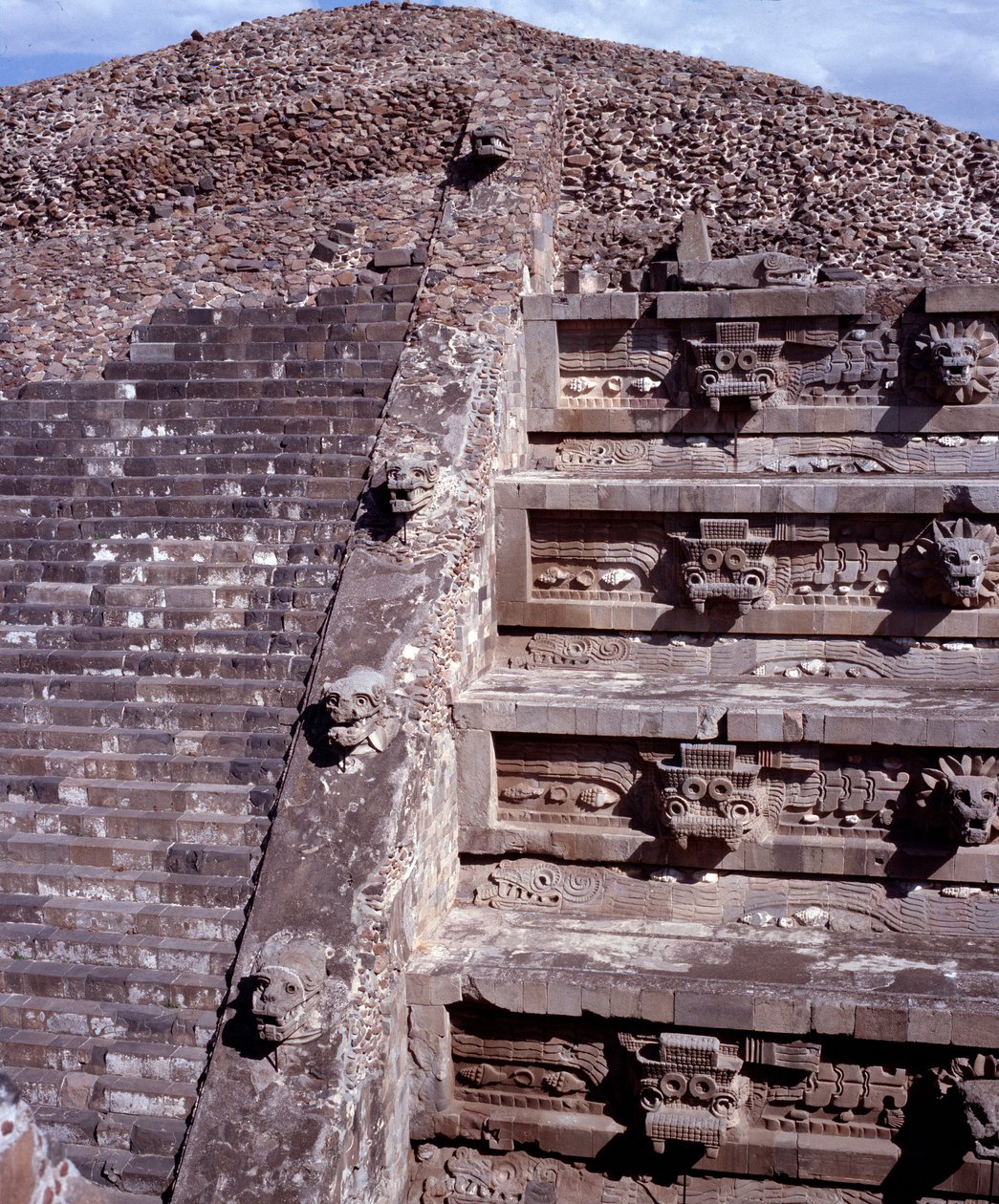
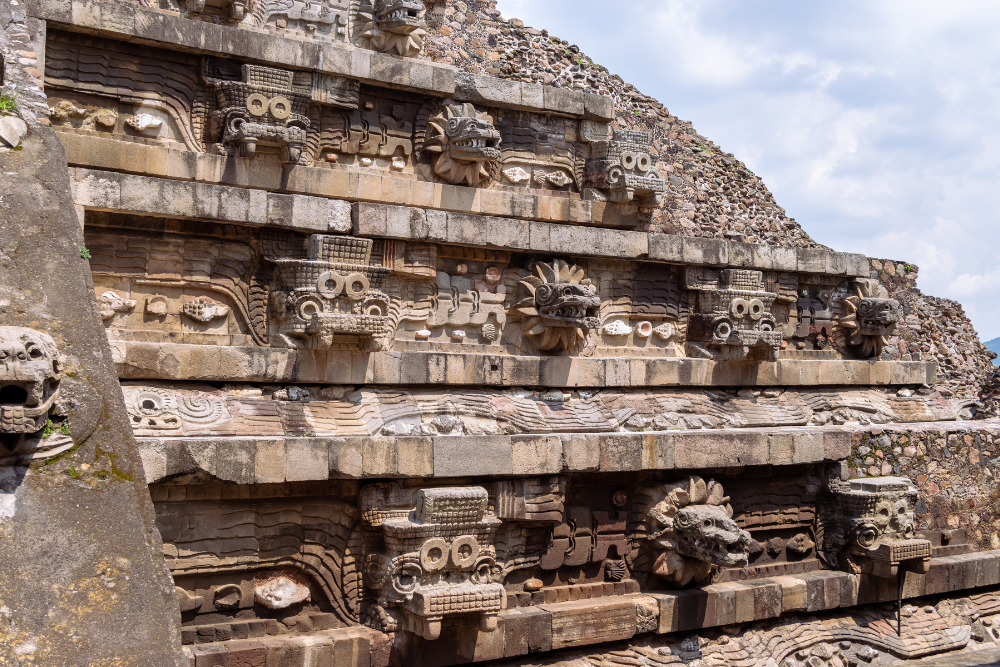
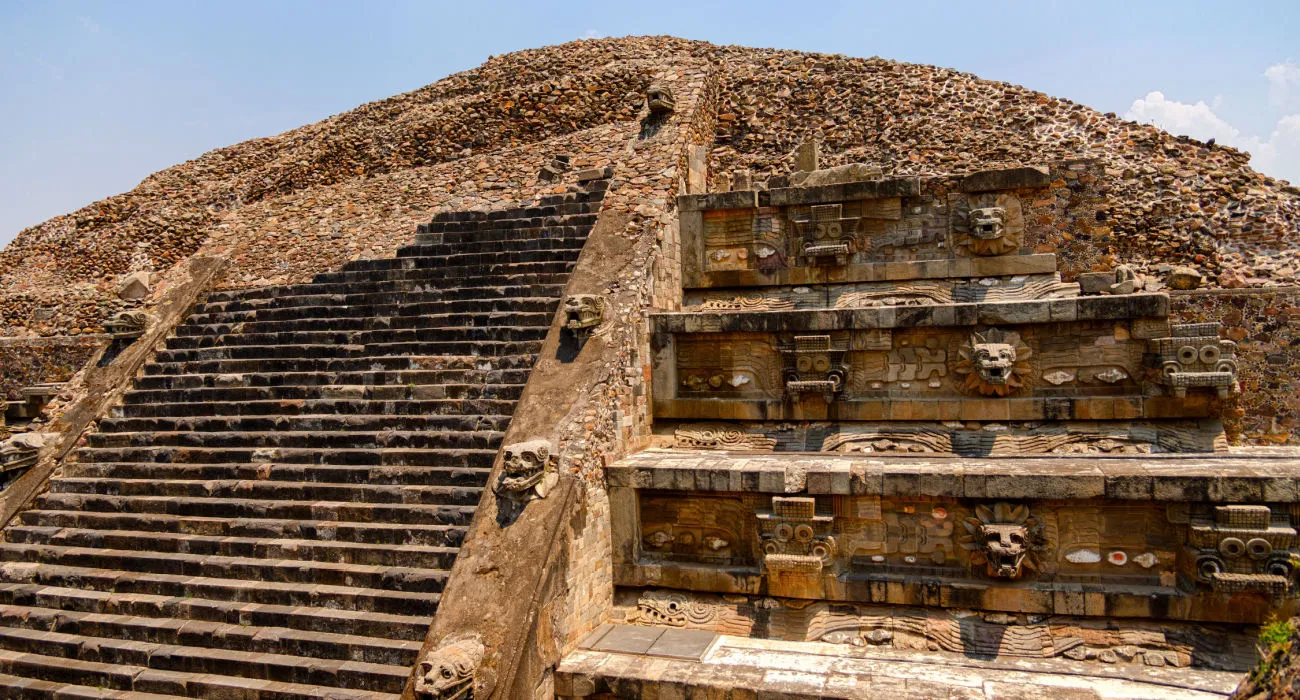
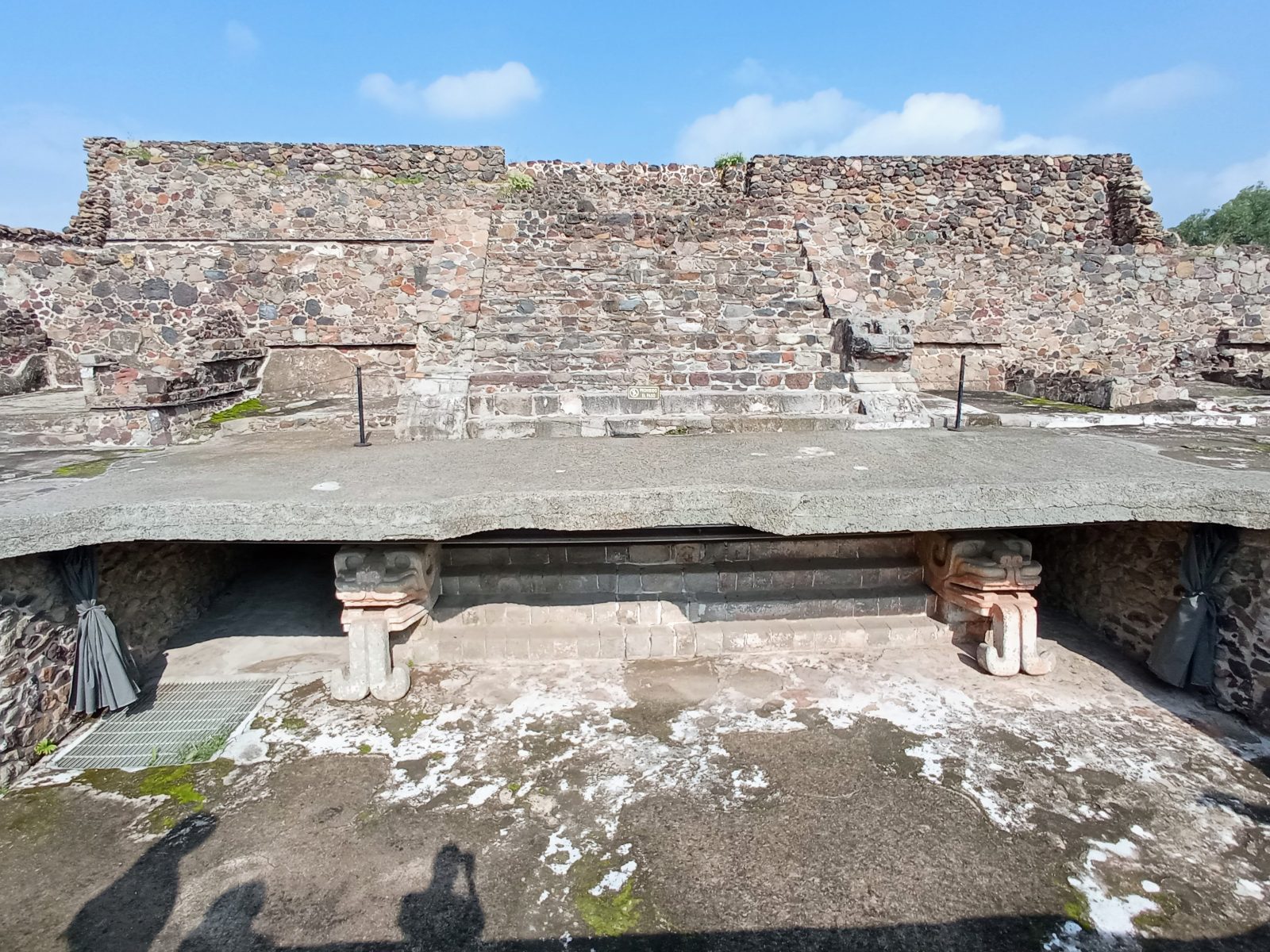
Located within the Citadel enclosure, its facade features carved stone heads alternating between the feathered serpent deity and a goggle-eyed rain figure, some of the best-preserved relief carvings on site. Excavations here uncovered one of the largest mass sacrificial burials found in the Americas, with over 200 individuals.
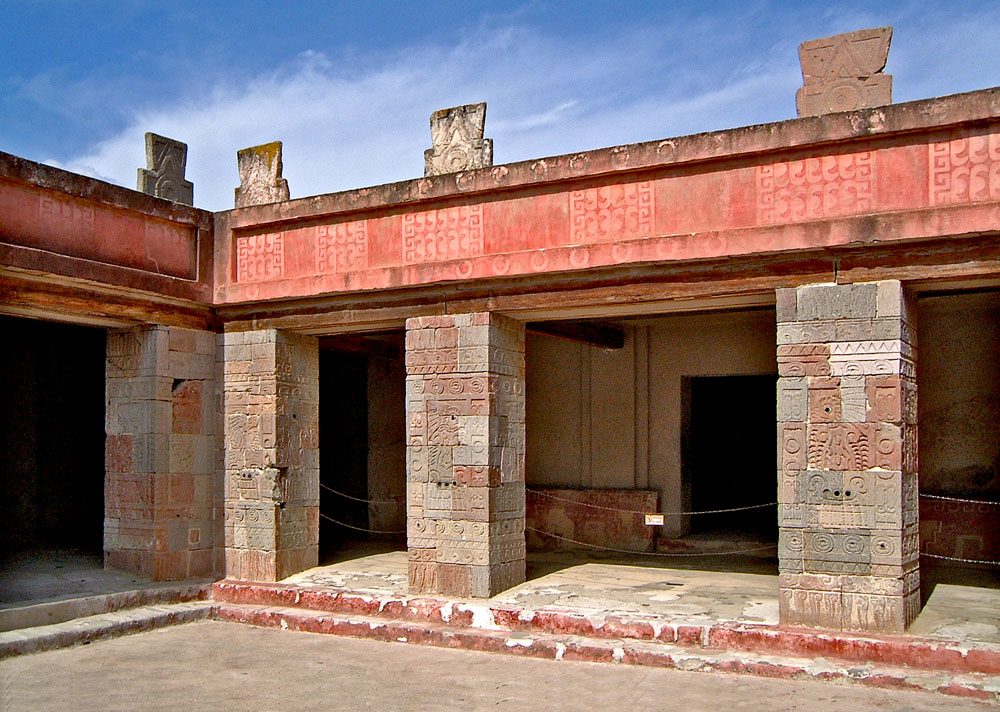
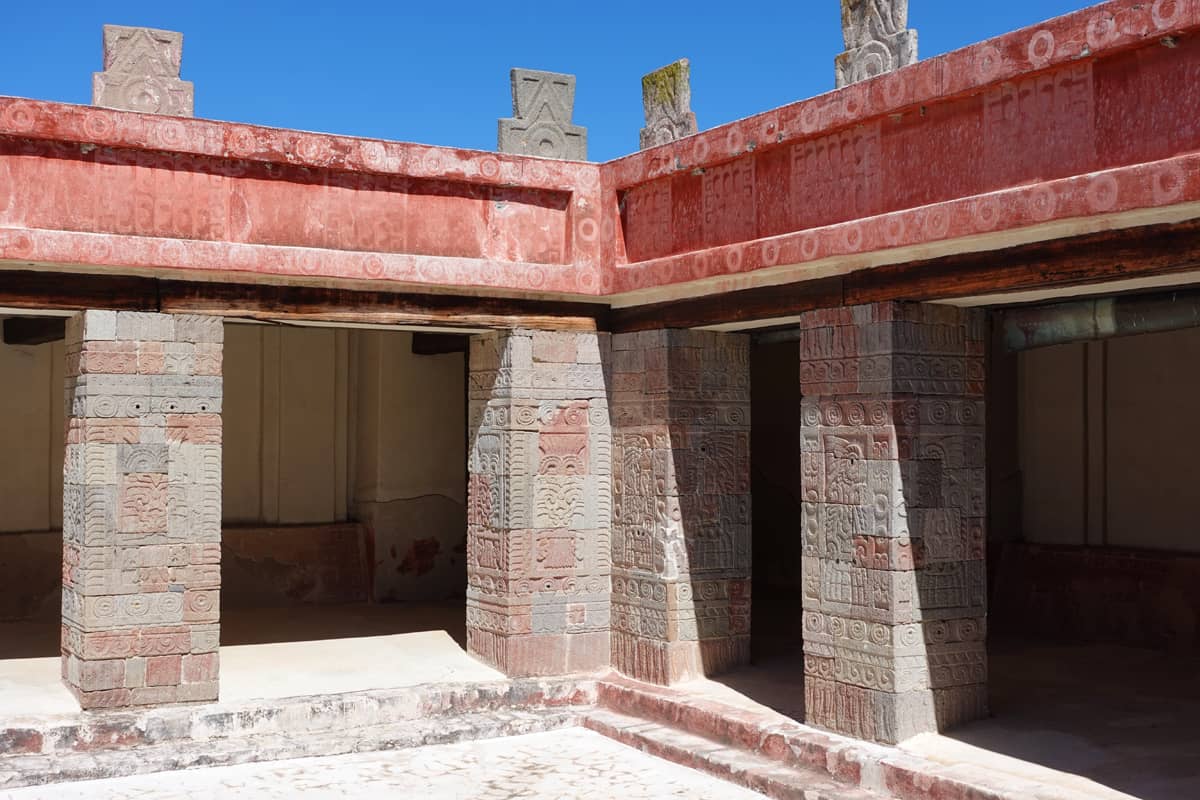
This palace structure near the Pyramid of the Moon takes its name from carved pillars depicting a hybrid Quetzal-Butterfly deity, unusual among the site's iconography for its intricate low relief. Traces of the original painted stucco can still be seen on parts of the columns.
A sunken rectangular plaza believed to have served as a ceremonial and administrative center, large enough to hold an estimated 100,000 people during major gatherings. It encloses the Temple of the Feathered Serpent at its center.
You leave Mexico City before sunrise, the tour van climbing through the northern suburbs as dawn breaks over the Sierra de Guadalupe. Fifty kilometers out, the Valley of Teotihuacan opens wide and flat, the pyramids emerging as dark triangles against the pale sky.
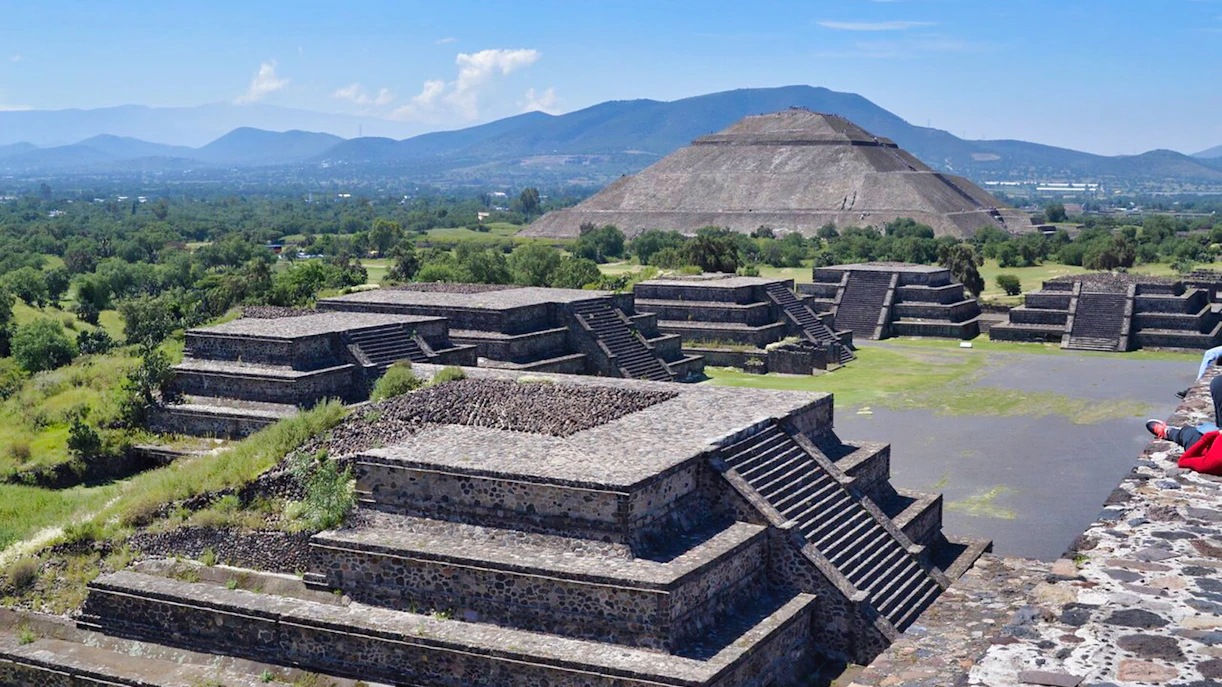
You arrive at the main entrance by 08:30, ahead of the midday tour buses, and walk the length of the Avenue of the Dead toward the Pyramid of the Sun. The climb is 248 steps, each tread worn smooth by millions of feet. At the summit platform you pause — the grid city spreads below, the Pyramid of the Moon aligned directly north, the volcanic peaks of Popocatépetl and Iztaccíhuatl visible on clear mornings.
You descend and walk to the Moon Pyramid, smaller but steeper, its plaza surrounded by platforms where your guide explains the Great Goddess murals once visible on interior walls. You duck into the Jaguar Palace, its covered corridors preserving frescoes of net-draped jaguars blowing conch-shell trumpets. The Temple of the Feathered Serpent is last — 260 serpent heads protrude from the western facade, alternating with Tlaloc masks whose circular eyes seem to track your movement across the plaza. By noon the site heats up; you retreat to the shaded museum where skeletal remains and obsidian offerings from the temple's foundation burials fill glass cases, the narrative of ritual sacrifice rendered in bone and stone.
Todos los detalles de tu próxima aventura en un solo lugar
Teotihuacan's Pyramid of the Sun rises 65 metres above the Valley of Mexico, built around 200 CE without metal tools, draft animals, or the wheel.
The city that surrounded it housed 125,000 inhabitants at its second-century peak, making it the sixth-largest urban center in the world at the time — larger than Imperial Rome in territory. The civilization that constructed the Avenue of the Dead, aligned 15.5 degrees east of true north to track the setting of the Pleiades, abandoned the site by 550 CE for reasons still debated by archaeologists. No written language survived. The Aztecs, arriving 800 years later, named the ruins Teotihuacan — "birthplace of the gods" in Nahuatl — believing the cosmic order itself had been forged here.
Today the archaeological zone spans 83 square kilometers, though visitors navigate a compact 4-kilometer ceremonial core. The Pyramid of the Moon anchors the northern terminus, its plaza framed by twelve secondary platforms where processions once honored a water and fertility deity archaeologists call the Great Goddess. Mica Temple, Jaguar Palace, and the Temple of the Feathered Serpent — adorned with 260 serpent heads and goggle-eyed rain god masks — line the ceremonial avenue. Teotihuacan pyramids tour from Mexico City options range from early-morning climbs that beat the heat and crowds to combination itineraries pairing the ruins with the Basilica of Our Lady of Guadalupe and the pre-Columbian market square at Tlatelolco. Hot air balloon flights lift at dawn, offering aerial views of the grid city's geometric precision before ground access begins.
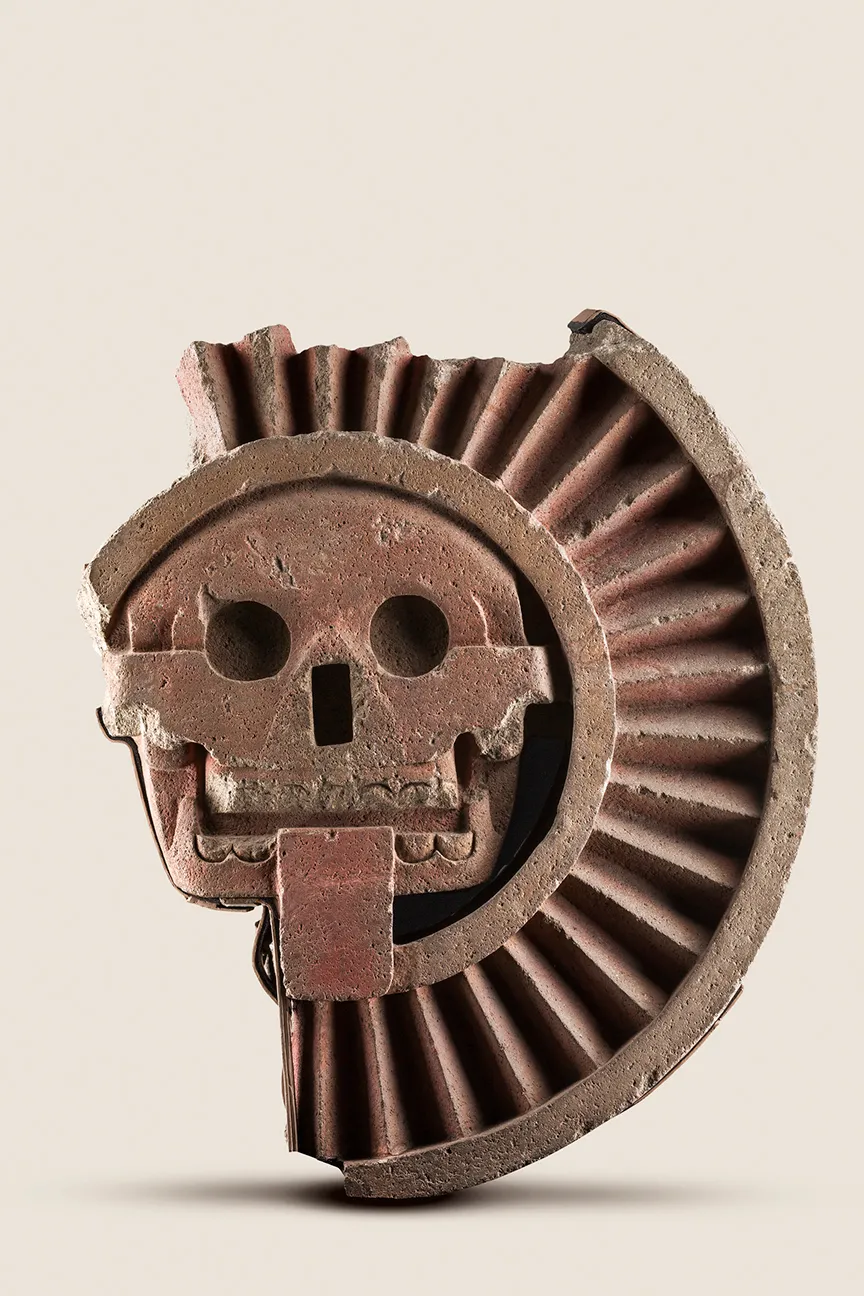
The on-site Museum of Teotihuacan Culture houses artifacts recovered from the Pyramid of the Feathered Serpent's foundation: obsidian blades, jade figurines, and the skeletal remains of sacrificial victims buried during the temple's 200 CE consecration. Murals preserved inside residential compounds display Tlaloc rain iconography and processions of jaguars, their pigments — red from hematite, blue from azurite — still vivid after 1,800 years. A general admission ticket costs 210 MXN and includes museum entry. The site opens daily from 08:00 to 17:00, with the optimal arrival window between 08:00 and 11:00 to secure cooler temperatures and thinner crowds on the pyramid staircases, which lack handrails and rise at a 45-degree angle.
The Aztecs, arriving 800 years after abandonment, believed the cosmic order itself had been forged here.
Wear closed-toe walking shoes since the Pyramid of the Sun and Pyramid of the Moon staircases are steep, uneven stone with no handrails on most sections. Light, breathable clothing works best given the high-altitude sun exposure across the open Avenue of the Dead, and a hat is strongly advised since there is almost no shade on the main plazas.
Bags are subject to visual inspection at the entrance gates, and large backpacks or suitcases are not allowed inside the archaeological zone. Most operators running a Teotihuacan pyramids tour from Mexico City recommend carrying only a small daypack with water and sunscreen through the checkpoints.
Personal photography and non-flash video with handheld phones and cameras are permitted throughout the Avenue of the Dead and both main pyramids. Tripods, drones, and any commercial or professional filming require prior written authorization from INAH, Mexico's national anthropology institute.
Children can walk the flat stretches of the Avenue of the Dead easily, but climbing the Pyramid of the Sun's roughly 240 steps is demanding for younger kids and should be paced with rest stops. Strollers struggle on the stone stairways, so many families visiting with toddlers use a baby carrier instead.
The Pyramid of the Sun and Pyramid of the Moon involve steep, irregular stone stairs that are not wheelchair or stroller accessible. The Avenue of the Dead and museum areas are mostly flat packed earth or paved paths, though surfaces can be uneven after rain, so wheelchair users typically limit their visit to ground-level plazas and the on-site museum.
Visitors may bring sealed bottled water and small snacks into the archaeological zone, but eating is only permitted in designated shaded rest areas away from the monument structures, not on the pyramid staircases themselves. Glass containers and alcohol are not allowed past the entrance checkpoints.
Quietest weekday
Busier with weekend visitors
Free entry for Mexican residents on some Sundays
Hours
Daily 08:00–17:00, last entry before closing
Opening hours
08:00 – 17:00
Getting there
City-center access via metro and bus
Accessibility
Most experiences are wheelchair-friendly — check individual tours
What to bring
Comfortable shoes, water, phone for mobile voucher
Public transport · 1h to 1h 30 min · Roughly 52-90 MXN each way
Take the Autobuses Teotihuacán line from Terminal Central de Autobuses del Norte in Mexico City directly to the site's Puerta 1
Car · 45 min to 1h depending on traffic · Toll fees plus onsite parking
Drive via the Mexico-Teotihuacán highway (Autopista Ecatepec-Pirámides) from Mexico City, with on-site parking near the main gates
Taxi · 1h approximately · Higher than bus, negotiate or use app rate
A private taxi or rideshare from central Mexico City runs directly to Puerta 1 or Puerta 5
Most Teotihuacan pyramids tour from Mexico City bookings allow free cancellation up to 24 hours before departure, with a full refund issued automatically. The site entrance fee of 210 MXN per foreign visitor is non-refundable once a ticket has been used or a same-day booking has started.
Recommended time
3-4 hours minimum, half a day to full day with add-ons
A self-guided walk covering both major pyramids and the main avenue takes 3-4 hours of walking, mostly outdoors with little shade. Many visitors join a teotihuacan pyramids tour from mexico city that runs 8-9 hours door-to-door, bundling transport, a guide, and stops like the Basilica of Guadalupe or a tequila tasting around the pyramid visit itself. Add an extra hour if you plan to climb both the Pyramid of the Sun and the Pyramid of the Moon, or subtract time if you only want the avenue and one climb. Departing Mexico City around 7-8am gets you inside the gates within the 08:00-11:00 best arrival window, well ahead of tour buses and queue buildup at the ticket booths.
Crowd levels through the day
Clima · afluencia · precio medio — los puntos pasan de verde a ámbar y rojo según sube cada indicador.
Daytime temperatures stay mild in the high teens to low 20s Celsius and the rainy season is tapering off. This is generally considered a comfortable stretch for climbing the Pyramid of the Sun without heavy heat.
Days are dry and cool, often the clearest skies of the year, though mornings can start near freezing at this altitude. Holiday weeks around Christmas and New Year bring noticeably larger crowds.
The spring equinox draws large crowds to the Pyramid of the Sun for the tradition of raising arms to the sun, so this period sees the heaviest visitor numbers of the year. Late spring afternoons can also turn hot before the rains arrive.
This is the rainy season, with afternoon downpours common, so mornings are the more reliable window for dry conditions. Humidity is higher than the rest of the year, making the open plazas feel warmer despite similar daytime highs.
Arriving in the 08:00–11:00 window means cooler stone underfoot on the pyramid stairs and shorter lines at the entrance gates.
This gate sits closest to the Citadel and is where most Teotihuacan pyramids tour from Mexico City groups begin, simplifying pickup logistics.
Onsite vendors and parking attendants often cannot break large denominations, so keep smaller MXN notes handy.
The Avenue of the Dead offers almost no shade, and reflected light off the stone plazas intensifies UV exposure.
The roughly 240 uneven steps have narrow tread depth, so using the handrail sections and resting on landings reduces strain.
lugares.inah.gob.mx lists any temporary structure closures for conservation work before you plan your route.
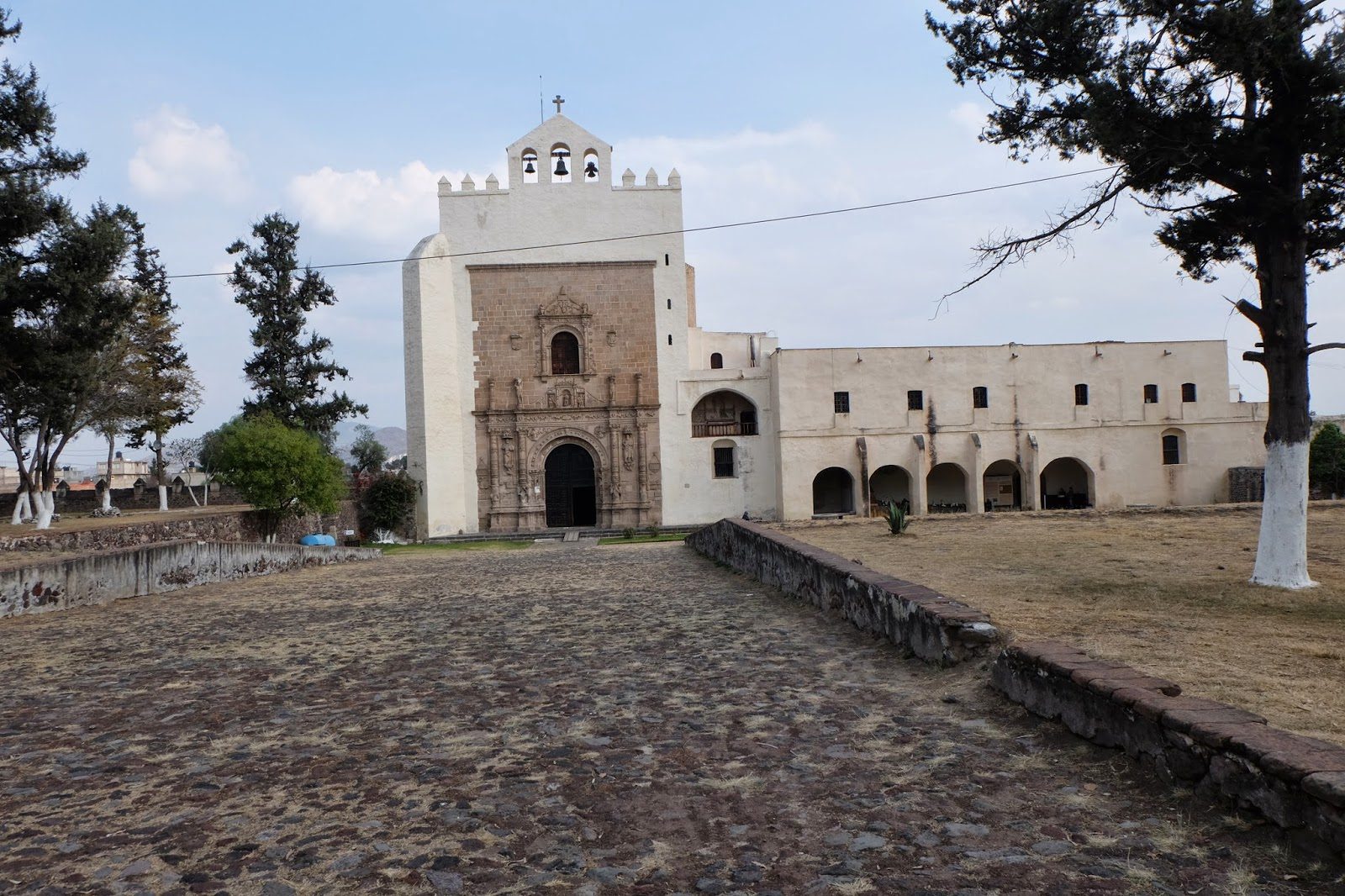
Travelers extending a Teotihuacan pyramids tour from Mexico City can add the nearby 16th-century monastery in Acolman on the return route.
Autopista Ecatepec-Pirámides km 22+600, 55800 San Juan Teotihuacán
Closest gate to the Citadel and most tour bus drop-offs
Get directions
Near the Pyramid of the Moon parking area
Used by tours ending their route at the northern end
Get directionsTeotihuacan emerged in the Valley of Mexico around 100 BCE, when scattered farming communities began coalescing into a planned urban center. By 100 CE, the city covered eight square miles and housed an estimated 30,000 residents drawn by trade routes linking the Gulf Coast to the Pacific. The Pyramid of the Sun rose first, completed circa 200 CE atop a natural cave sacred to earlier inhabitants. Workers hauled three million tons of stone and earth to create its 216-foot mass, the third-largest pyramid in the Americas. The Pyramid of the Moon followed by 250 CE, anchoring the Avenue of the Dead—a two-mile ceremonial boulevard aligned fifteen degrees east of true north to match the setting sun on August 12, a date tied to the Mesoamerican calendar. At its zenith around 450 CE, Teotihuacan held 150,000 people, making it the sixth-largest city on Earth. Murals excavated in residential compounds depict jaguars, feathered serpents, and processions of priests, suggesting a theocratic elite who controlled obsidian mines and turquoise workshops. Scholars debate whether a single dynasty ruled or a council of temple authorities governed collectively; no royal tombs have emerged. The city's influence extended 600 miles south into Maya territories, where steles at Tikal record visits by Teotihuacano envoys in 378 CE. Yet the builders left no written histories, and their language remains unknown—even the name Teotihuacan, meaning "birthplace of the gods," was assigned centuries later by the Aztecs, who discovered the ruins in the 1300s and incorporated them into their creation myths. Between 550 and 650 CE, fire swept the city's core. Archaeologists found charred beams in elite compounds and defaced sculptures along the Avenue of the Dead, hinting at internal revolt or invasion. By 750 CE, Teotihuacan lay abandoned, its population scattered to emerging centers like Xochicalco and Cholula. Spanish chroniclers mentioned the ruins in 1580, but systematic excavation began only in 1905 under archaeologist Leopoldo Batres, who controversially stripped the Pyramid of the Sun's outer layer seeking a smoother profile. Today, a teotihuacan pyramids tour from mexico city draws two million visitors annually to climb the pyramids and trace the avenue where pilgrims once walked, though the identity of those pilgrims remains Mesoamerica's deepest enigma.
Scattered settlements merge into a planned urban core in the Valley of Mexico
Pyramid of the Sun completed using three million tons of stone and earth
Pyramid of the Moon rises at the northern terminus of the Avenue of the Dead
Population peaks at 150,000, making Teotihuacan the sixth-largest city globally
Fires ravage the ceremonial center; elite compounds show signs of violent destruction
The city is abandoned; residents disperse to rival centers across Mesoamerica
Aztec explorers discover the ruins and name the site Teotihuacan, "birthplace of the gods"
Archaeologist Leopoldo Batres begins the first systematic excavation of the pyramids
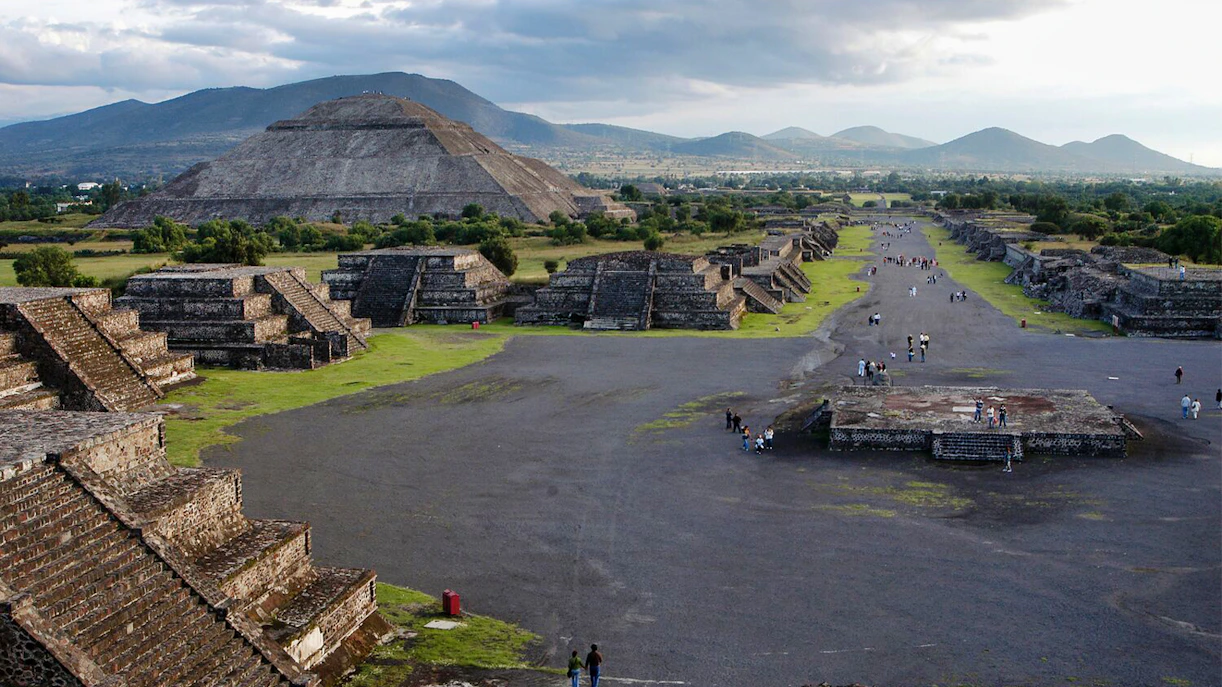
Climb to the top platform and look northwest down the Avenue of the Dead toward the Pyramid of the Moon and Cerro Gordo behind it; the staggered rooflines and causeway create the classic wide shot that most Teotihuacan pyramids tour from Mexico City itineraries build their schedule around. Stairs are steep and narrow, so pace yourself on the way up.
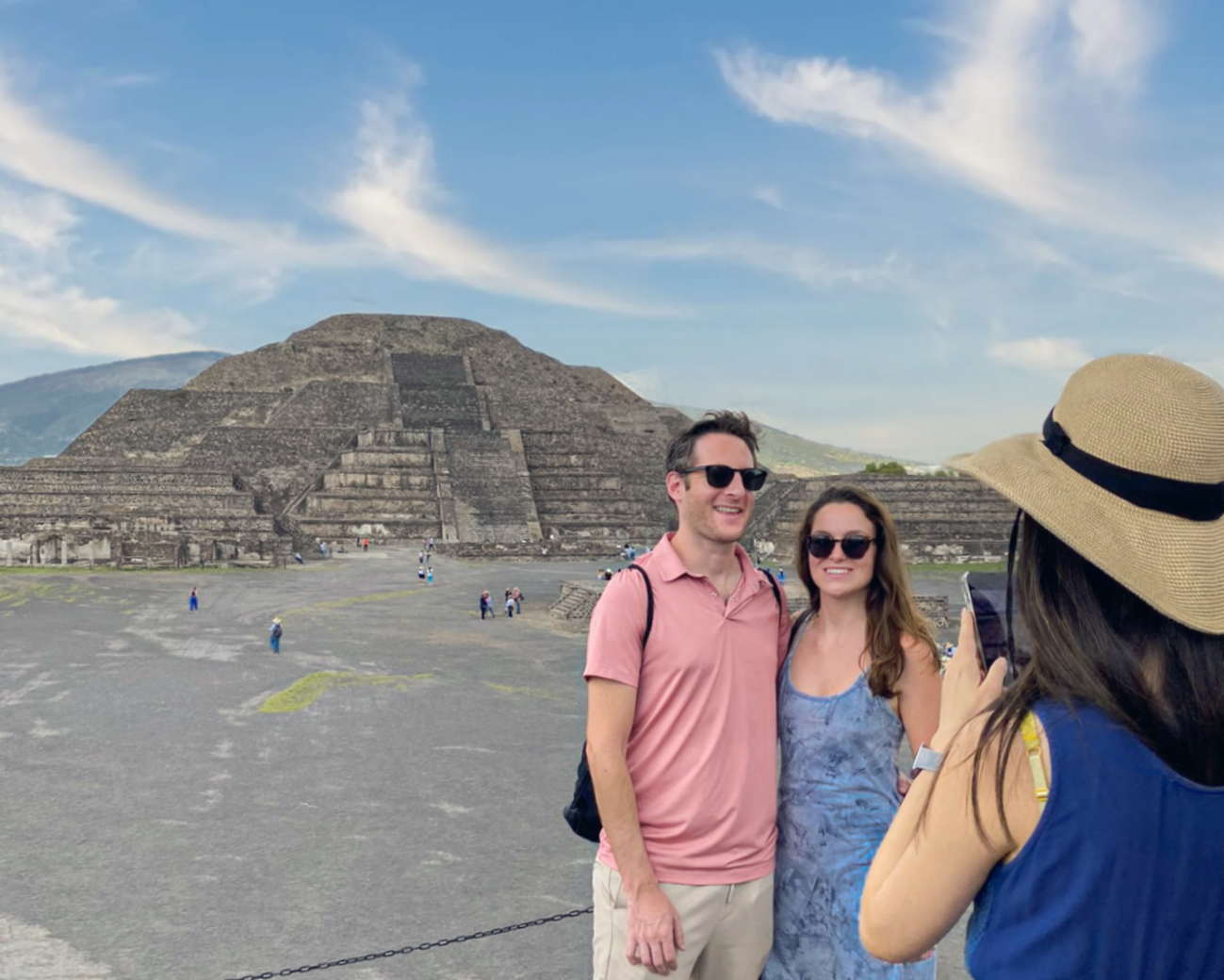
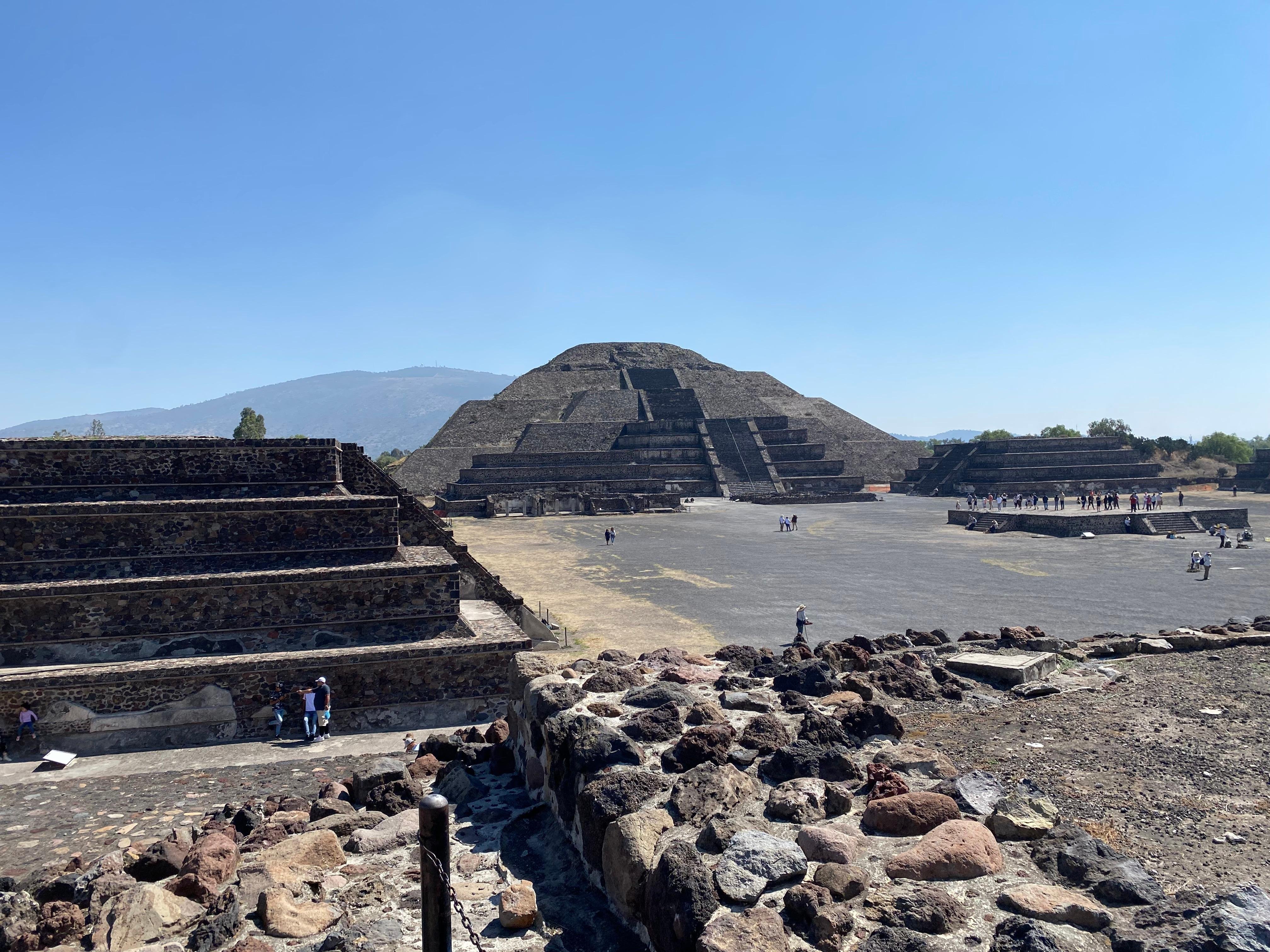
Stand at the base of the Pyramid of the Moon, near the small altar platform in the plaza, and frame back toward the Pyramid of the Sun with the surrounding platform mounds in the foreground. This spot gives a lower, more intimate angle than shooting from the Sun pyramid itself.
Inside this restored priestly residence beside the Pyramid of the Moon, carved stone pillars with quetzal-butterfly reliefs and faded mural fragments line a shaded patio, ideal for architectural detail and portrait shots. Light is softer here since the space is partially roofed.
Shoot straight down the central causeway from any of the raised platforms flanking it, using the receding line of ruins and distant pyramids for depth. Early light rakes across the stone and throws long shadows across the avenue.
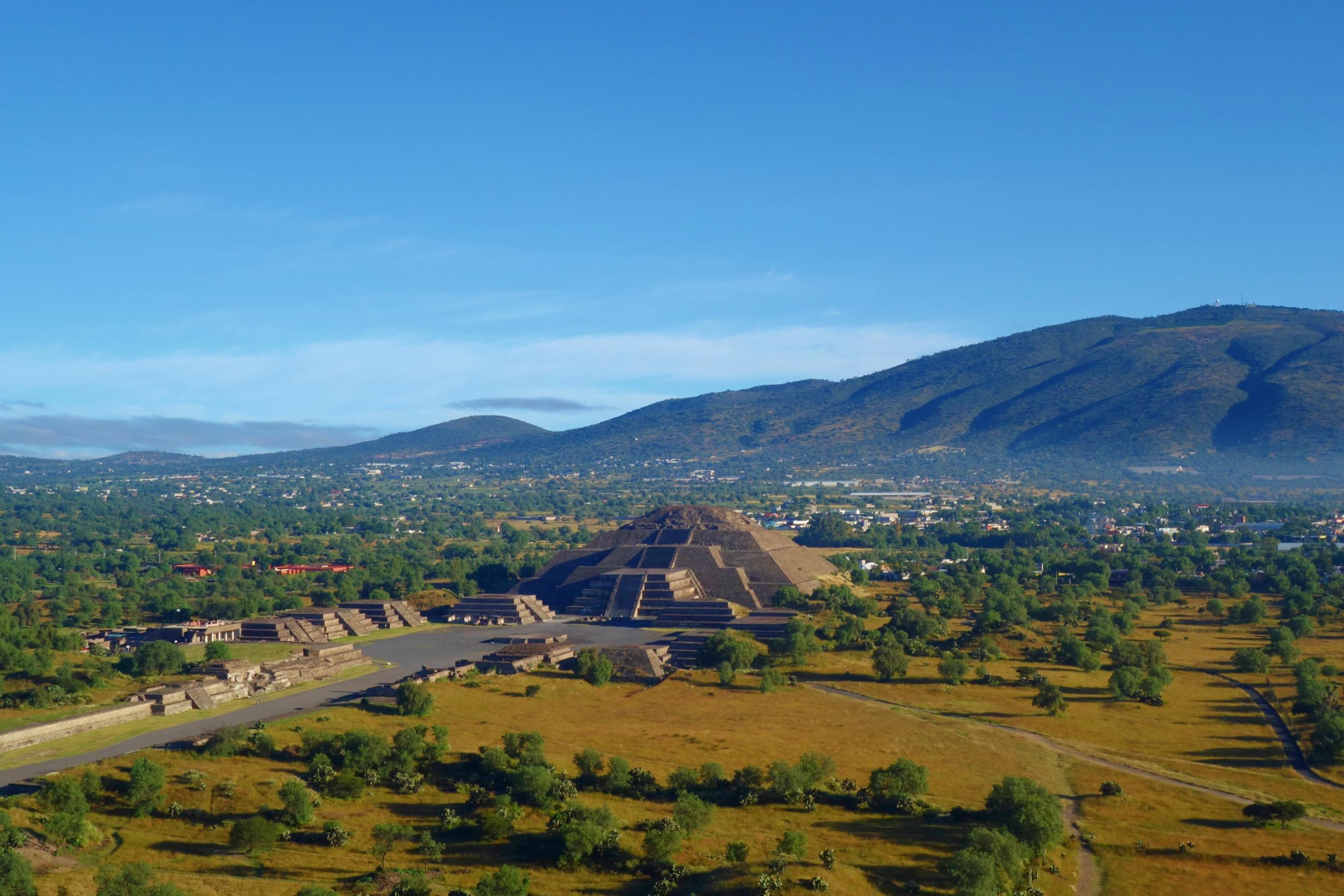
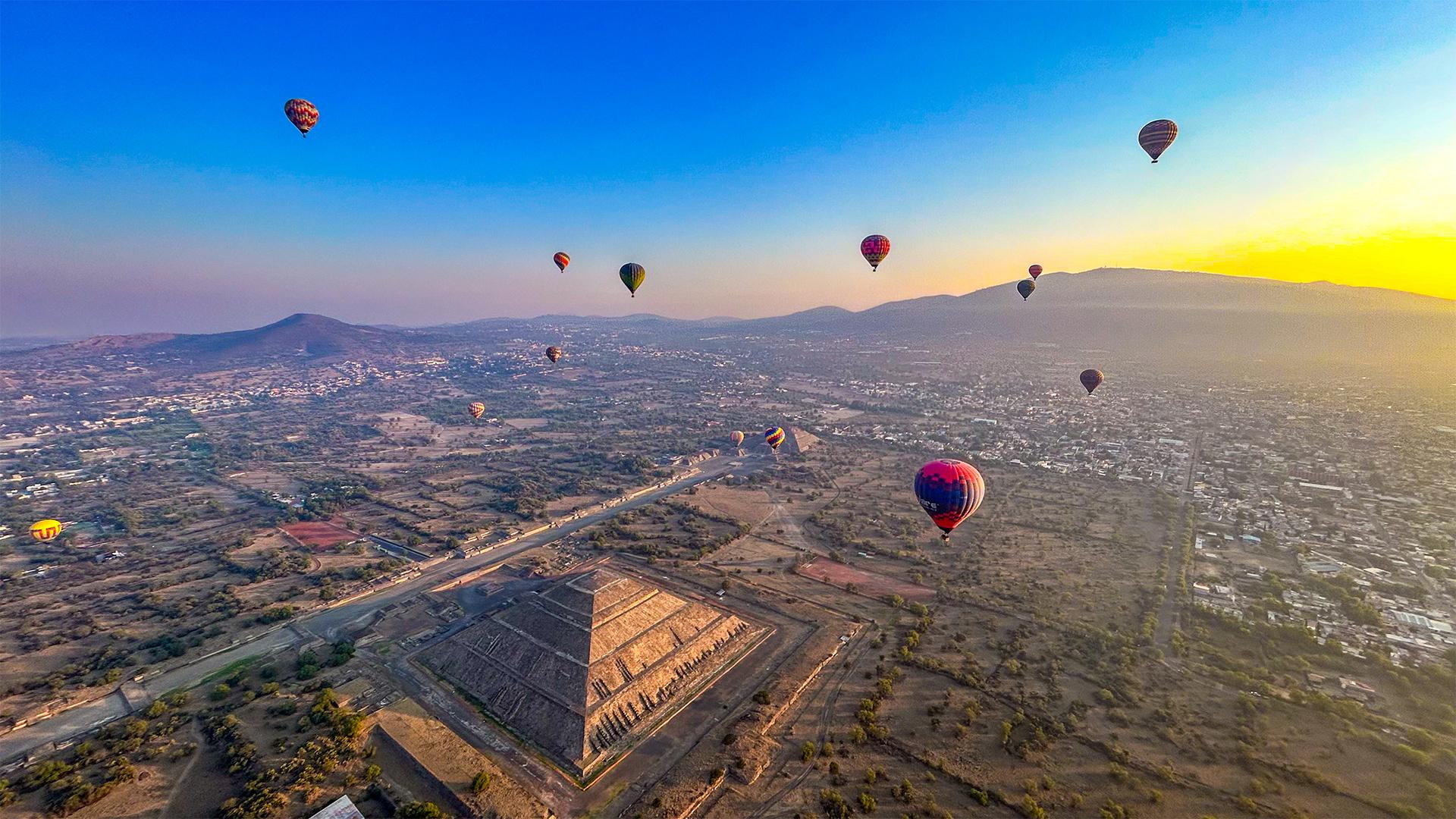
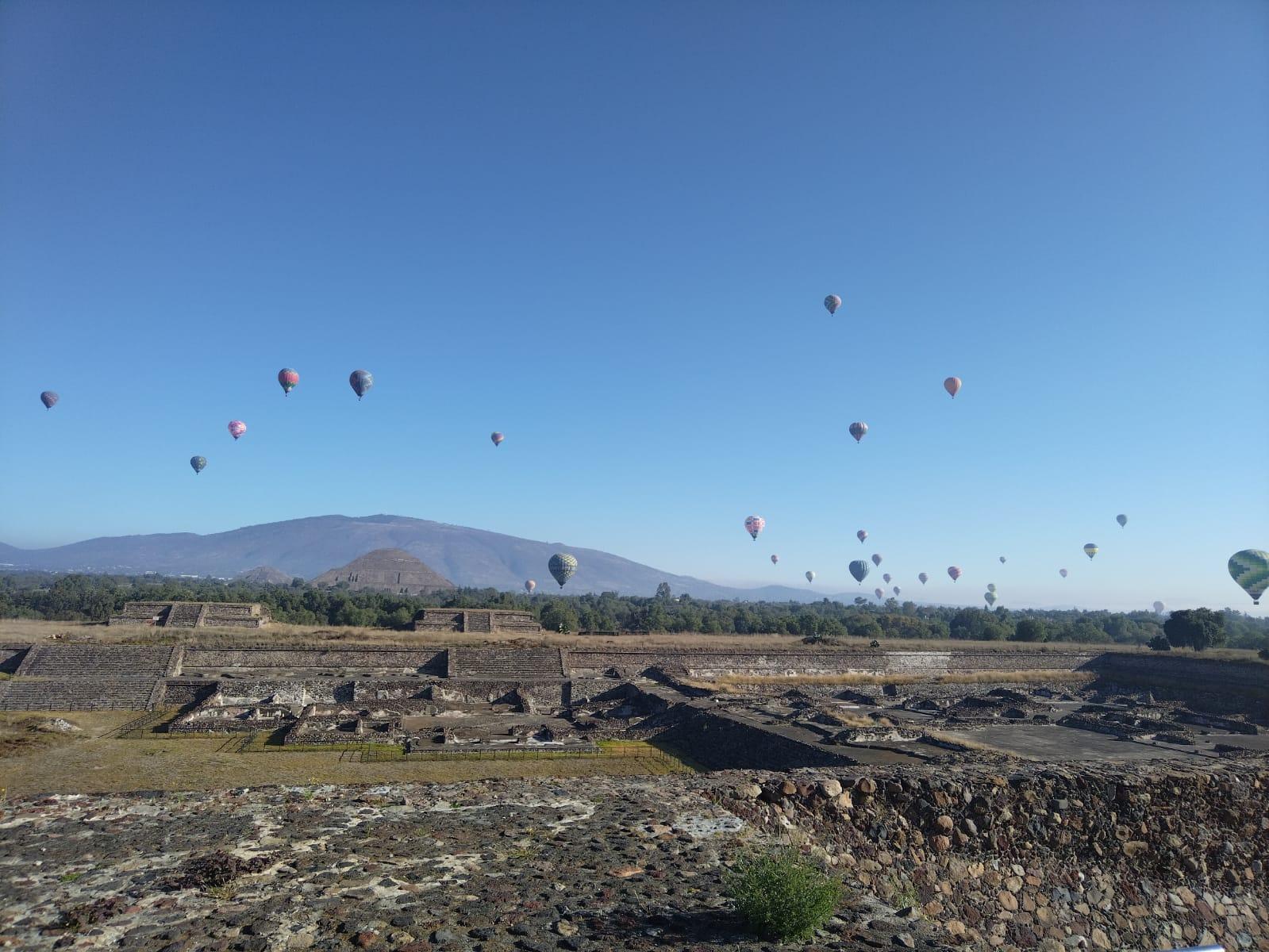
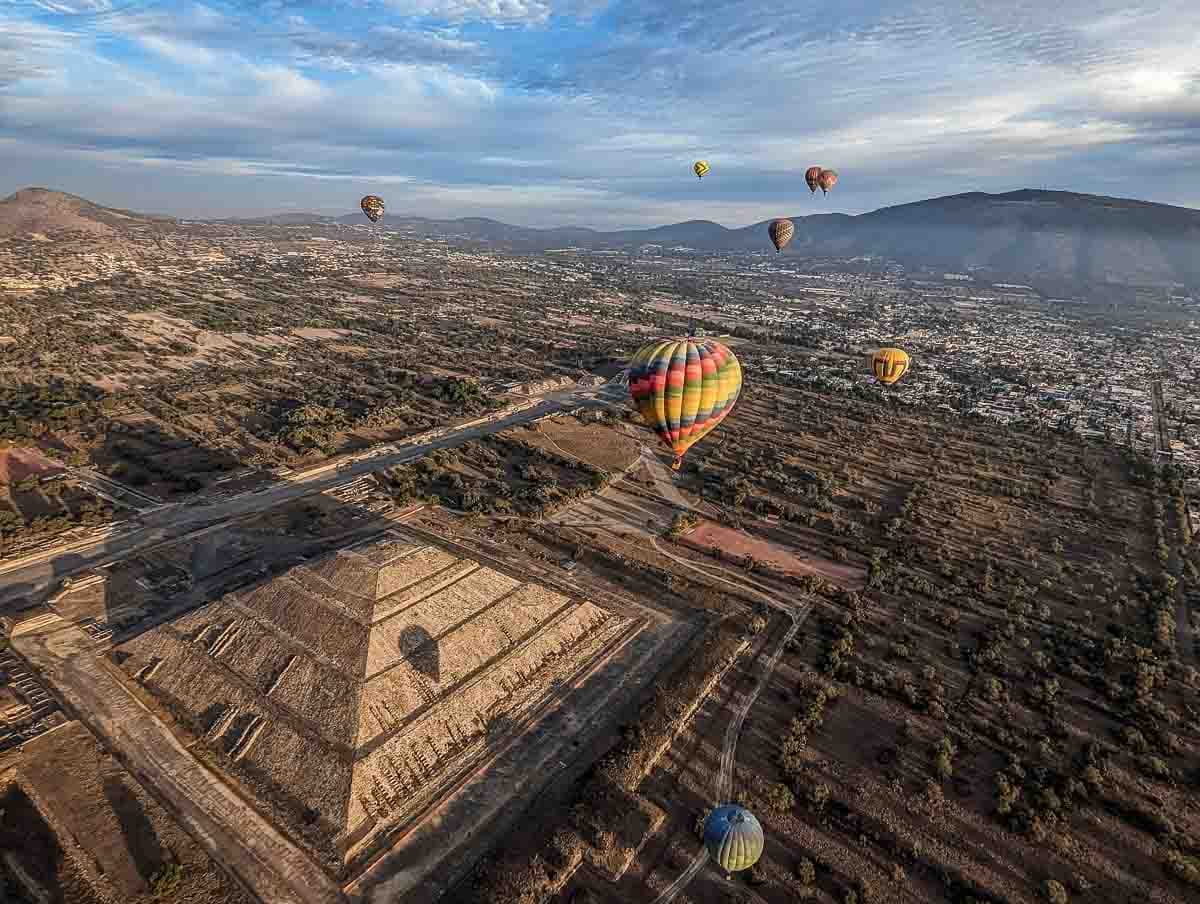
Several bookable balloon flights lift off from fields near the archaeological zone at dawn, giving an aerial view over both pyramids and the Avenue of the Dead against the Valley of Mexico. This is the only vantage point that captures the full site layout in one frame.
A teotihuacan pyramids tour from mexico city with children means uneven volcanic-stone paths, big open plazas, and long stretches without shade, so it works best for families who pace themselves and plan around a young explorer's energy rather than an adult's. Kids tend to enjoy the scale of the Avenue of the Dead more than any historical detail, which makes it a rewarding Mexico City pyramids tour for curious grade-schoolers.
The uneven stone terrain and steep pyramid steps make strollers impractical beyond the flat central avenue; a baby carrier is far more workable for toddlers who tire of walking. Sites near the Pyramid of the Sun require carrying little ones the last stretch.
Children around 6 and up generally handle the walking distance and heat better, since younger kids fatigue quickly on the open, shadeless site. Families with toddlers should treat this as a shorter, shaded-side visit rather than a full loop of both pyramids.
On-site restrooms exist near the main entrances, but baby-changing stations are limited, so pack a portable changing pad. Bring your own wipes and water, as facilities are basic compared to a modern museum setup.
Split the visit into short walking segments with shade breaks, since kids overheat faster than adults on the exposed avenue. Many family groups skip climbing both pyramids and focus energy on one, saving stamina for the walk back.
There are no formal dining areas inside the archaeological zone, so pack snacks and a refillable water bottle for restless kids between sights. Vendors near the exits sell simple snacks if you run out.
There is no indoor shelter along the main pyramid route, so a lightweight rain cover for the stroller or carrier and ponchos for kids are worth packing during unpredictable autumn weather.
Most visitors on a teotihuacan pyramids tour from mexico city either pack light snacks for the site or plan lunch for afterward, since options inside the archaeological zone are limited to the museum cafeteria. La Gruta, a cave restaurant a short walk from the Sun Gate entrance, and a handful of casual eateries in San Juan Teotihuacán town cover most sit-down needs, and several bookable tours already fold lunch or a home-cooked feast into the price.
Set inside a natural cavern near the east side of the site, known for mixiotes and grilled meats with live marimba music. Popular with tour groups at midday, so go early or late for a quieter table. Several packaged tours include this stop as their included lunch.
Basic sandwiches, snacks and drinks next to the on-site museum near the Pyramid of the Sun. Fine for a quick break between structures, not a full sit-down meal. Gets busy around midday when tour groups pause for water and shade.
Family-run spot in town serving Mexican comfort dishes like barbacoa and quesadillas. Quieter than the on-site options and a good choice if you are staying past closing time. Best suited to travelers with their own transport.
Casual terrace dining near the site entrance with a standard Mexican menu and cold drinks. Convenient for a post-visit meal without needing a car. Can fill up when multiple tour buses unload around the same time.
Todo lo que necesitas saber para tu viaje
The site opens daily at 08:00 and closes at 17:00, with last entry shortly before closing; most Teotihuacan pyramids tour from Mexico City departures aim for the 08:00–11:00 window to beat peak crowds and midday heat.
The Avenue of the Dead and museum areas are mostly flat, but the Pyramid of the Sun and Pyramid of the Moon have steep, uneven stone stairways that are not wheelchair or stroller accessible.
Drones, tripods without a permit, large backpacks or suitcases, alcohol, glass containers, and pets other than service animals are not allowed inside the site.
Personal, non-flash photography and video are permitted throughout the grounds; professional or drone filming requires prior authorization from INAH.
Weekday mornings in autumn tend to be quietest, while the March 21 spring equinox and major holiday weeks bring the largest crowds to any Teotihuacan pyramids tour from Mexico City.
Wear closed-toe walking shoes, breathable clothing, and a hat, since the pyramid staircases are steep and there is little shade across the open plazas.
Sealed bottled water and small snacks are allowed, but eating is restricted to designated shaded rest areas away from the monuments, and glass containers or alcohol are prohibited.
Autobuses Teotihuacán runs direct buses from Terminal Central de Autobuses del Norte in Mexico City, taking about 1 to 1.5 hours each way for a self-guided alternative to a booked tour.
Yes, though the roughly 240 steps up the Pyramid of the Sun can be demanding for young children, so families often pace the climb with rest breaks on the landings.
Most bookings allow free cancellation up to 24 hours before departure with a full refund, while the entrance fee itself is non-refundable once used.
The Temple of Quetzalpapálotl, the on-site museum, and the 16th-century Acolman Monastery are all within a short walk or drive of the main pyramids.
The general entrance fee is 210 MXN per foreign visitor, which includes access to the on-site museum.
A palace complex with carved pillars depicting the Quetzal-Butterfly deity, adjacent to the main plaza.
Houses artifacts, murals, and a scale model of the ancient city, included with the general entrance ticket.
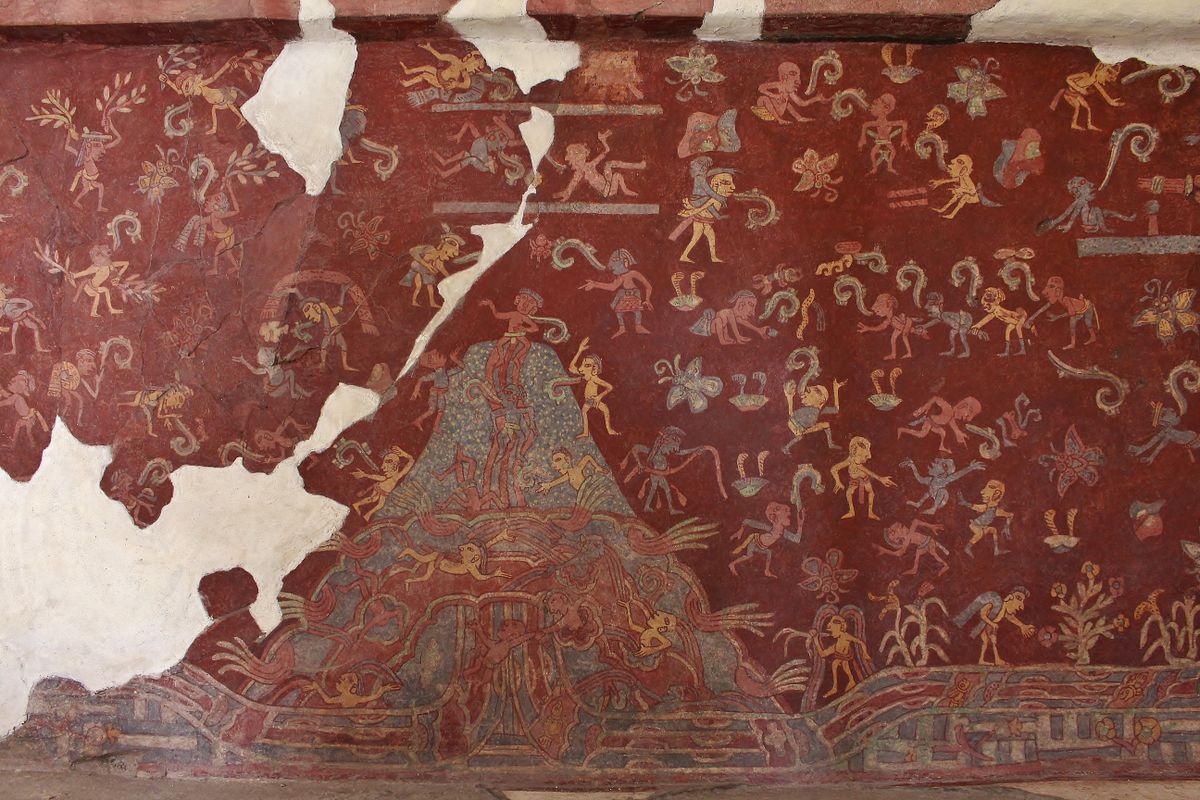
Known for the Tlalocan mural depicting a Teotihuacan paradise scene, though murals here are partial reproductions.
A 16th-century Augustinian monastery with an ornate stone facade, one of the earliest in the Americas.
A hotel with pyramid views located close to the site's main entrance road.
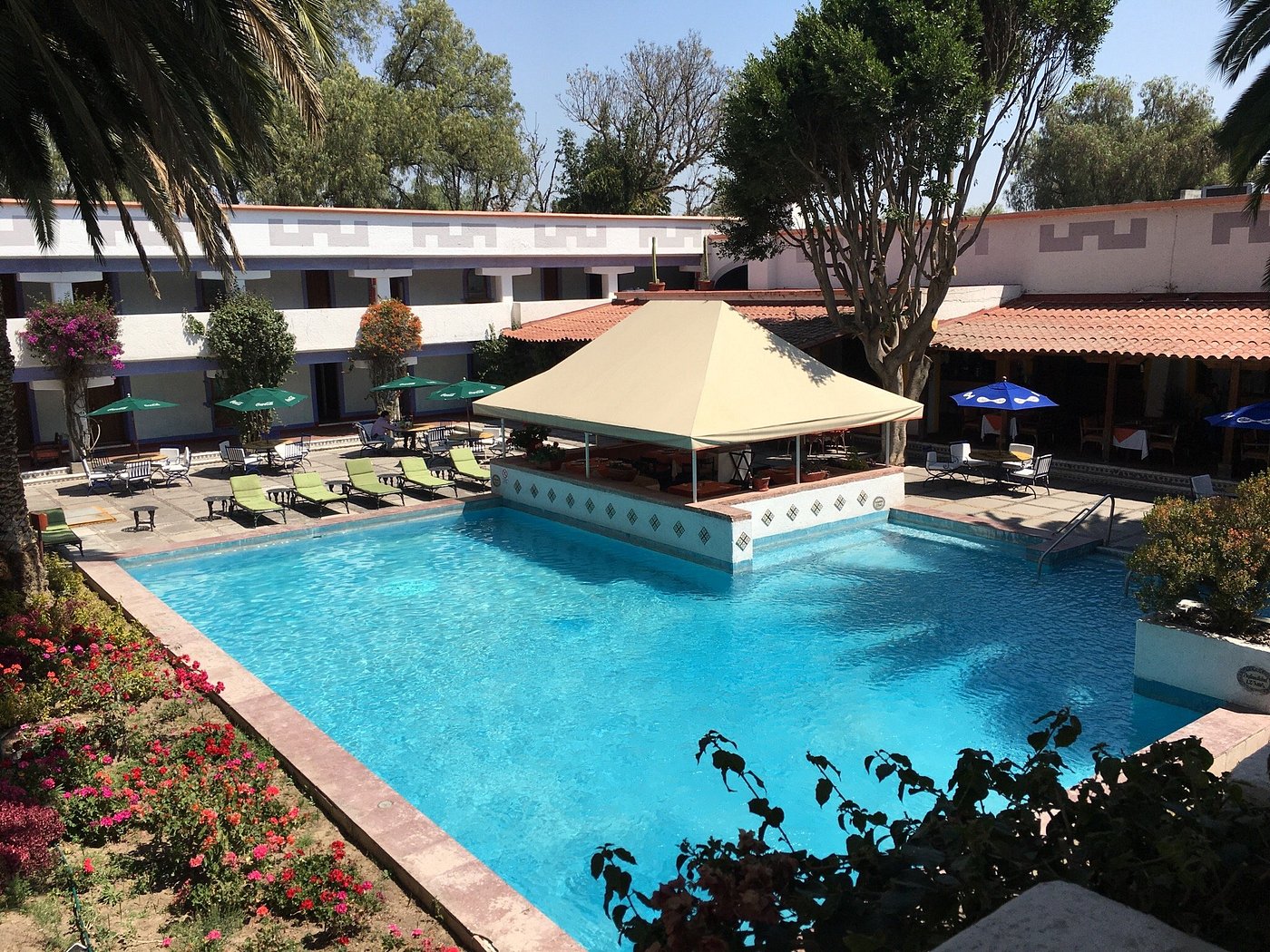
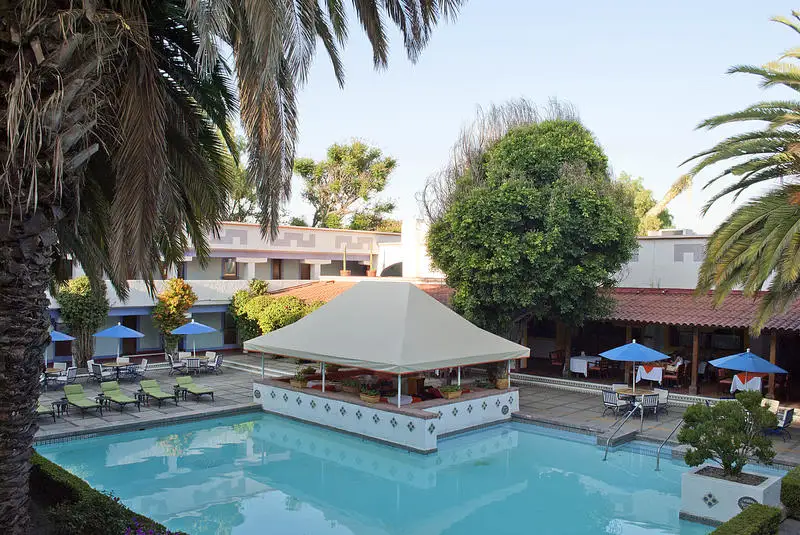
Long-established hotel near the site with a pool and on-site restaurant.
The nearest town offering budget guesthouses and small family-run inns.
Wide range of hotel tiers, most convenient for combining with a Teotihuacan pyramids tour from Mexico City departure.
Únete a miles de viajeros felices que han descubierto esta increíble experiencia
Reserva tu experiencia ahora