11 hr
Teotihuacan Hot Air Balloon Adventure with Pyramid Exploration
- Expert local guide
- Small group
- Skip-the-line access
- Free cancellation
Teotihuacan Hot Air Balloon Tours From Mexico City
Sunrise flight over ancient pyramids, then walk the Avenue of the Dead
Compare fares, pick the fit — all bookings are mobile-voucher and eligible for free cancellation where shown.
11 hr
6 hr 30 min
11 hr
| Experience | Duration | Rating | Skip-the-line | Guide | Small group | Free cancel. | Price | |
|---|---|---|---|---|---|---|---|---|
|
Guided Experience
Most popular
Teotihuacan Hot Air Balloon Adventure with Pyramid Exploration
|
11 hr | ★ 4.6 | ✓ | ✓ | ✓ | ✓ | €136 | Book → |
|
Guided Experience
Teotihuacan Hot Air Balloon Flight with Breakfast
|
6 hr 30 min | ★ 4.6 | ✓ | ✓ | ✓ | ✓ | €192 | Book → |
|
Guided Experience
Teotihuacan Balloon Flight & Guadalupe Basilica Tour
|
11 hr | ★ 5.0 | ✓ | ✓ | ✓ | ✓ | €227 | Book → |
Worth it for sunrise seekers and photographers
A teotihuacan tour from mexico city hot air balloon typically costs $130–180 USD per person, roughly 30× the 95 MXN INAH site entry fee you'd pay to visit the pyramids independently. What justifies that premium? You're paying for the pre-dawn balloon flight itself — a 45–60 minute drift over the Avenue of the Dead and the Pyramids of the Sun and Moon at sunrise — plus round-trip transport from Mexico City, breakfast, and often a toast with the pilot. Budget-conscious travelers who simply want to climb the pyramids can drive or bus in for under $10 total and explore at their own pace. But if aerial views of the ancient city and witnessing the volcanic valley bathed in golden light matter to you, the balloon experience delivers something the ground visit cannot. Teotihuacan hot air balloon tours from Mexico City bundle convenience (hotel pickup at 5 a.m., no navigation hassles) with access to restricted airspace above one of Mesoamerica's most iconic archaeological zones. Packages that add Guadalupe Basilica or tequila tastings push past $200 but stretch a half-day into a fuller cultural circuit.
Bottom line: Pay the premium if aerial photography and sunrise spectacle justify the cost; skip if you'd rather spend hours inside the ruins on foot.
Both experiences use the same pre-dawn window before the archaeological site's 09:00 gate opening, but a teotihuacan tour from mexico city hot air balloon puts you in the sky over the pyramids while the tequila-tasting tour keeps you on the ground with a guide; most first-timers who want the classic aerial view over the Avenue of the Dead pick the balloon.
|
Top pick Hot Air Balloon Flight |
Early Morning Pyramid Tour with Tequila Tasting | |
|---|---|---|
| What you see | Pyramids and valley from the air at sunrise | Pyramids at ground level with a guide |
| How you get there | Hotel pickup, van to launch field | Hotel pickup, van to site gate |
| Time of day | Pre-dawn liftoff, lands near sunrise | Early morning before 09:00 gate opening |
| Physical effort | Minimal — standing in a balloon basket | Moderate — walking and climbing pyramid steps |
| Duration | About 1 hour in the air, half-day with transport | Half-day, includes tequila tasting stop |
| Price tier | Higher — premium aerial experience | Mid-range — ground tour plus tasting |
| Best for | Photographers and first-time aerial views | Travelers wanting history plus a tasting stop |
| See tickets & prices |
Verdict: Choose the balloon flight for the sunrise-over-pyramids view and choose the tequila tour if you'd rather stay grounded, walk the site up close, and finish with a tasting.
Hand-picked experiences loved by thousands of travelers
8 hours
Free Cancellation
Beat the crowds at the legendary City of the Gods with expert-led exploration of ancient pyramids and temples
2 hours
Free Cancellation
Soar above ancient pyramids in a hot air balloon and toast your adventure with sparkling wine
9 hours
Free Cancellation
Journey through Mexico's spiritual and archaeological treasures on this comprehensive day trip from the capital
9 hours
Free Cancellation
Journey through Mexico's spiritual heart and ancient wonders on this comprehensive cultural expedition
10 hours
Free Cancellation
Journey through ancient pyramids, sacred pilgrimage sites, and layered history with authentic barbacoa lunch
5 hours 30 minutes
Free Cancellation
Drift above ancient pyramids at dawn in your own private basket, followed by champagne and breakfast
9 hours
Free Cancellation
Journey from Mexico City to trek volcanic landscapes, explore native wilderness, and savor market cuisine
11 hours
Free Cancellation
Journey through colonial heritage and ancient pyramids on this cultural exploration from Mexico City
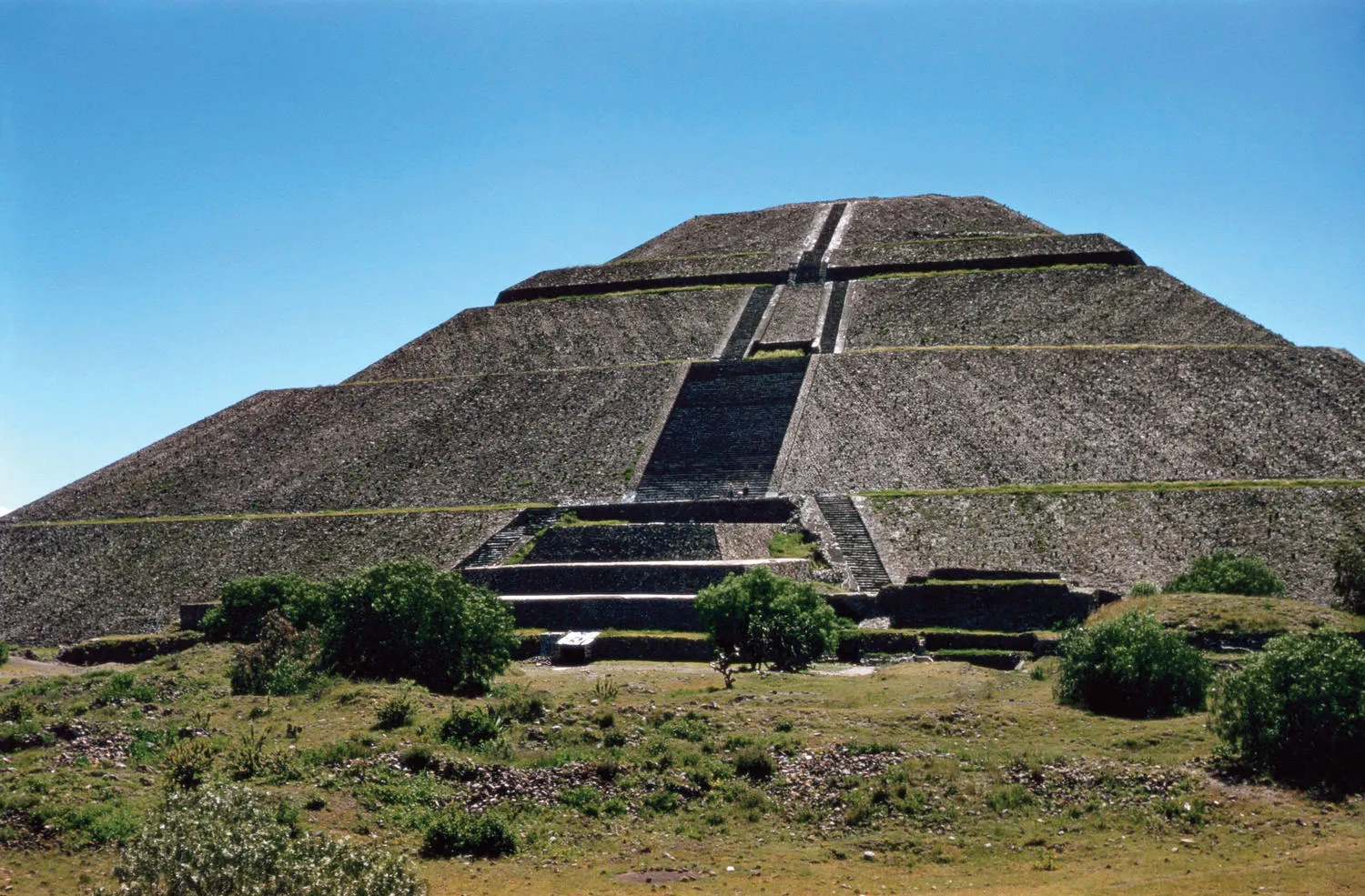
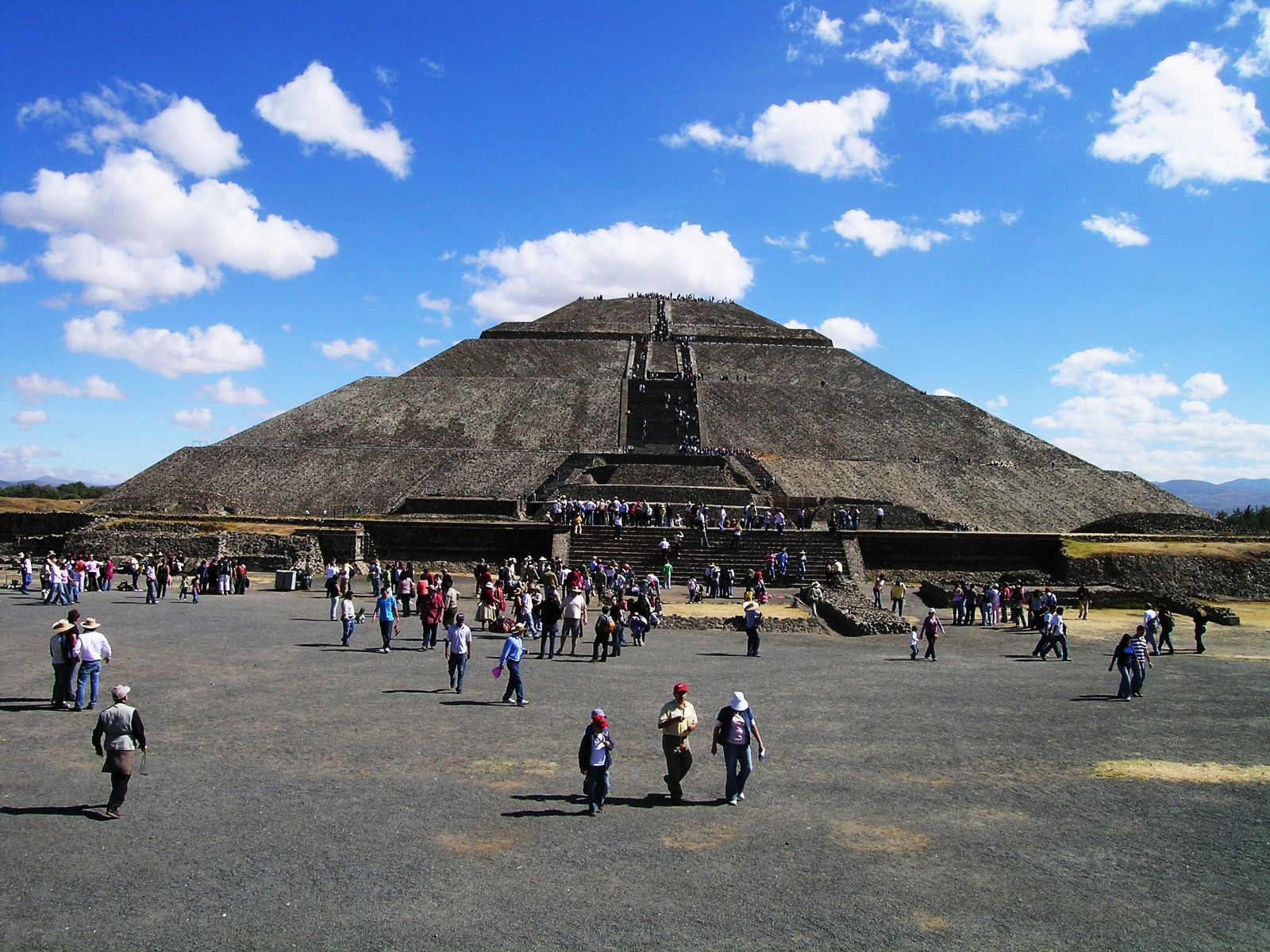
The third-largest pyramid in the world by base area, rising about 65 meters and built around 100 CE using an estimated 3 million tons of stone and rubble. Visitors can climb its steep staircase for a panoramic view often seen from balloon flights above.
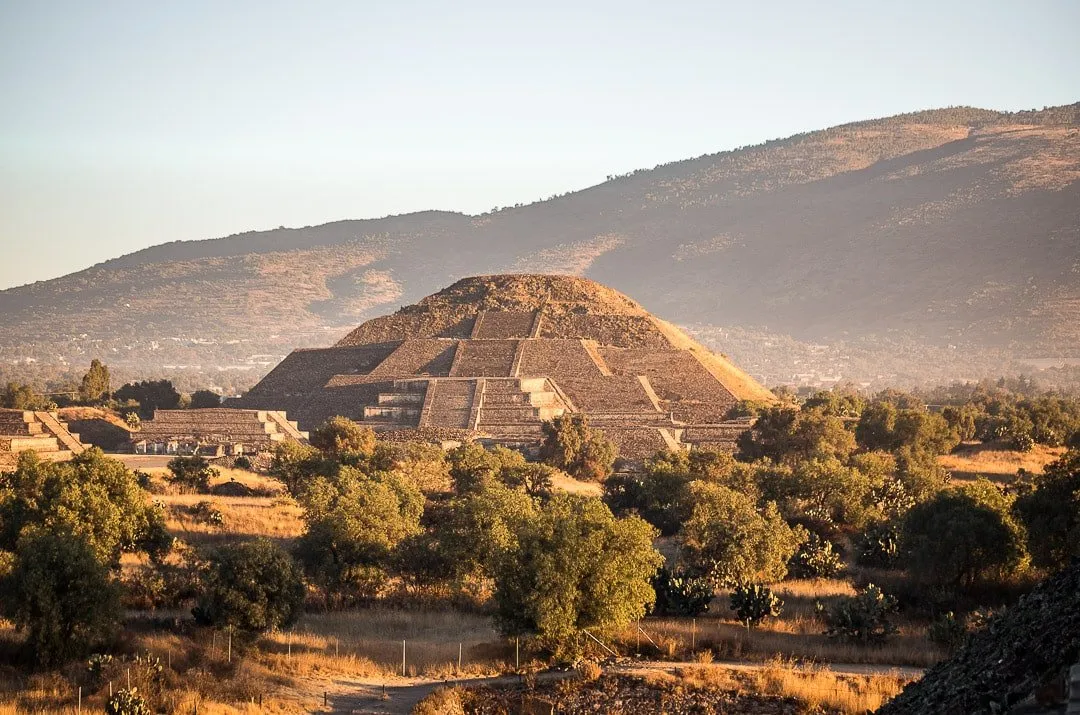
Smaller than the Pyramid of the Sun but positioned at a higher elevation, so its summit reaches a similar visual height, and it anchors the northern end of the Avenue of the Dead. Excavations beneath it revealed sacrificial burials linked to the city's founding rituals.
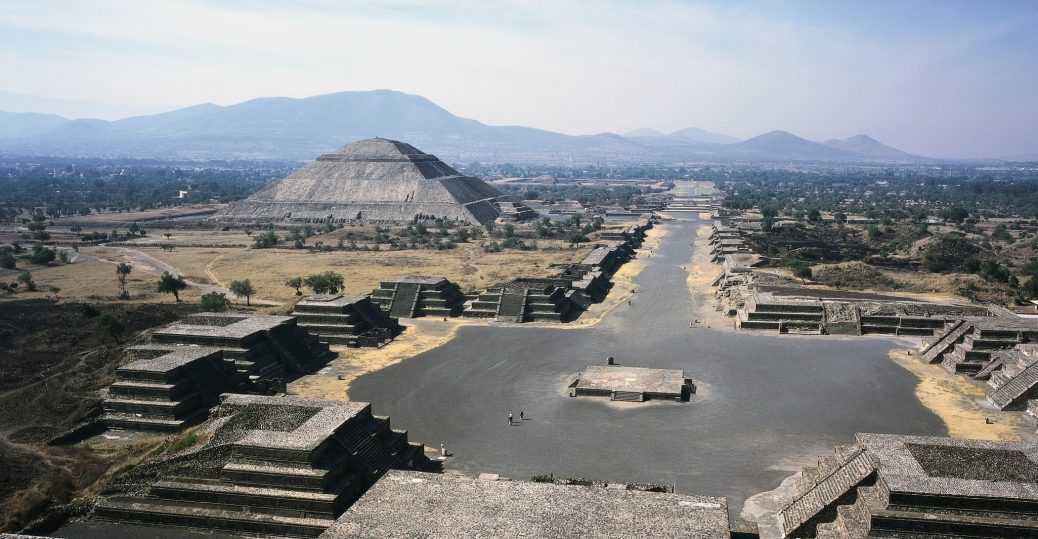
A roughly 2-kilometer ceremonial roadway connecting the site's major structures, originally lined with now-vanished platforms the Aztecs mistook for tombs, which gave the avenue its name. Hot air balloons frequently drift directly over this axis at sunrise.
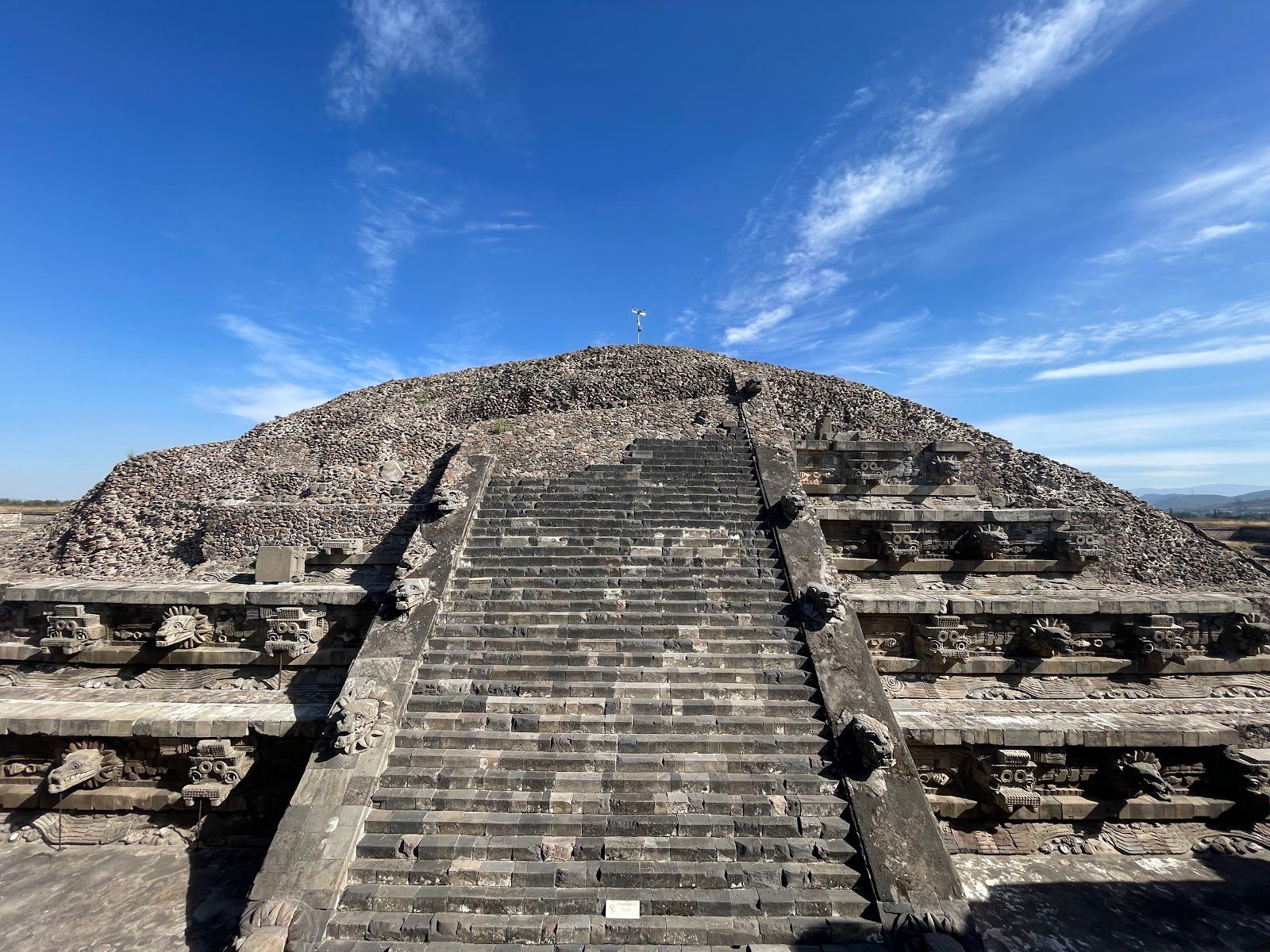
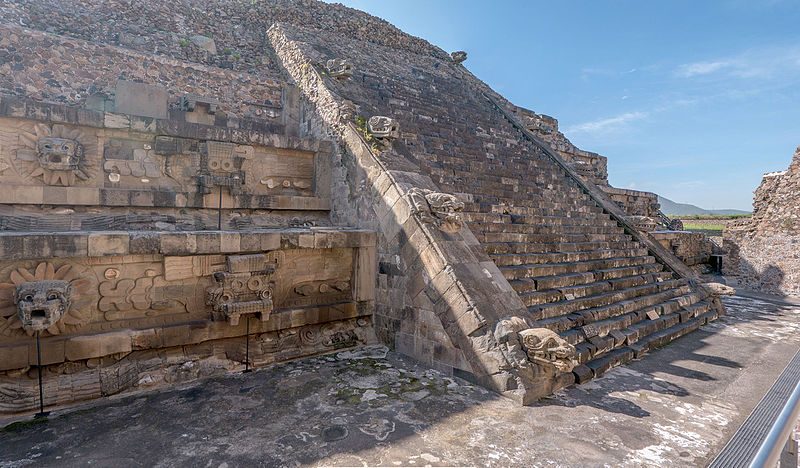
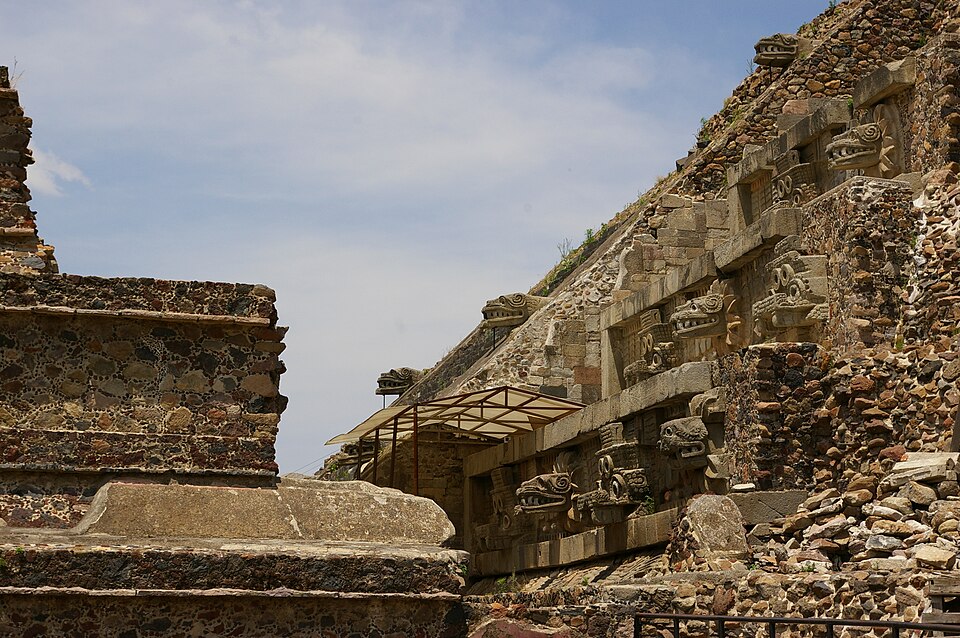
Located within La Ciudadela complex, this structure features carved stone heads of Quetzalcoatl alternating with a goggle-eyed rain deity, among the best-preserved sculptural facades at the site. Archaeologists have found over 200 sacrificial remains buried around its foundations.
A massive sunken plaza believed to have served as a civic and religious gathering space, capable of holding an estimated 100,000 people during ceremonies. It sits at the southern end of the Avenue of the Dead, opposite the Pyramid of the Moon's sightline.
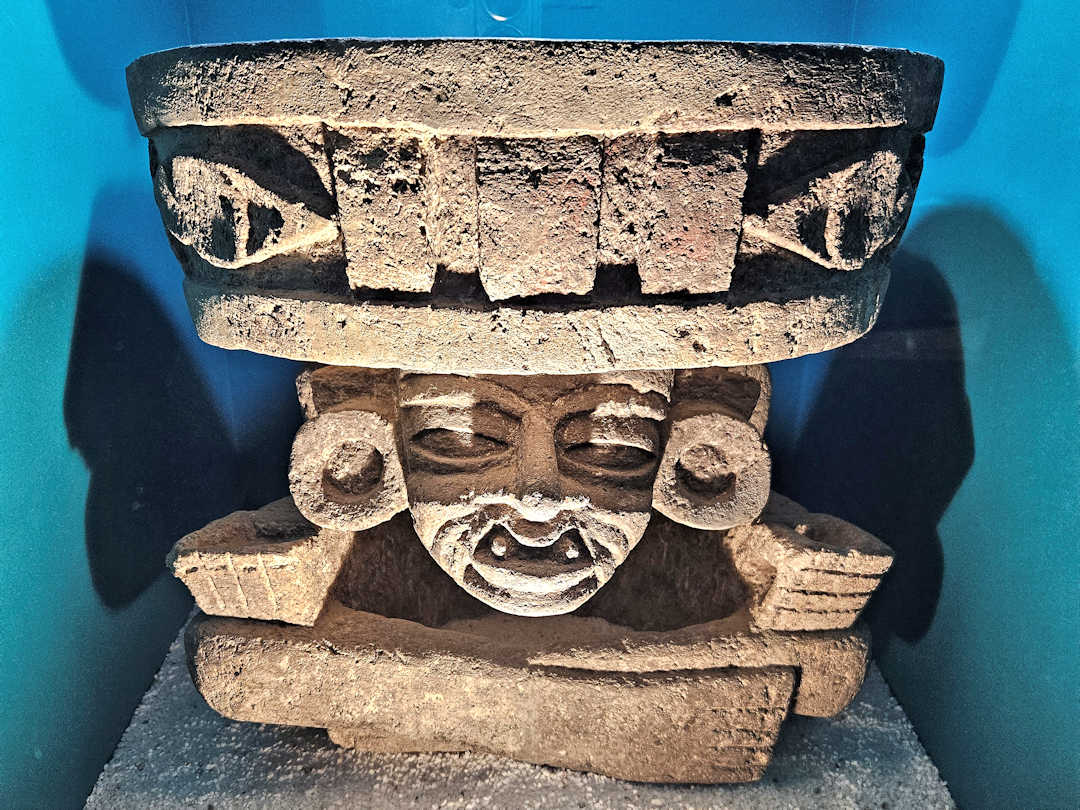
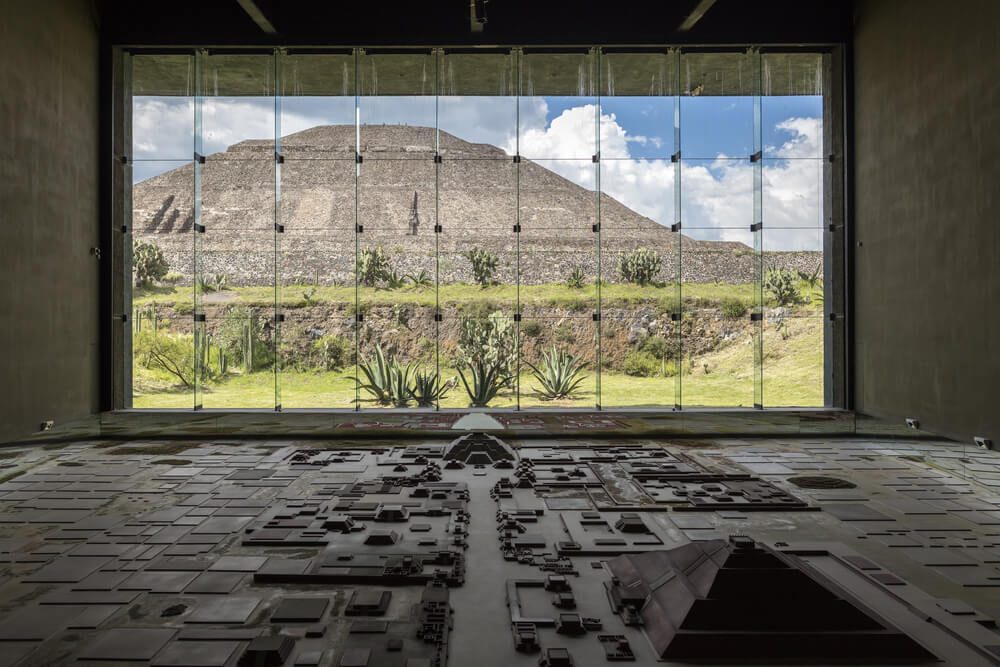
A compact on-site museum near the Pyramid of the Sun housing a large-scale model of the ancient city along with recovered ceramics, obsidian tools, and skeletal remains from excavations. It offers useful context before or after a balloon flight and pyramid climb.
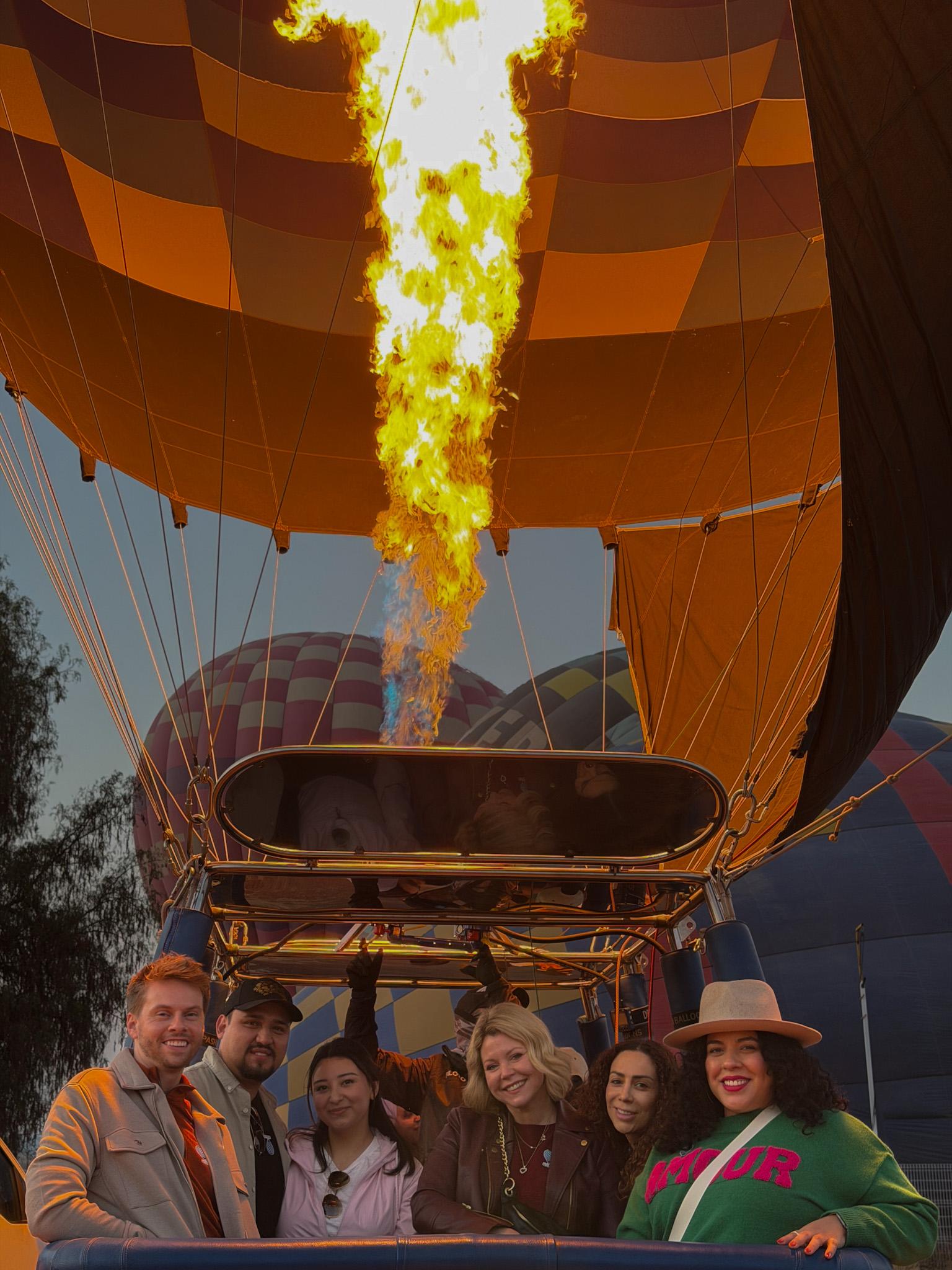
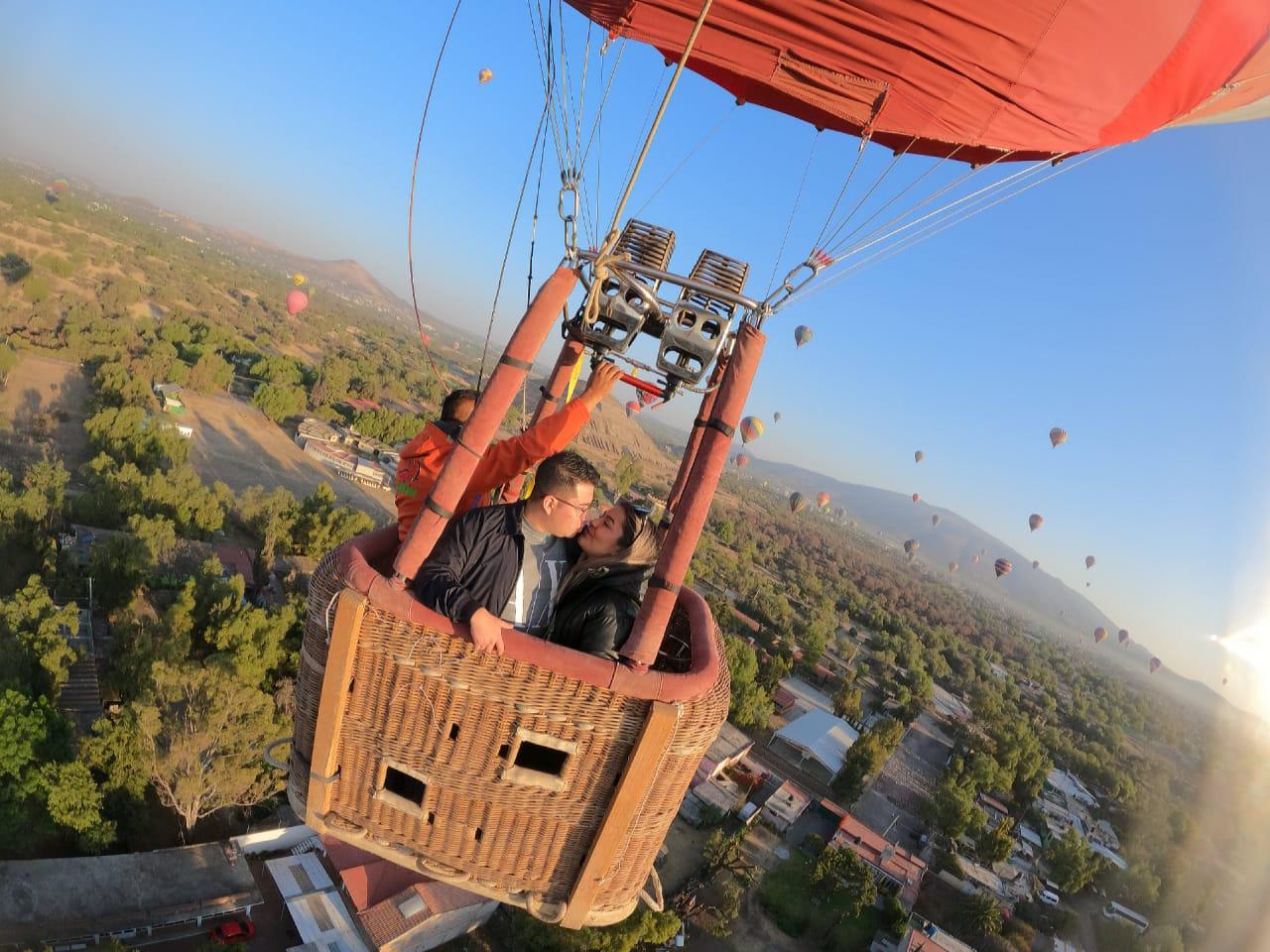
You leave Mexico City in darkness, reaching the launch field as ground crews inflate the balloon envelopes with roaring burners. At 06:30, you lift off — silent once the flame quiets — and the valley unfolds beneath you in the blue hour.
The Avenue of the Dead stretches two miles below, ruler-straight, with the Pyramid of the Moon anchoring the northern end. As the sun breaks the eastern sierra, the basket drifts west over the Pyramid of the Sun, its shadow a perfect staircase across the plaza. You land in a field outside the archaeological zone after 50 minutes. A van transfers you to the site entrance, which opens at 09:00. Your guide leads you up the Sun Pyramid's 248 steps — the climb takes 15 minutes — and the view from the platform reveals the grid you saw from the air now populated with tourists the size of ants. You descend and walk the Avenue of the Dead to the Moon Pyramid, pausing at the Palace of Quetzalpapalotl to see the stone columns carved with butterfly-bird hybrids. The Ciudadela and Temple of the Feathered Serpent close the route. By noon, you're back in the van, headed to Mexico City with a stop for pulque or mezcal tasting if the itinerary includes it.
All the details about your upcoming adventure in one place
Teotihuacan reached its zenith between 100 and 650 CE, when it housed 125,000 residents across eight square miles — larger than imperial Rome at the same moment. The city's grid runs 15.5 degrees east of north, aligned to the point where the sun sets on August 12, the Mesoamerican calendar date of cosmic creation.
The Pyramid of the Sun rises 216 feet in five tiers, its base nearly identical in perimeter to Egypt's Great Pyramid. Spanish chroniclers arrived in 1520 to find the site already abandoned for eight centuries; the Aztecs named it Teotihuacan, "place where the gods were created," because they believed the Fifth Sun was born here. Modern archaeology has revealed a cosmopolitan trade hub where Gulf Coast shells, Pacific jade, and Guatemalan cacao converged, and where residential compounds bore murals in cinnabar, malachite, and Maya blue.
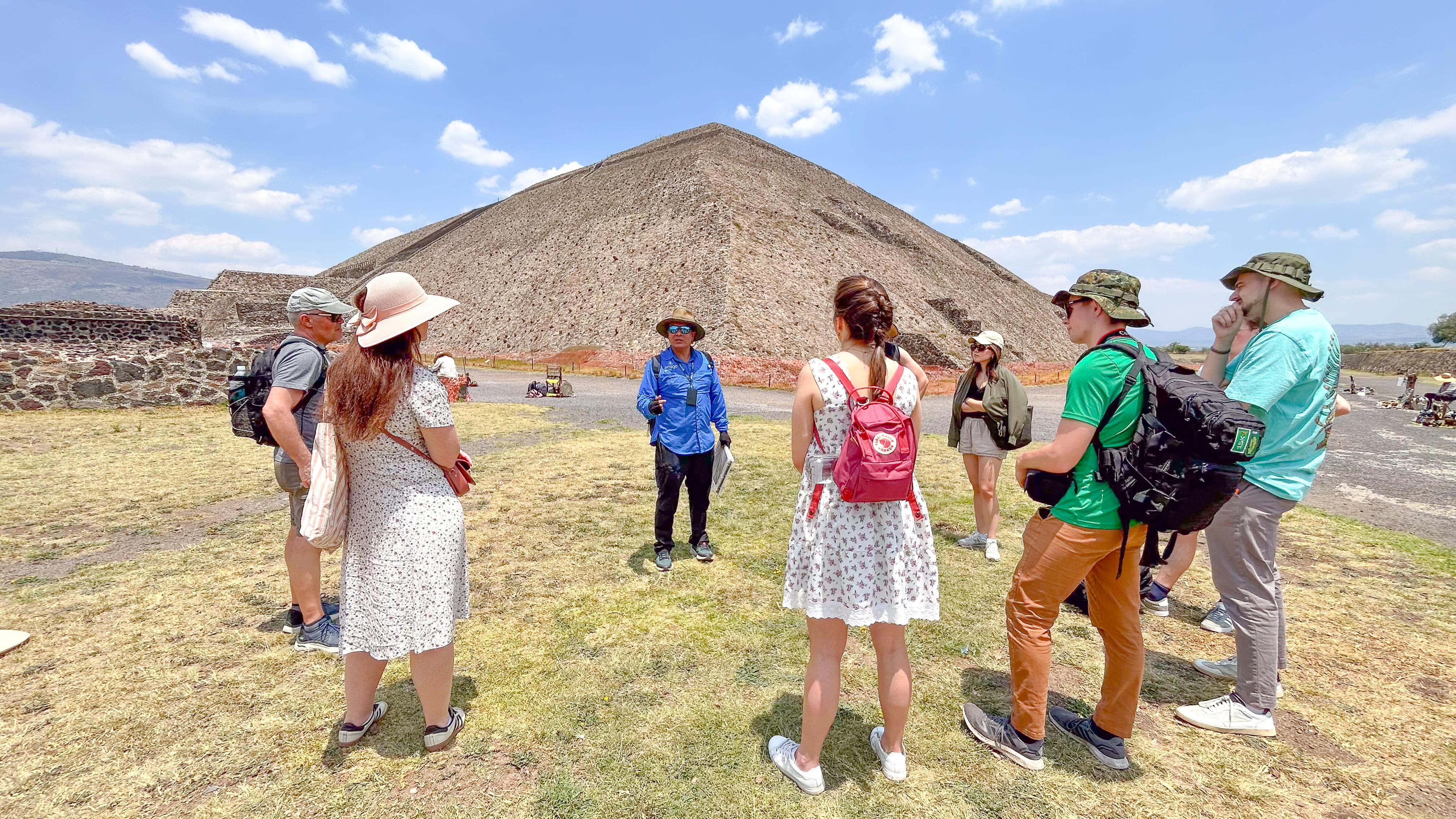
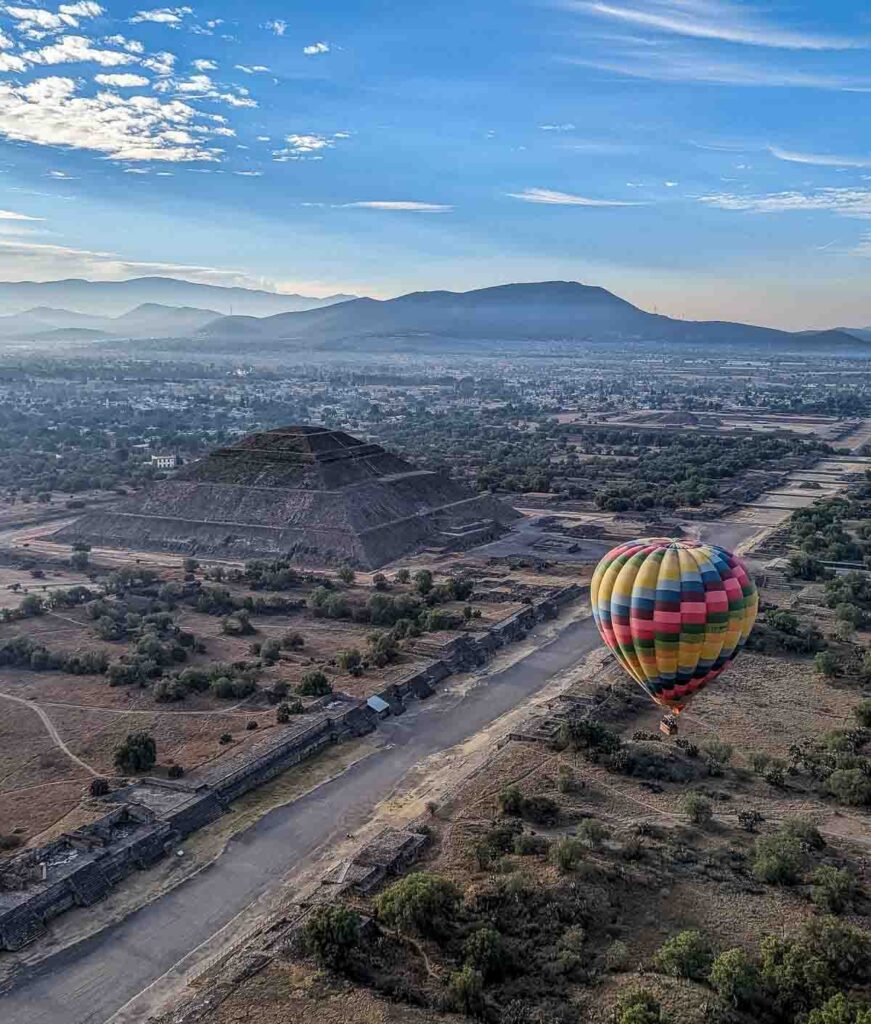
A teotihuacan tour from Mexico City hot air balloon opens the site from an angle its builders never saw — drifting a thousand feet above the Avenue of the Dead as the valley floor emerges from pre-dawn shadow. Basket flights launch between 06:00 and 07:00, depending on wind, and last 45 to 60 minutes. Pilots track the axis of the ceremonial avenue, giving passengers an unobstructed view of the Pyramid of the Moon at the northern terminus, the Ciudadela complex to the south, and the sprawl of unexcavated platforms stretching into farmland. After landing, most itineraries include guided access to the archaeological zone itself — the 95 MXN INAH conservation fee grants entry to all three major pyramids, the Palace of Quetzalpapalotl, and the Temple of the Feathered Serpent. Guides interpret the iconography of jaguar murals, explain the talud-tablero architectural style unique to Teotihuacan, and recount the city's mysterious collapse. Some packages add breakfast in a local cave restaurant or a stop at a family-run obsidian workshop, where artisans demonstrate the blade-knapping techniques that made Teotihuacan's green obsidian a currency across Mesoamerica. The combined experience spans five to eight hours, returning to Mexico City by midday.
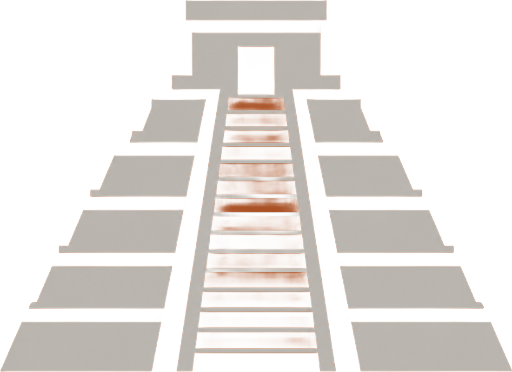
The city's grid runs 15.5 degrees east of north, aligned to the point where the sun sets on August 12, the Mesoamerican calendar date of cosmic creation.
Layered clothing is essential since a teotihuacan tour from mexico city hot air balloon departs before sunrise when temperatures can drop below 10°C, then warms quickly once the sun rises over the pyramids. Closed-toe walking shoes are recommended for climbing the steep stairs of the Pyramid of the Sun after the flight.
Balloon operators limit onboard items to small bags that can be securely stowed during flight and landing. At the archaeological site itself, bags are subject to visual inspection at the entrance gates before you access the Avenue of the Dead.
Photography and video are permitted throughout the balloon flight and across the Teotihuacan site for personal use. Drones and professional tripod setups require separate INAH authorization and are not part of standard balloon tour permits.
Most balloon operators set a minimum age, commonly around 6-8 years old, and require an accompanying adult for children on board. Stroller access is impractical on the balloon field and around the pyramid staircases.
The balloon launch field and landing zones involve walking on uneven grass or dirt, which limits accessibility for wheelchair users. Within the archaeological zone, the Avenue of the Dead is relatively flat, but the Pyramid of the Sun and Pyramid of the Moon require climbing steep, narrow stone stairs with no elevator alternative.
A light breakfast, often including sparkling wine or champagne, is typically served after landing as part of the balloon package. Outside food and drink brought from home is generally allowed in the site's outdoor areas, but there are no coolers or glass bottles permitted onto the balloon itself.
Slightly quieter midweek
Busiest day, balloon operators sell out early
Popular with domestic visitors
Site hours
09:00–17:00 daily, balloon flights launch before sunrise
Opening hours
09:00 – 17:00
Getting there
City-center access via metro and bus
Accessibility
Most experiences are wheelchair-friendly — check individual tours
What to bring
Comfortable shoes, water, phone for mobile voucher
Car · 1h · Toll roughly 50-90 MXN
Self-drive from Mexico City takes about 1 hour via the Mexico-Teotihuacan highway (México 132D), with paid parking available near the site gates.
Most teotihuacan tour from mexico city hot air balloon bookings allow free cancellation up to 24-48 hours before the scheduled flight, subject to the operator's specific window, since balloon launches depend on wind and visibility. The INAH archaeological site fee of 95 MXN per person is paid separately at the gate and is not part of the balloon tour refund.
Recommended time
Half a day
A teotihuacan tour from mexico city hot air balloon typically starts with pre-dawn pickup around 4:30-5:00 AM so the balloon launches before sunrise, landing in time to reach the archaeological zone close to gate opening at 09:00. Plan roughly 2.5 to 3 hours on the ground among the pyramids if you arrive in the 09:00-10:30 window, since that's when INAH staff outnumber tour buses and the Pyramid of the Sun queue stays short. Full-day variants that add breakfast, a guide-led walk to the Pyramid of the Moon, and transfer time back to the city run 8 to 11 hours door-to-door. Add 30-45 minutes if you want unhurried time at the Ciudadela without rushing back to the parking area.
Weather · crowds · average price — dots go green to amber to red as each metric rises.
Cooler mornings around 8-14°C favor stable balloon conditions, with clearer skies typical in October and November. Crowds are moderate compared to peak winter holidays.
Reserve your teotihuacan tour from mexico city hot air balloon several days ahead since flights depend on weather and spots fill quickly on weekends.
Near San Juan Teotihuacán, State of Mexico
Exact field location shared by operator night before flight
Get directionsTeotihuacan emerged around 100 BCE in the Basin of Mexico, growing into one of the largest cities in the ancient world by 450 CE, with a population exceeding 125,000. The city's architects oriented the urban grid 15.5 degrees east of astronomical north, aligning the Avenue of the Dead with the setting of the Pleiades. Construction of the Pyramid of the Sun began around 200 CE, requiring an estimated 3 million tons of stone and adobe brick to reach its final height of 65 meters. The pyramid's base measures 225 meters per side, making it the third-largest pyramid in the world. Archaeological excavations in 1971 revealed a cave beneath the structure, likely considered a sacred entrance to the underworld. The Pyramid of the Moon, completed around 250 CE, anchored the northern end of the ceremonial avenue and served as the stage for elaborate rituals. Excavations between 1998 and 2004 uncovered multiple burial chambers containing sacrificial remains, jaguar skeletons, and obsidian blades. The city controlled obsidian mines and trade routes across Mesoamerica, exporting its volcanic glass from workshops concentrated near the Avenue of the Dead. Teotihuacan's influence extended to distant Maya cities, evident in architectural styles and ceramic designs found at Tikal and Copán. A teotihuacan tour from mexico city hot air balloon reveals the vast urban layout that once housed neighborhoods segregated by craft and ethnicity. The city collapsed between 550 and 650 CE under circumstances that remain disputed. Evidence of intentional burning along the Avenue of the Dead suggests internal revolt, possibly triggered by drought or resource depletion. By 750 CE, the ceremonial core lay abandoned, though small populations persisted in outlying areas. When the Aztecs discovered the ruins eight centuries later, they named it Teotihuacan, meaning "birthplace of the gods," believing it was where the current sun and moon were created. Modern balloon flights at dawn recreate the celestial perspective that shaped the city's cosmology, as pilots launch near the eastern horizon where Teotihuacan's architects observed solar alignments that governed their monumental construction.
Settlement begins in the Basin of Mexico, establishing the foundation for urban growth
Construction of the Pyramid of the Sun commences, eventually consuming 3 million tons of material
The Pyramid of the Moon is completed at the northern terminus of the Avenue of the Dead
Teotihuacan reaches its demographic peak with over 125,000 inhabitants across 20 square kilometers
The city collapses amid evidence of burning and abandonment along major ceremonial structures
Aztec explorers encounter the ruins and name the site Teotihuacan, the birthplace of the gods
Mexican government begins systematic excavation and partial restoration of the pyramid complex
UNESCO designates Teotihuacan a World Heritage Site for its urban planning and cultural influence
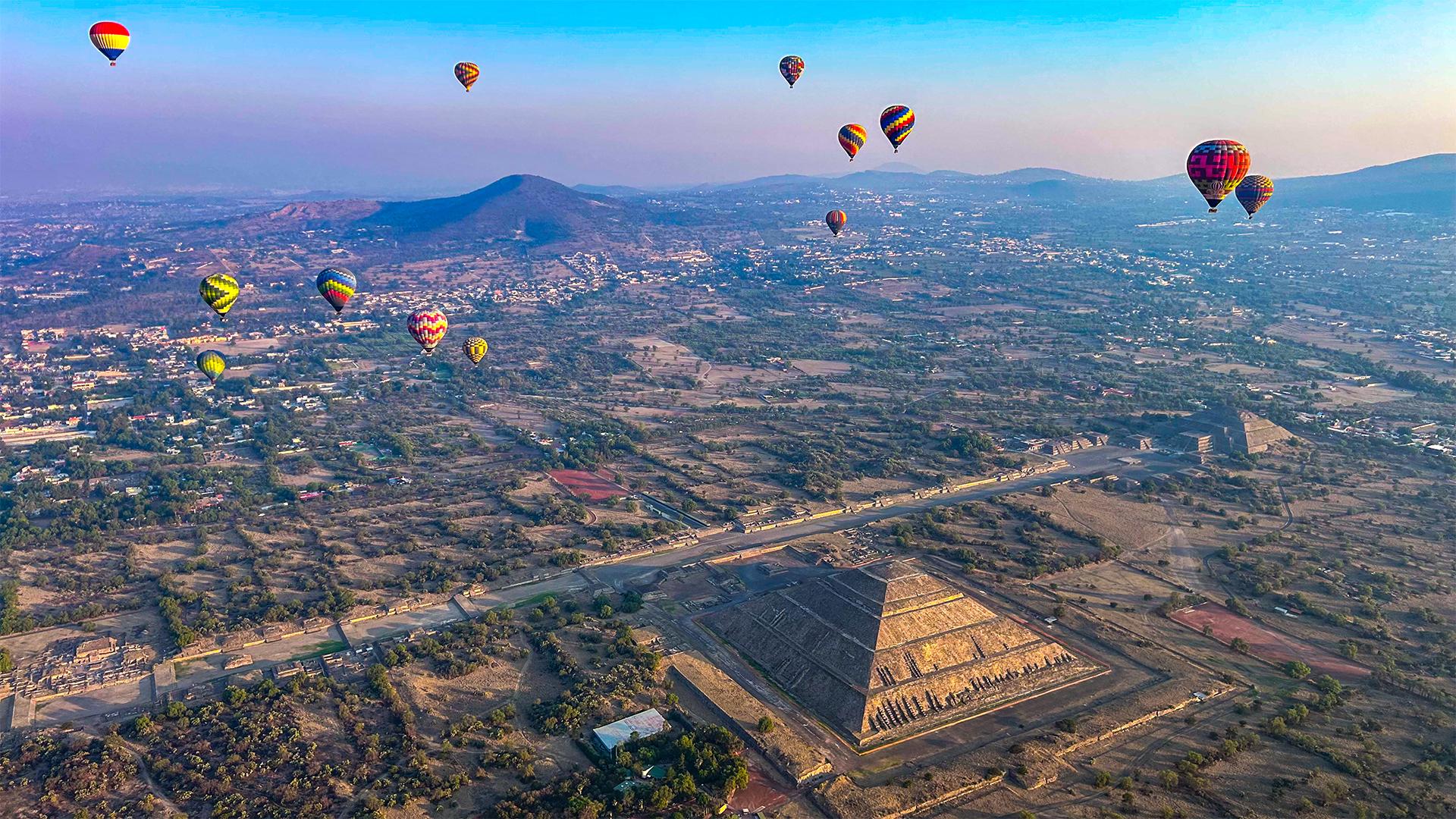
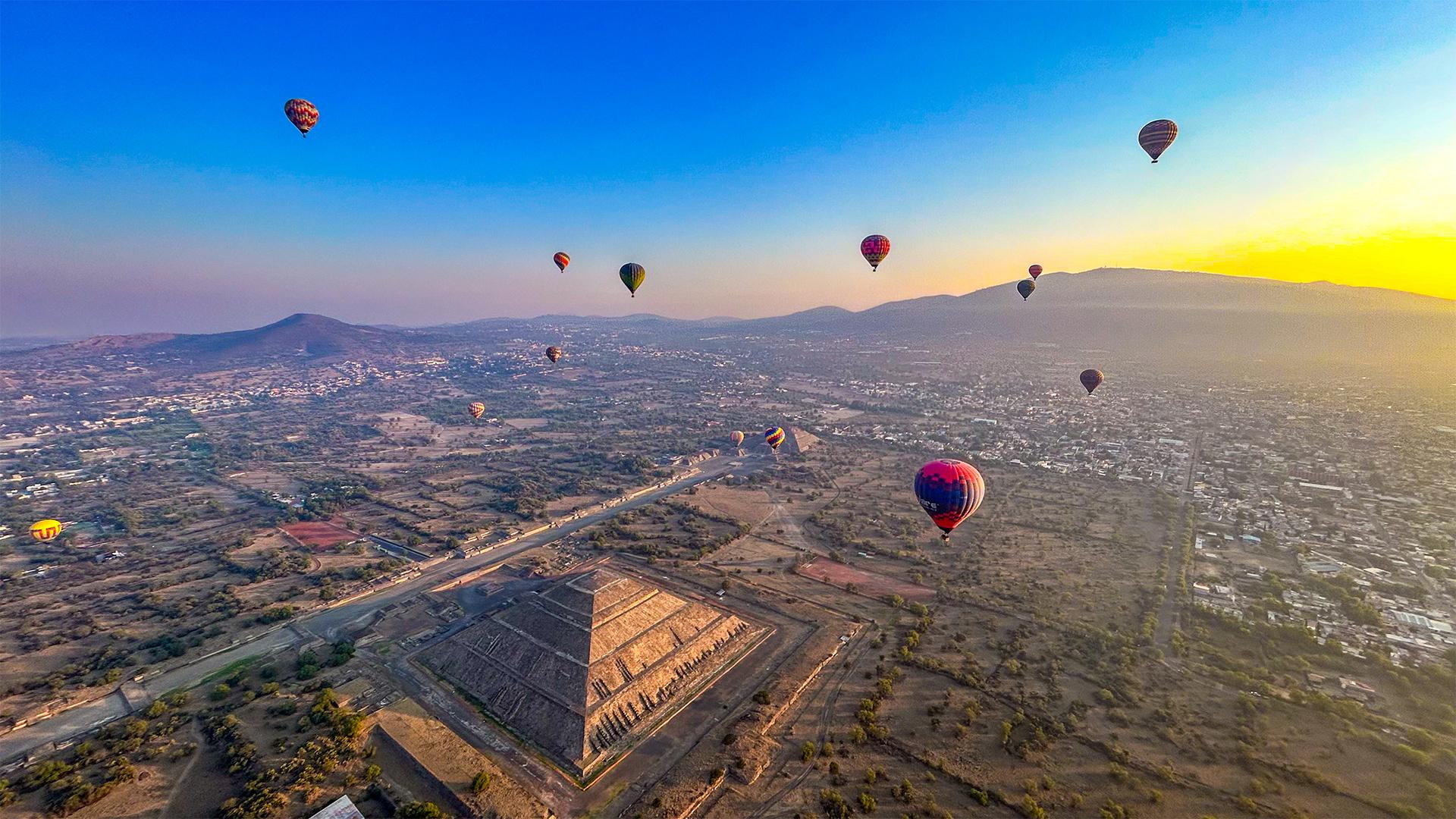
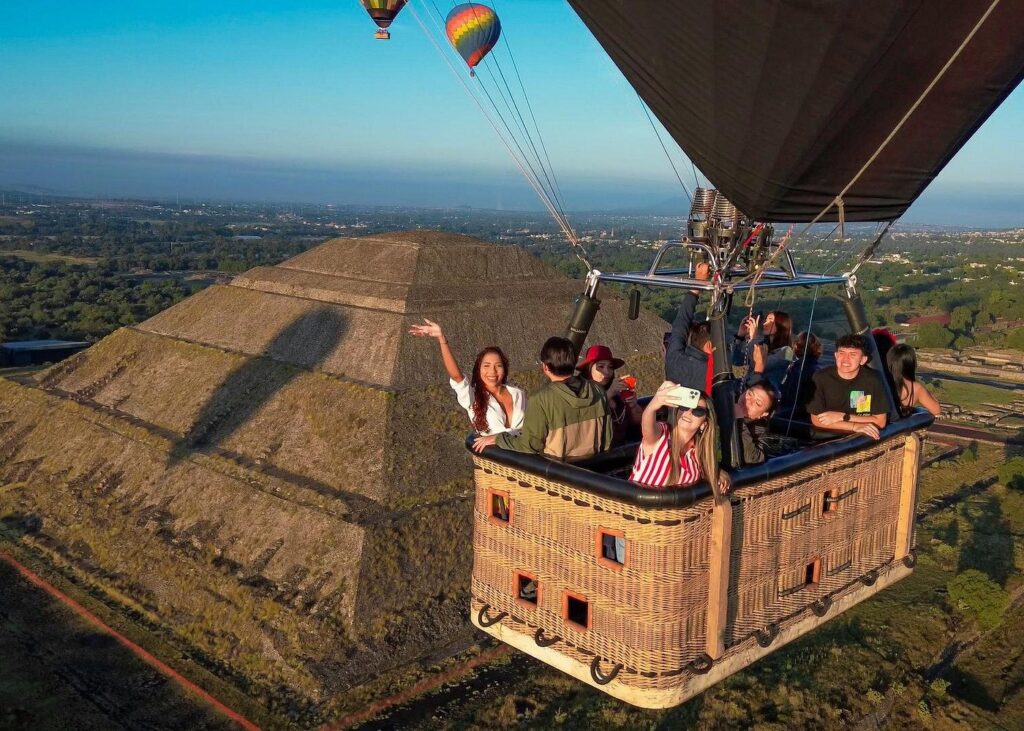
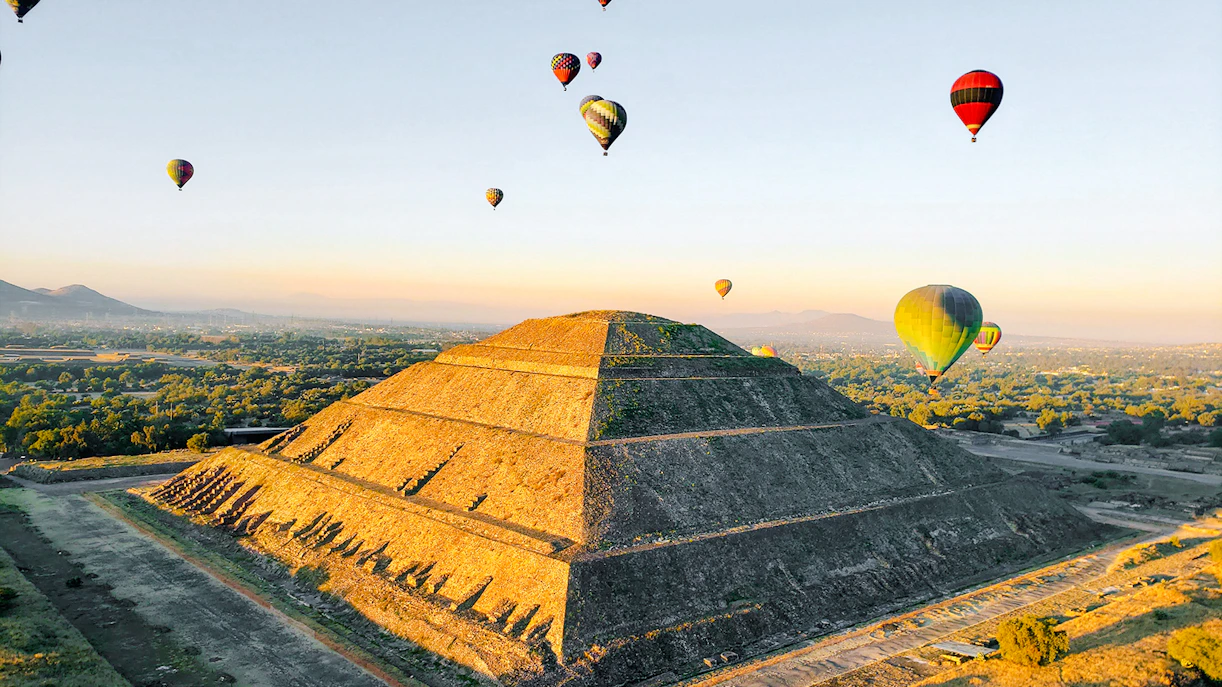
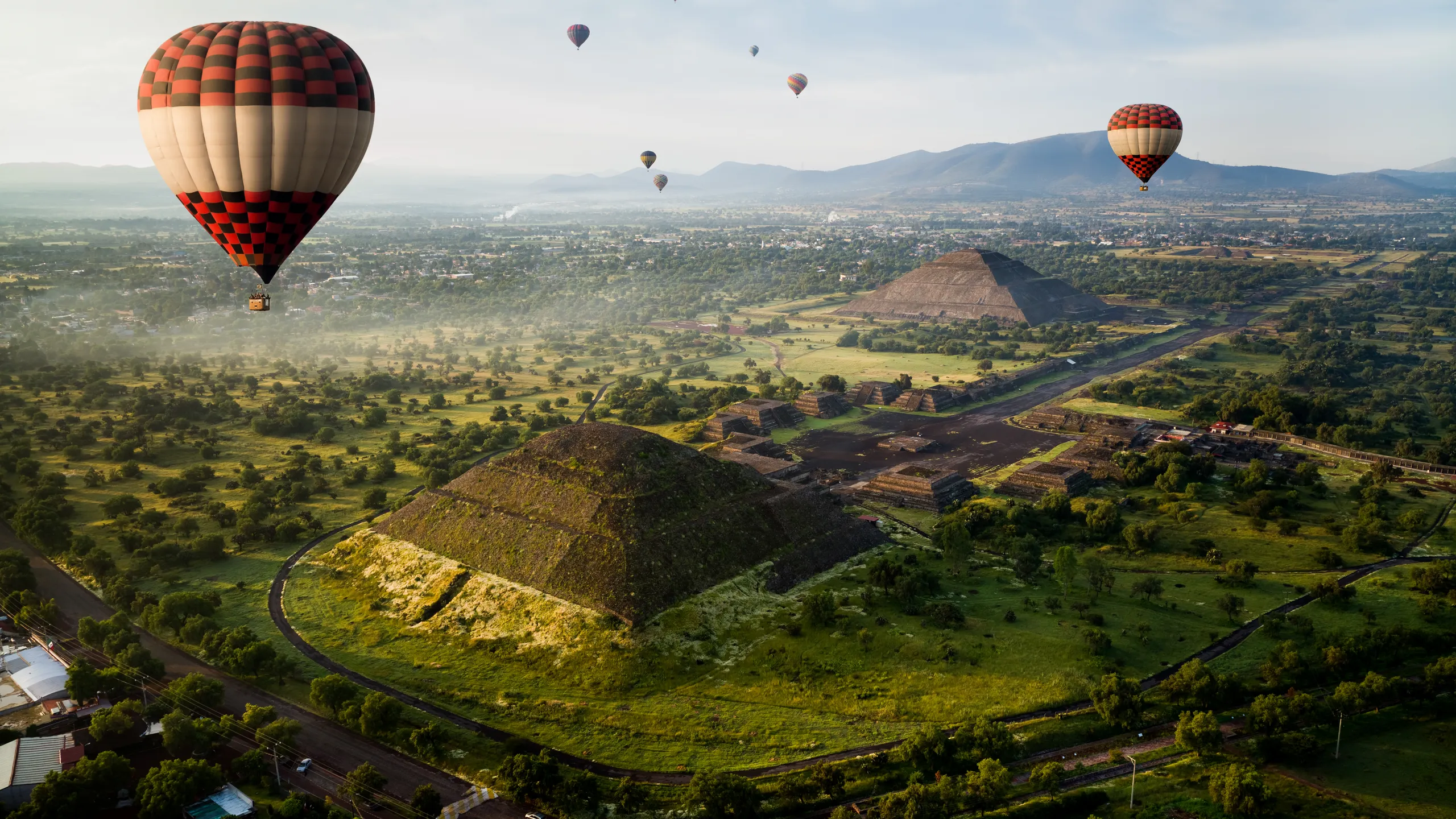
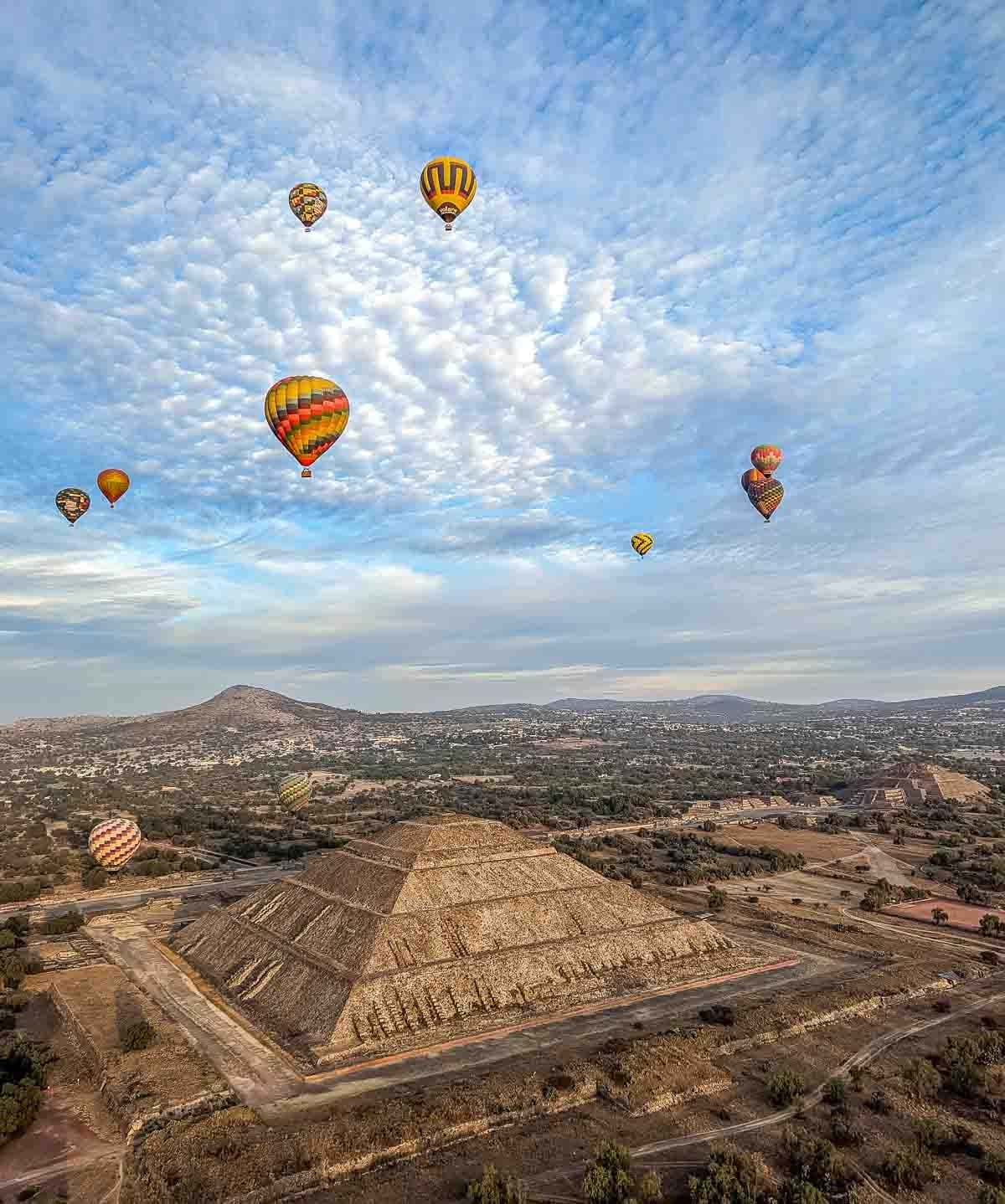
From the balloon basket, the Pyramid of the Sun fills the frame as pilots circle its summit platform, sunlight raking across the stepped terraces. A wide-angle lens captures the pyramid's full bulk against the valley floor. This drift is the signature shot on any teotihuacan tour from mexico city hot air balloon, so keep the camera ready as the basket banks.
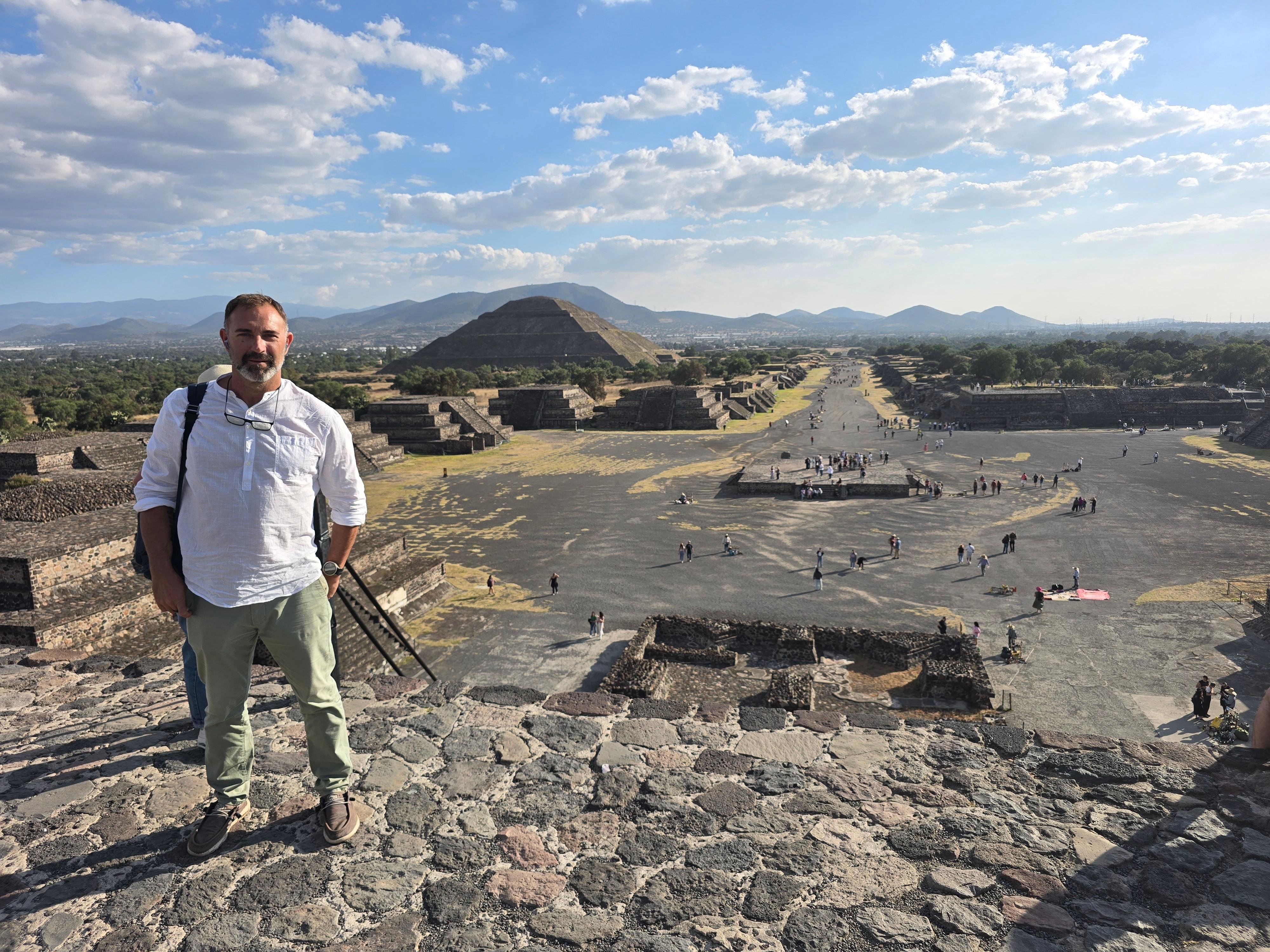
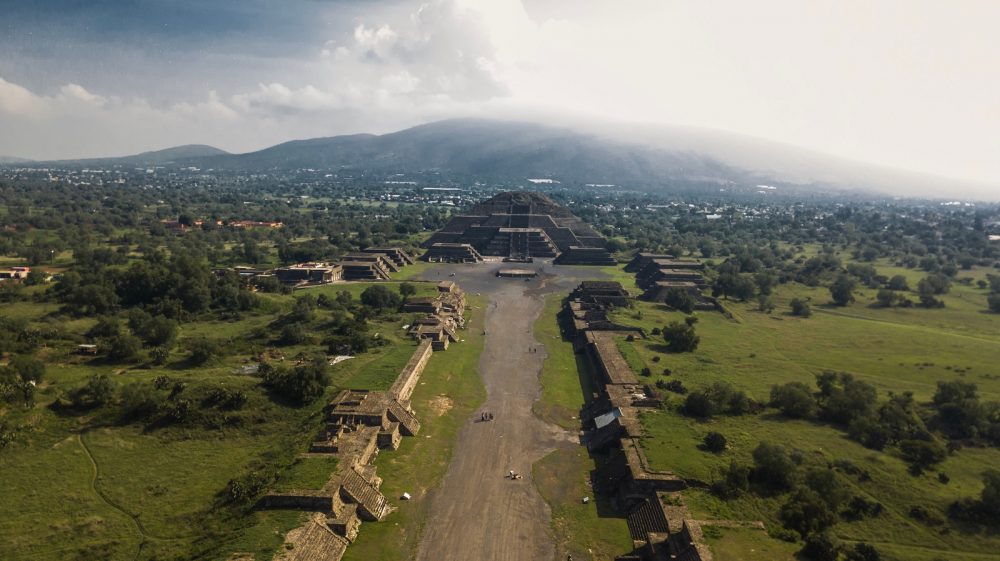
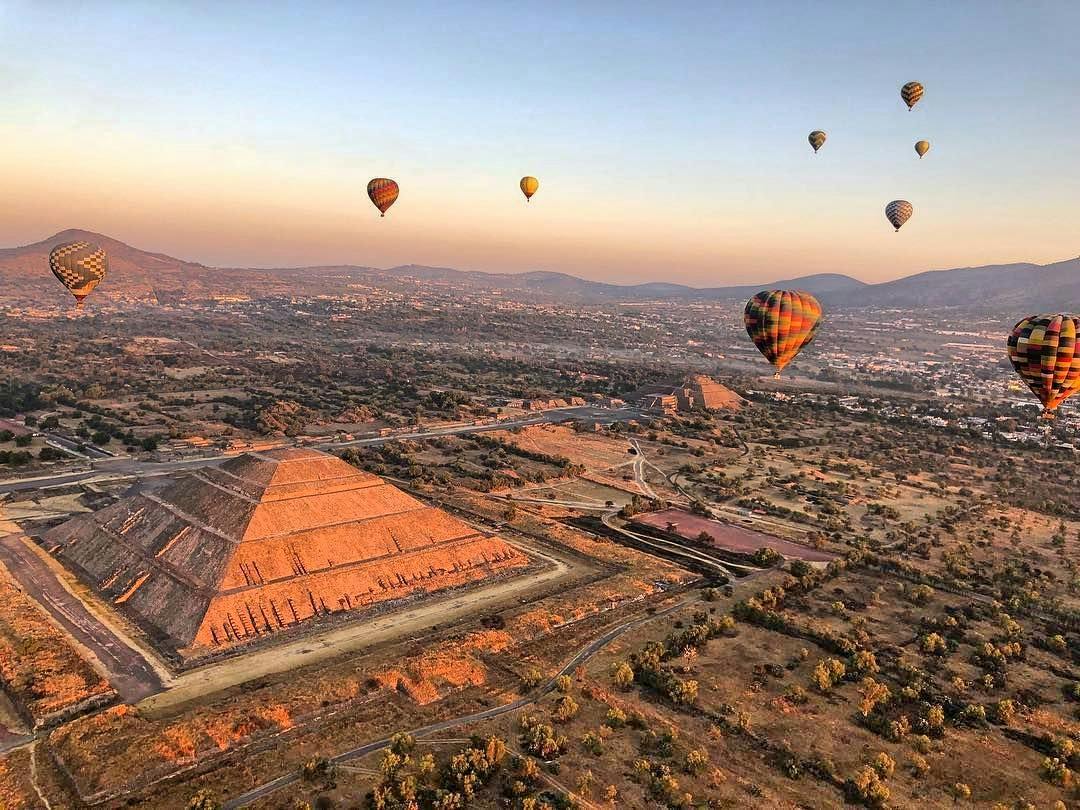
Looking straight down the axis of the Avenue of the Dead from altitude reveals its long, ruler-straight line flanked by dozens of smaller platform mounds. The shot works best when the balloon drifts directly over the causeway rather than off to one side. Haze is thinnest right after liftoff, so this angle is sharpest early in the flight.
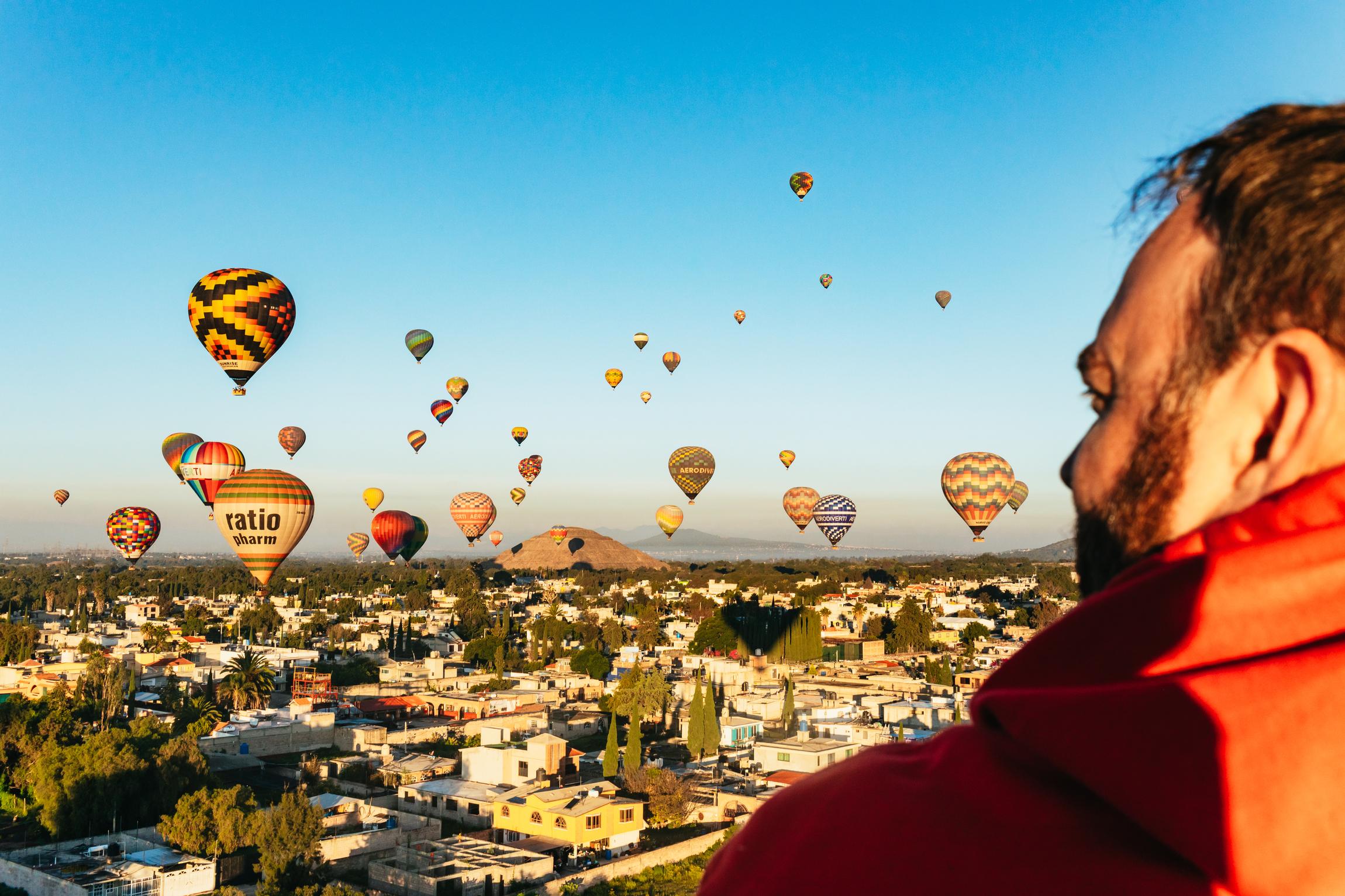
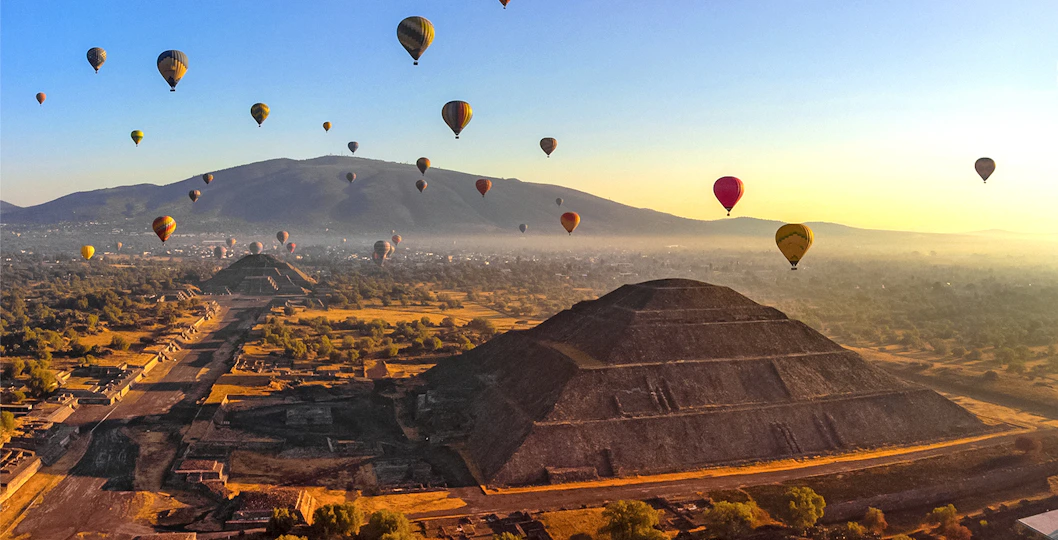
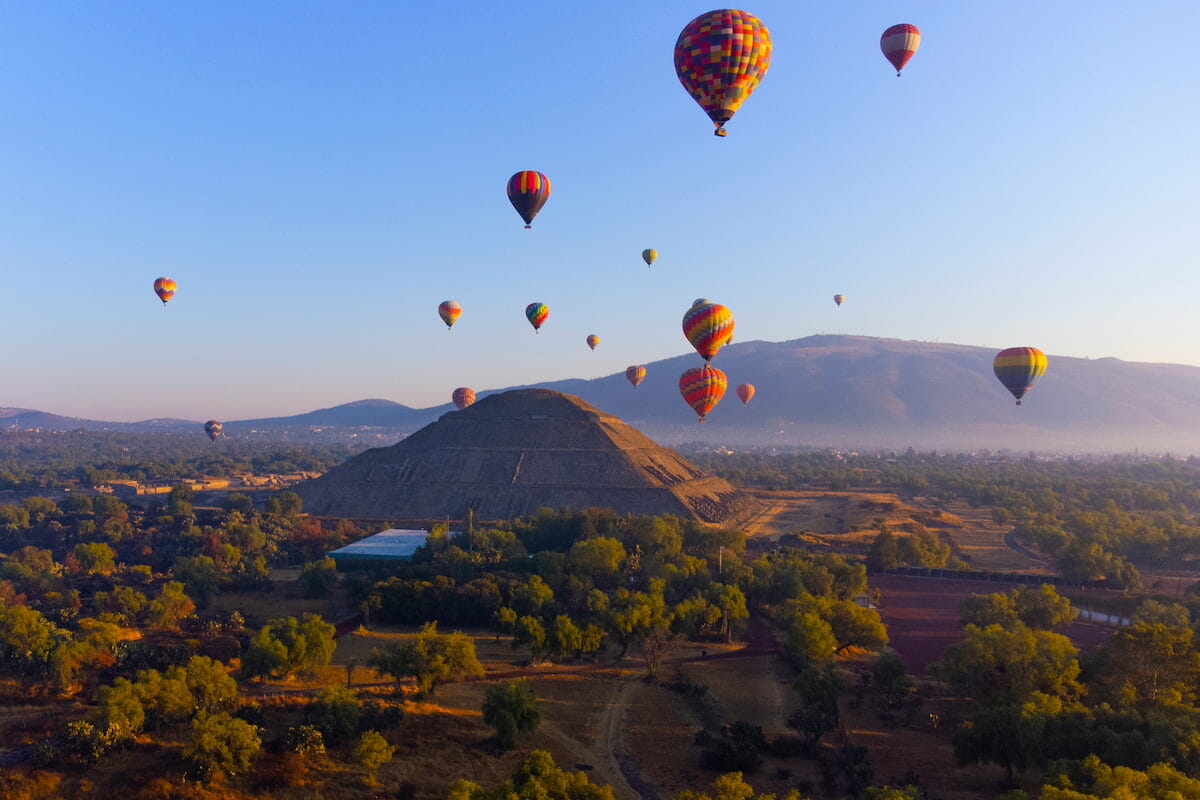
From higher altitude over the surrounding ridges, dozens of other balloons appear scattered across the plain with the pyramids as a backdrop, giving a sense of scale to the whole site. This is a good frame for capturing the fleet itself rather than a single monument. Wider zoom or a phone panorama both work well here.
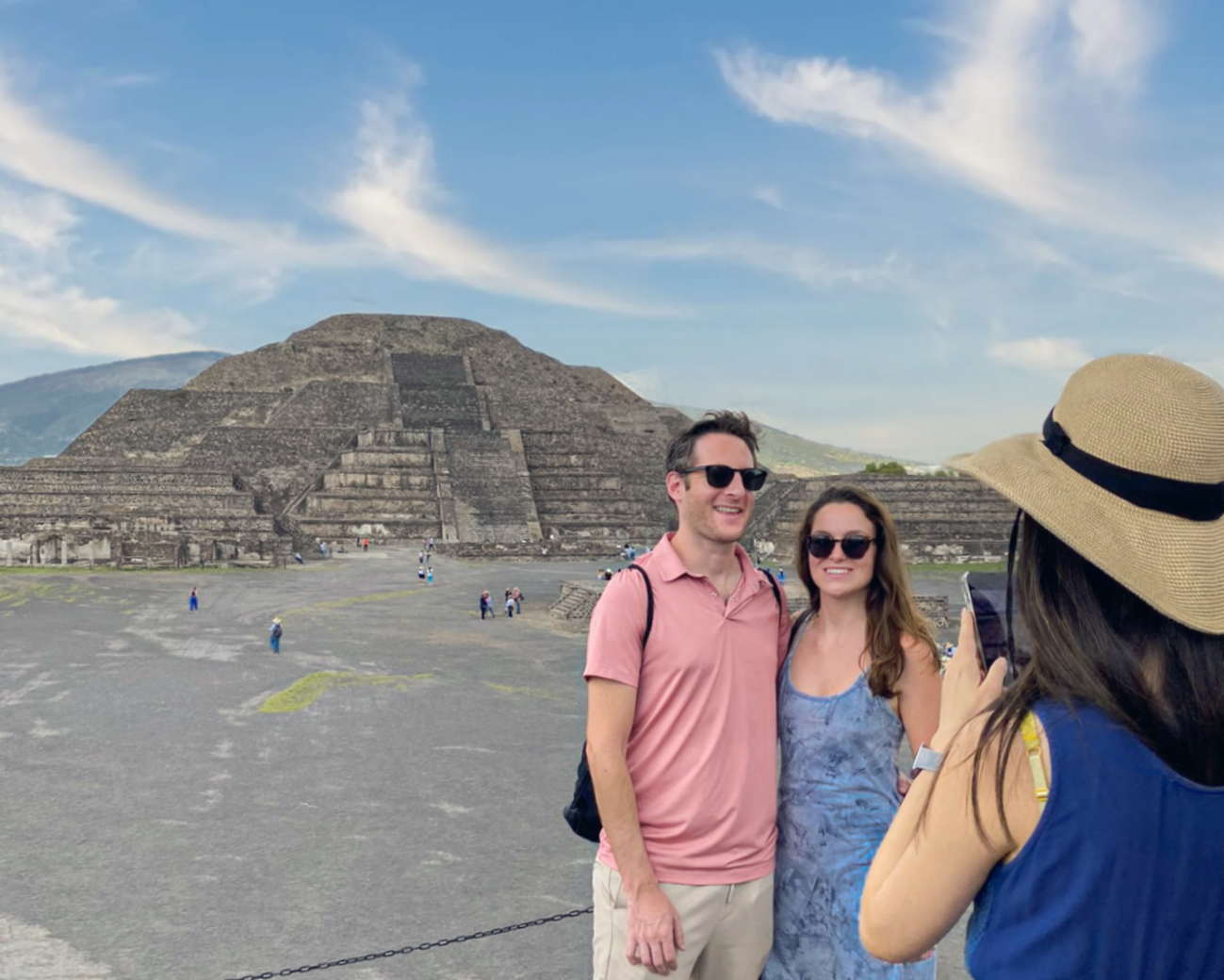
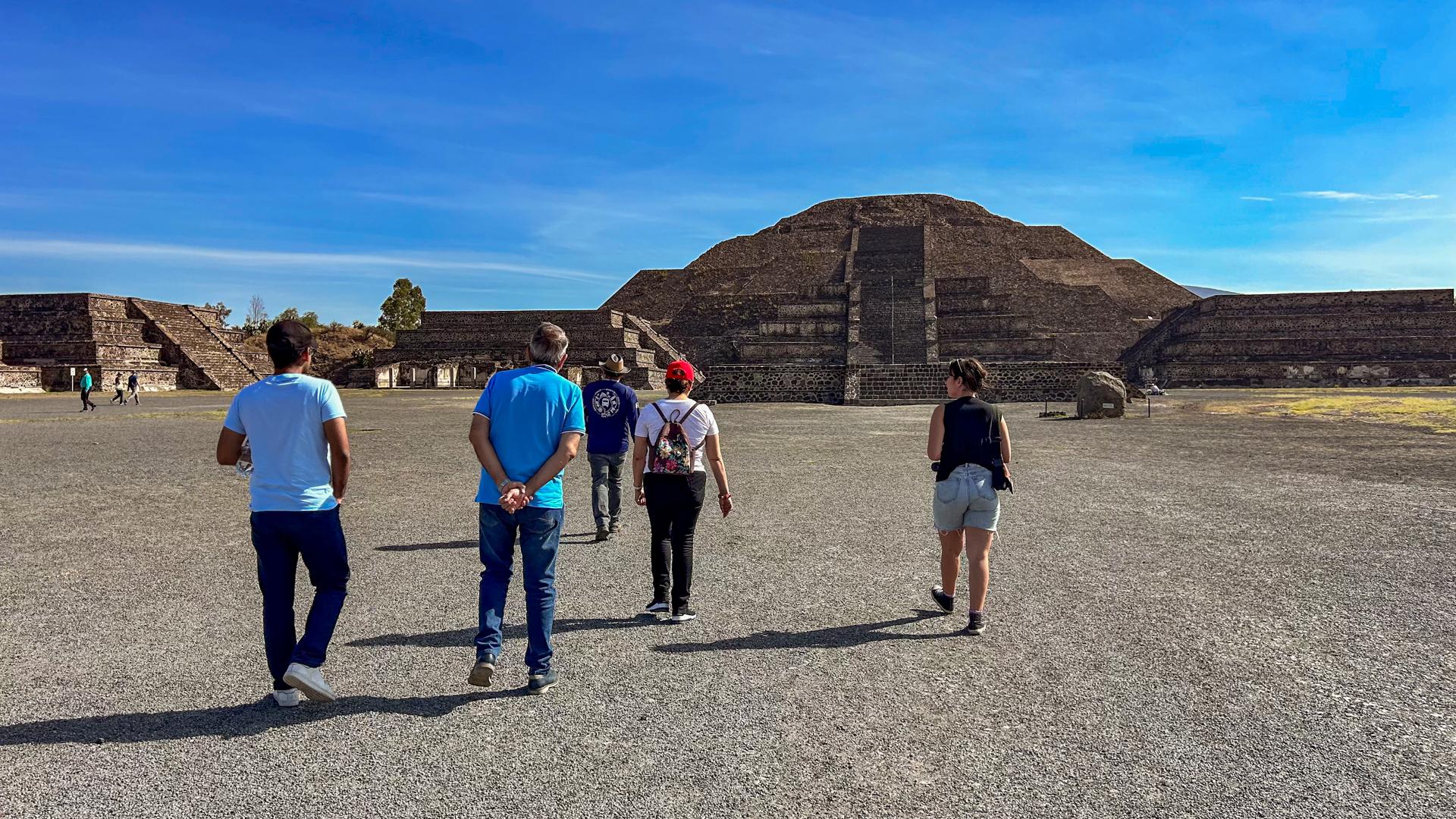
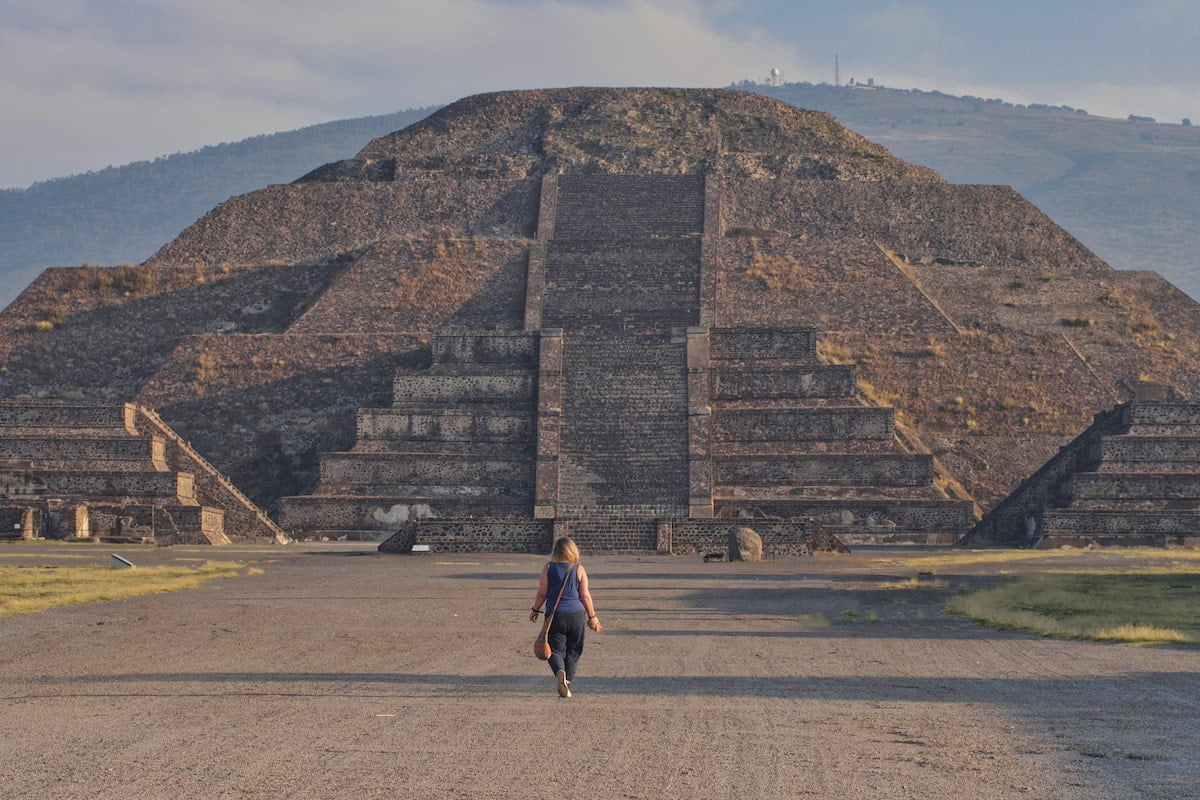
Standing at the center of the Plaza de la Luna, facing the Pyramid of the Moon, gives a straight-on ground shot with the stepped facade filling the frame and Cerro Gordo rising behind it. This is the classic post-landing photo once the tour moves to walking the site. Space is open and unobstructed, so no special access is needed.
Climbing partway up the Adosada Platform in front of the Pyramid of the Sun gives an upward angle that exaggerates the structure's height, with the staircase leading the eye to the summit. Shooting from the lower steps avoids the crowds gathered at the top. It pairs well with the earlier aerial pass for a before-and-after sequence.
A teotihuacan tour from mexico city hot air balloon combines a pre-dawn wake-up with a full day of walking, so families need to weigh flight-safety minimums against how much a young child can realistically handle before naptime.
Most balloon operators set a minimum weight (commonly around 30-40 lbs) rather than a strict age, but toddlers and infants are generally discouraged since baskets have no seating and liftoff can be abrupt.
Balloon flights launch near sunrise, meaning hotel pickup is often before 5:00 AM, so pack a light breakfast and let kids sleep in the van rather than forcing them awake early.
After the flight ends and pyramid gates open at 09:00, budget downtime before tackling Basilica or Tlatelolco stops, since combining ballooning with multiple historic sites in one day is long for children under 8.
The archaeological zone has restrooms near the main entrances but no dedicated baby-change room, so bring your own changing mat for infants.
Strollers work on the flat paved paths between structures but struggle on the pyramid staircases themselves, so a soft carrier is more practical for toddlers who tire of walking.
Split snacks and water breaks around the balloon landing and the walk to the pyramids, since kids running on an early start can crash mid-morning without steady fuel.
Most balloon flights end with a set breakfast at a hacienda-style restaurant near the launch field before the group transfers to the ruins, so a teotihuacan tour from mexico city hot air balloon rarely leaves you hunting for food on an empty stomach. Inside the archaeological zone itself, options are limited to snack stands, so the real sit-down meals happen just outside the gates.
Set inside a natural cavern a short walk from the site, this long-running spot serves a set Mexican lunch menu with soup, mixed grill and dessert. It fills with tour groups around midday, so arrive early if your itinerary has flexible time.
Balloon operators route landed passengers to a hacienda-style dining hall for a buffet of eggs, chilaquiles and sweet bread with coffee or champagne toast. It is fast-moving since multiple flight groups rotate through the same seating.
Combined tours typically add a stop at a family-run barbacoa restaurant near San Juan Teotihuacán, serving slow-cooked lamb, consomé and fresh tortillas. It suits a hearty, unhurried lunch after the ruins rather than a quick bite.
Many bundled packages include a stop at a local tequila or obsidian workshop offering free tasting flights alongside artisan crafts. It is casual and quick, good for souvenirs rather than a meal.
Everything you need to know for your journey
Most teotihuacan tour from mexico city hot air balloon operators depart before sunrise, with hotel pickup around 4:30-5:00 AM so the balloon can launch as the sky begins to lighten.
Yes, reserving in advance is strongly recommended since balloon capacity is limited and popular sunrise slots sell out, especially on weekends.
Dress in layers, since pre-dawn temperatures at the launch field are noticeably cooler than the archaeological site later in the morning; closed-toe shoes help for the pyramid climb afterward.
Small bags and cameras are permitted on board provided they can be securely stowed during takeoff and landing, but bulky luggage should stay with your transfer vehicle.
The Avenue of the Dead is relatively flat, but the Pyramid of the Sun and Pyramid of the Moon require climbing steep stone stairs with no elevator access.
The INAH archaeological site fee is 95 MXN per person, paid separately from the balloon flight cost.
Many operators set a minimum age around 6-8 years old for balloon passengers, so check the specific requirement when booking a family teotihuacan tour from mexico city hot air balloon.
If wind or visibility makes flying unsafe, operators typically reschedule the flight to the next available morning rather than canceling outright.
A light breakfast, often with sparkling wine, is commonly included after landing as part of most teotihuacan tour from mexico city hot air balloon packages.
Transfers usually take about an hour by car from central Mexico City via the toll highway, with the exact launch field location shared by the operator the night before.
Yes, since the site gate opens at 09:00, most travelers land from their balloon flight, eat breakfast, and then head straight to the pyramids for a same-morning visit.
Pets are not permitted on the balloon or within the fenced archaeological zone, aside from trained service animals.
On-site museum near the Pyramid of the Sun with artifacts and a scale model of the ancient city.
Hotels and guesthouses clustered near San Juan Teotihuacán offer proximity to both the balloon field and site gates.
Join thousands of happy travelers who have discovered this incredible experience
Book Your Experience Now